Machrus OGrow Greenhouse Review: Compact Walk In Kit ROI
By Priya Shah • 29th Sep
Bottom line
The Machrus OGrow OG11767-PE is worth considering for seed-tray organization and potted-plant staging, not as a proven all-weather or hands-off greenhouse.
- Best for: Gardeners who need walk-in access and many shelf positions for seed trays or container plants and have room for this documented configuration’s approximately 54.4-square-foot exterior rectangular footprint. Check the current price
- Skip it if: You need published wind or snow ratings, unattended heat control, or independently verified durability and load performance.
- Main limitation: The plastic cover, door, and side windows provide basic enclosure—not documented climate control. No numerical ROI or payback period is supported.
Important: The OGrow family includes multiple sizes; the 117-by-67-inch dimensions and 12-shelf layout apply specifically to OG11767-PE. Price and availability should be rechecked.
This Machrus OGrow greenhouse review looks past the appealing idea of a low-fuss small greenhouse kit and asks the budget question that matters: what work can it realistically replace, and what work does it add? The documented OG11767-PE configuration can be a sensible staging tool for gardeners who need covered shelf space and walk-in access. It is not, based on the available specifications, a storm-rated or hands-off four-season greenhouse.
For this review, I am assessing the manufacturer-listed OG11767-PE, a two-tier, 12-shelf configuration. That distinction matters. The OGrow family comes in multiple sizes, so its measurements, shelf count, weight, and other listed details should not be assumed to apply to every Machrus greenhouse variation.
The short verdict
The 12-shelf Machrus OGrow is worth considering if your goal is seed-tray organization and potted-plant staging rather than protected in-ground production. Its strongest value is the combination of walk-in access and many shelf positions within one covered structure. Its weak point is climate management: it has a roll-up door and two side windows, but no documented fan, thermostat, heater, cooling system, wind rating, or snow-load rating.
Buy bones, DIY brains.
That means buying this kit only after you budget for a level site, careful anchoring, temperature monitoring, and the climate upgrades your location requires. A portable greenhouse walk-in is a tool, not an insurance policy against wind, snow, or summer heat.
What the documented 12-shelf OGrow configuration includes
Machrus describes the OG11767-PE as a two-tier walk-in greenhouse with 12 shelves. The published frame dimensions are 117 inches long by 67 inches wide by 83 inches high (an exterior footprint of about 54.4 square feet). It is 117 inches long, so "compact" is true only compared with a permanent greenhouse; it is not a tiny patio cabinet.
The manufacturer lists a 48.5-pound product weight, rust-protected powder-coated frame tubes, a clear plastic cover, and a full-length roll-up zippered entry. For airflow, the listed design has the front door plus two Velcro side windows. Machrus also says ground anchors and ropes are included, and that assembly uses a connector-and-rod system without tools or separate hardware.
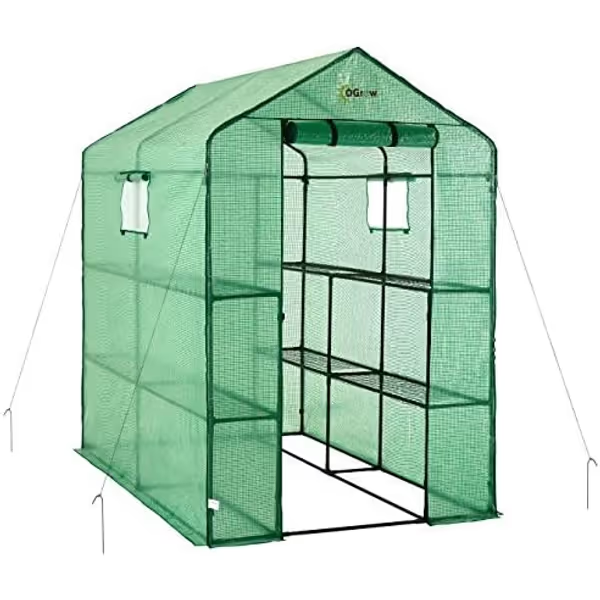
Machrus Ogrow Portable Greenhouse Kit
Portable, walk-in greenhouse for flexible indoor/outdoor gardening needs.
DesignWalk-in Portable
DesignWalk-in Portable
Pros
Versatile for indoor/outdoor use
Spacious interior for its size
Cons
Compact size may limit large-scale growing
The greenhouse shelf capacity is a major selling point, but read it correctly. Machrus claims up to 75 pounds per individual shelf for this configuration. That is a manufacturer claim, not an independently verified load test. I would not design your growing plan around the maximum number. Pots get much heavier after watering, and uneven loading is a different stress than neatly distributed trays.
The practical use case is clear: seed trays and potted plants that benefit from organized vertical growing. Twelve shelves can make a modest footprint feel productive.
My value assessment: where this small greenhouse kit earns its keep
A good greenhouse purchase creates leverage. It lets you do more of the work you already need to do—organize, shelter, stage, and monitor seed trays and potted plants—with fewer trips between windowsills, garage, porch, and garden beds.
The Machrus greenhouse has three potential sources of that leverage:
- Walk-in access. You can step inside instead of working through a narrow zipper opening or moving a whole shelf to reach a tray.
- Vertical staging. The 12-shelf layout is the central value proposition for growers with many pots or seed trays.
- Basic enclosure. The cover, door, and side windows create a controllable-enough starting point for a gardener willing to open, close, monitor, and upgrade as conditions demand.
This is why portable greenhouses can be worth it: they concentrate plant care and extend your ability to protect seed trays and containers during variable weather. But the return is not automatic and should not be framed as a promised cash payback. There is no product-specific evidence for yield, energy use, crop value, or a numerical ROI for this kit.
Instead, calculate value with a simple, honest scorecard:
Your personal ROI worksheet
Build cost
- Current kit price and shipping, confirmed where you buy
- Site leveling materials, if needed
- Any local permit, HOA, or placement review required for your property
- Optional ground-prep or anchoring materials beyond what is included
Operating cost
- A thermometer or sensor so you can react before crops cook
- Watering supplies
- Any fan, shade material, or heating you decide your growing plan needs
Maintenance and risk cost
- Time to open and close ventilation points
- Periodic inspection of the cover, zippers, connectors, anchors, and ropes
- The possibility that severe local weather requires removing plants, extra securing, or avoiding use during exposed seasons
If the kit eliminates scattered indoor seed-tray and potted-plant clutter and helps you organize enough plants to match its cost in your own garden plan, it may be a fine value. If you need a structure you can leave unattended through high wind, snow accumulation, or heat waves, the value case weakens quickly because the required upgrades and supervision become the real purchase.
I learned this lesson pricing a midrange kit against a DIY tunnel when grocery prices were climbing: the frame was only the beginning. Bolts, brackets, rain catchment, a shade solution, and electricity turned the "cheap" option into a real project. The same discipline applies here: track the whole system, not just the cart total.
The climate-management gap you must plan for
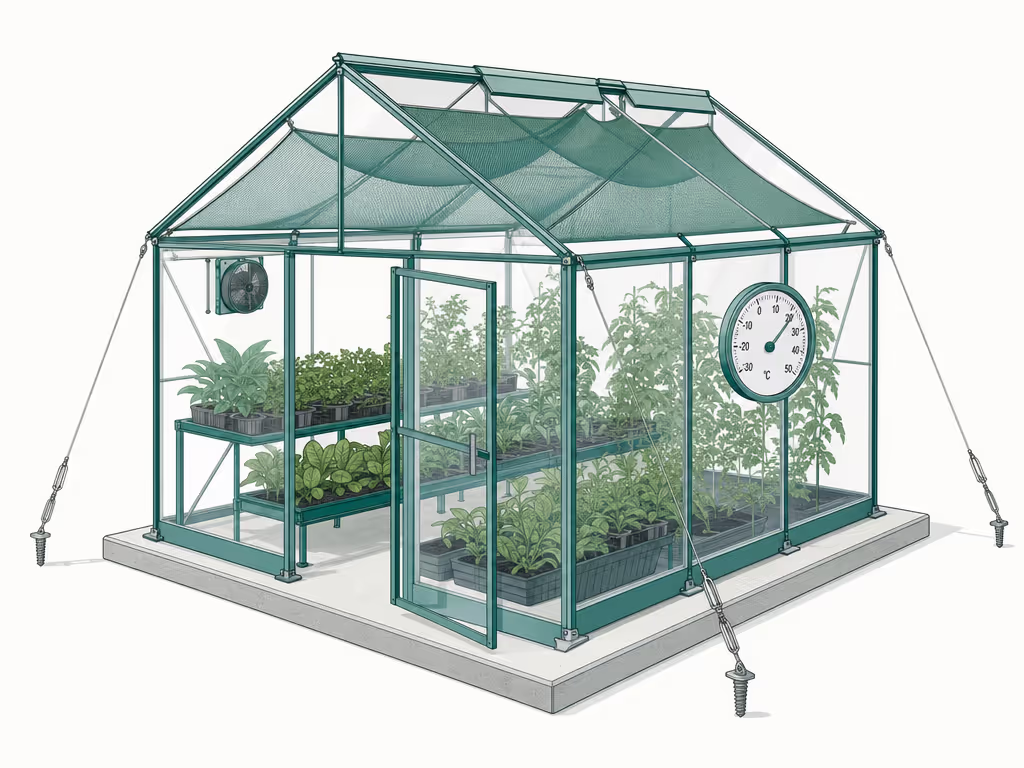
Machrus lists two side windows and a zippered roll-up door, which are useful openings. What they do not establish is stable temperature control. Purdue University Extension notes that greenhouse air can easily rise above 95°F in summer without temperature control. The exact risk varies with sun exposure, local weather, crop, and how consistently you manage the openings.
For a buyer in a mild, supervised setting, manual ventilation may be enough for limited periods, but gardeners facing heatwaves should compare specialized greenhouse ventilation systems. For a heat-prone yard, those openings are not a substitute for a monitoring routine and a heat plan.
Low-cost upgrades to prioritize
I would add in this order, after making the site secure:
- A temperature monitor. This is the first "brain" to buy. You cannot manage a condition you do not measure.
- Shade strategy. A removable shade cloth or homemade shade sail can reduce the solar load when conditions call for it. Keep it adjustable; seasonal light needs change.
- Airflow plan. Use the door and side windows deliberately, and decide who will open or close them when you are away. If your conditions demand mechanical air movement, price that separately because no fan is documented as included.
- Water discipline. Shelves and closely grouped pots dry differently than open beds. Check the plants, not just the soil surface on one tray.
That sequence is both cheaper and more useful than buying a pile of gadgets before you know your daily temperature pattern. Buy bones, DIY brains.
Wind, anchoring, and siting: do not confuse included anchors with a rating
Ground anchors and ropes are included for the OG11767-PE, according to Machrus. That is better than receiving a cover and frame alone. It is not a documented wind-speed certification, and the available product information does not specify anchor placement, anchor type, soil requirements, snow-load limits, or safe operating limits.
That absence should guide your decision. I will not recommend a lightweight covered frame as a shortcut for an exposed site simply because it comes with anchors.
Use the included items as part of a cautious installation, not as proof that the greenhouse is ready for every forecast. General greenhouse storm-preparation guidance emphasizes a level base, sheltered siting, and secure anchoring. Those are sensible principles, but they are not Machrus-specific installation instructions.
Before you assemble, run this site checklist
- Check local rules first. Confirm whether your municipality, landlord, HOA, school, or community garden has placement, temporary-structure, setback, or anchoring requirements.
- Choose a level location. Your soil type also affects anchoring and foundation preparation, so review these soil-specific greenhouse foundation solutions before assembly. A racked frame makes doors, shelves, and cover tension harder to manage.
- Look at wind exposure. Avoid treating an open wind corridor as a casual placement decision.
- Plan drainage. Do not place the greenhouse where standing water or runoff will undermine the base area.
- Decide how you will anchor it before assembly day. The product information does not provide a complete site-specific anchoring plan.
- Make a severe-weather routine. Know when you will inspect it, remove vulnerable plants, or pause use rather than hoping the cover handles conditions it was never rated for.
Assembly and durability: reasonable expectations, not marketing assumptions
Machrus says the connector-and-rod assembly requires no tools or hardware, but compare that claim with honest greenhouse assembly difficulty ratings before assuming the build will be effortless. That suggests a simpler build than a bolted, panelized greenhouse, and it is attractive for renters or gardeners who may want to relocate the structure. However, there is no independently tested assembly-time evidence for this exact configuration. Set aside unhurried time and inventory parts before committing plants to it.
The manufacturer describes a powder-coated frame and clear plastic cover, but the available information does not establish cover life, frame rigidity, corrosion resistance over time, or weather resistance through independent testing. The warranty is a 30-day limited warranty; verify the warranty terms and the seller's replacement process before purchase.
This is the trade-off in plain language:
| What you gain | What you still own |
|---|---|
| Tool-free-style connector-and-rod design, according to Machrus | Proper assembly, periodic checks, and re-tensioning or adjustment as needed |
| 12 shelf positions in a walk-in form | Sensible loading rather than assuming the maximum claimed load is your everyday target |
| Included anchors and ropes | Site-specific anchoring decisions without a published wind rating |
| Door and side windows | Active heat and humidity management |
A short warranty does not automatically make the greenhouse a bad purchase. It does mean durability per dollar, not the prettiness of the product photo, should lead your decision.
Who should buy the Machrus OGrow walk-in greenhouse?
It is a practical fit if you:
- Need many shelf positions for seed trays and potted plants.
- Want to walk inside rather than work from the edge of a mini greenhouse.
- Have room for the documented 12-shelf version’s approximately 54.4-square-foot exterior rectangular footprint, plus any clearance your site requires.
- Can create a level, sheltered, carefully anchored site.
- Are willing to check temperatures and manage ventilation.
- See the kit as a modular starting point, not a complete climate-controlled growing building.
Pass (or choose a more heavily documented structure) if you:
- Need published wind or snow-load ratings for your site or insurer.
- Expect reliable unattended operation during hot weather.
- Need a confirmed four-season heating and cooling solution.
- Want independently verified structural, cover-life, or shelf-load performance.
- Have a highly exposed site and no practical way to reduce wind risk.
Final recommendation and next step
This Machrus OGrow greenhouse review lands on a conditional recommendation for the OG11767-PE 12-shelf walk-in configuration. It offers useful organization and access for a gardener who keeps many seed trays and potted plants. The published 117-by-67-inch footprint, 12 shelves, full-length entry, side windows, and included anchors point to a workable seed-tray-and-potted-plant staging setup, not a proven all-weather greenhouse.
The product was listed by Machrus at $280.60 and marked sold out when the listing was checked; both price and availability can change, so verify them before planning your build budget.
Your actionable next step: measure the 117-by-67-inch exterior footprint where you would place it, then account for any clearance your site and local requirements need. If the space is level, sheltered, and you can name your anchoring and heat-management plan before checkout, the OGrow can be a sensible small greenhouse kit. If you cannot, do not let the shelf count rush you. Spend the next dollar on site readiness and climate control first, that is where the durable return starts.
Related Articles