Shipping Container Greenhouse vs Traditional Kits FAQ
By Takumi Sato • 11th Aug
Quick verdict
Choose a container farm when you need equipment-led control of temperature, humidity, light, nutrients, and irrigation and can support its utilities and operating routines. Choose a traditional greenhouse when you want a space for starts, herbs, or seasonal crops. Neither category is automatically better or storm-proof.
- Choose the first option if: Your priority is indoor, equipment-led control of temperature, humidity, light, nutrients, and irrigation.
- Choose the alternative if: You prefer a greenhouse growing space and can accept control that depends on the greenhouse design and installed equipment.
- Main trade-off: Container systems may demand substantial electrical capacity, while greenhouse performance varies widely. Before ordering a container conversion, consider delivery access, drainage, bearing surface, and level.
Important: Manufacturer water, energy, dimensions, climate, and support figures are product-specific claims, not independent benchmarks. No collected evidence establishes universal costs, yields, profitability, or storm performance.
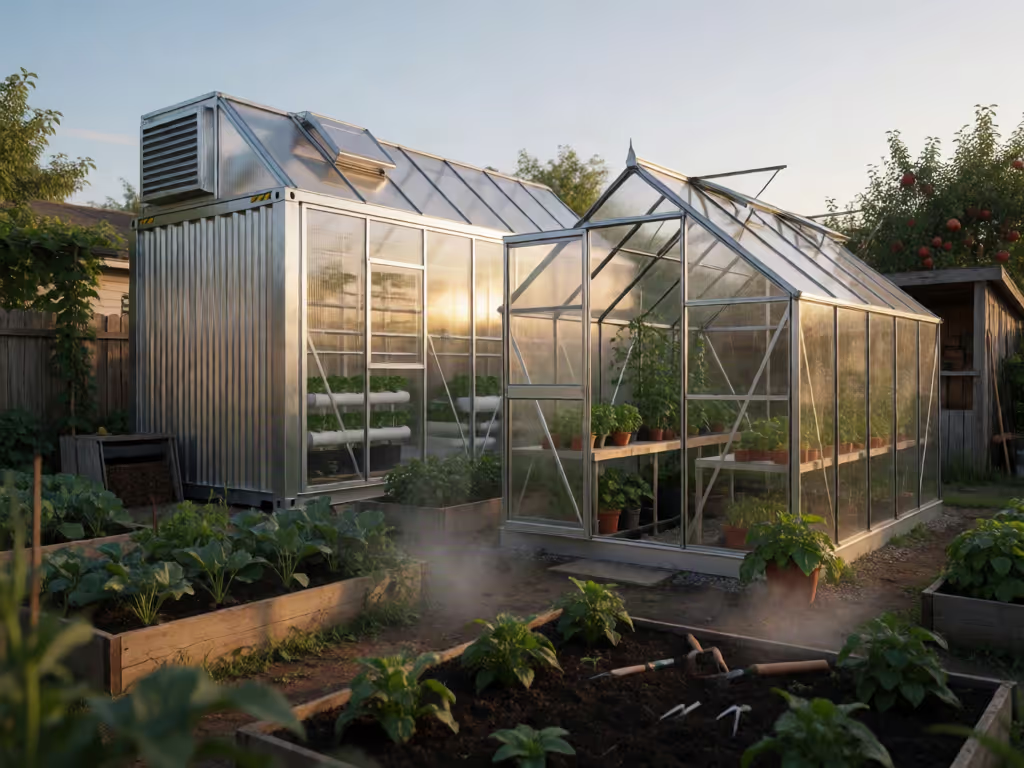
A shipping container greenhouse and a traditional greenhouse are often placed in the same shopping category, but they solve different growing problems. FarmBox Foods, for example, describes container farms equipped with plumbing, electrical systems, and sensors for controlling interior conditions. A greenhouse’s control level depends on its design and equipment. Choose by the environment you need to control, not by whichever structure looks tougher in a listing.
That distinction prevents expensive regret. FarmBox Foods’ named Vertical Hydroponic Farm is housed in an insulated shipping container. A traditional greenhouse may better suit a homeowner who wants a place for starts, herbs, and seasonal crops. Neither label, by itself, tells you how a structure handles your weather, your crop plan, or your utilities.
Steel is not a storm rating.
After a coastal storm, I walked through a field of distorted growing structures. The lesson was plain: attractive plans are not a safety margin. Before you buy, separate the production system from the site plan and ask what storm-performance evidence is actually available.
What is the real difference between a container farm and a greenhouse?
Controlled-environment agriculture includes high tunnels, greenhouses, and indoor vertical farms. They sit on a spectrum: each can protect crops, but the amount of control differs.
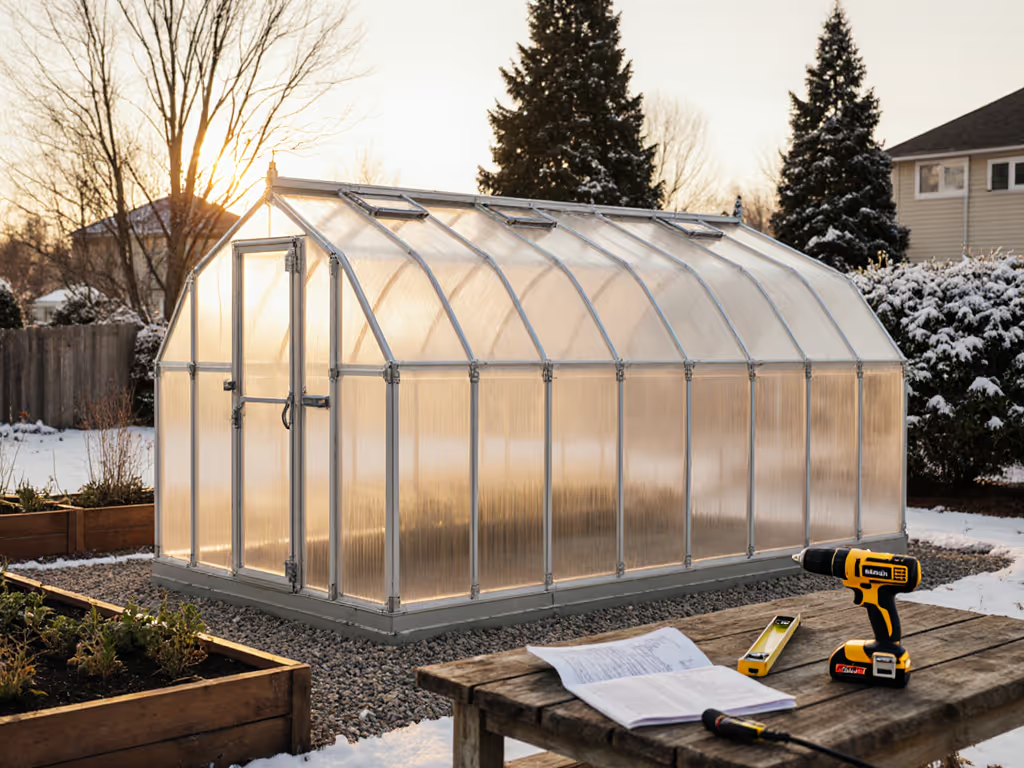
A traditional greenhouse regulates temperature, humidity, ventilation, and light. Its greenhouse glazing material is a major performance decision. Greenhouses may use vents, shade cover, exhaust fans, and cooling pads for temperature management, depending on their design and equipment.
FarmBox Foods documents a Vertical Hydroponic Farm housed in an insulated shipping container, while Growcer documents modular vertical farms. Readers comparing these systems may also benefit from this hydroponics-integrated greenhouse comparison. Hydroponics delivers nutrients through water rather than soil, and plants may be supported by inert media. FarmBox Foods describes its container farms as insulated shipping-container units fitted with plumbing, electrical systems, and sensors for interior conditions. That is a manufacturer-described configuration, not a universal specification for every container conversion.
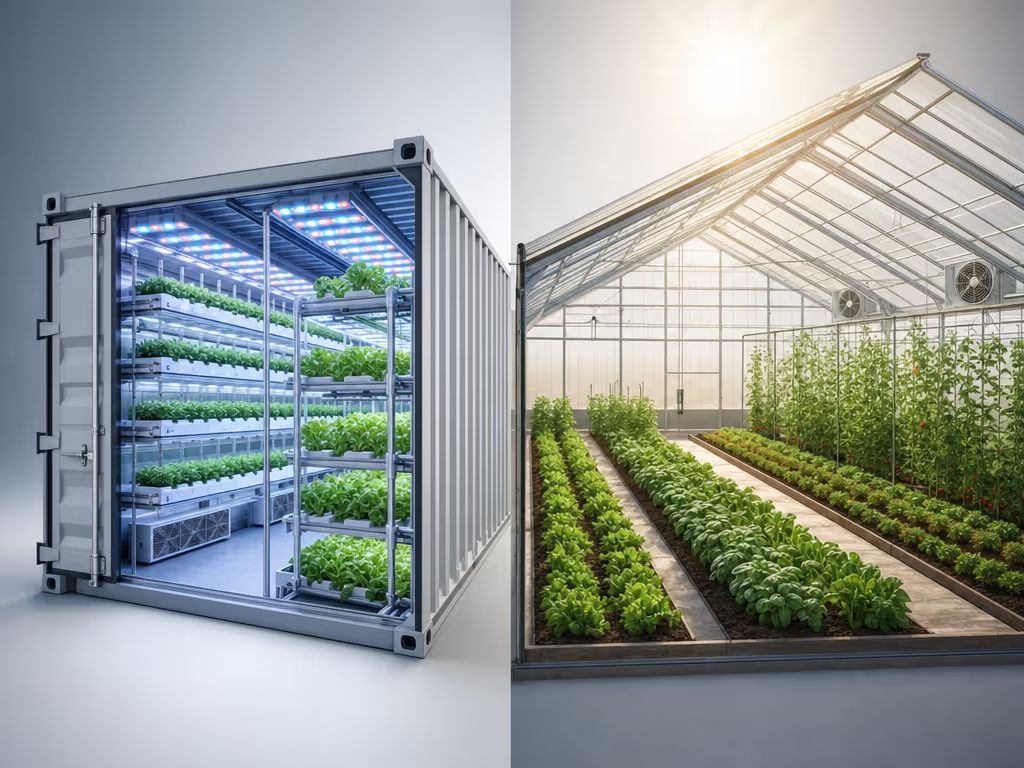
For the documented container and modular offerings discussed here, the useful comparison is equipment-led indoor control versus greenhouse control:
| Decision area | Documented container or modular examples | Traditional greenhouse |
|---|---|---|
| Growing approach | FarmBox Foods’ Vertical Hydroponic Farm is hydroponic; Growcer describes modular vertical farms using deep-water-culture technology | Varies with the structure and installed growing system |
| Light strategy | CEA can use lighting systems; check the exact product configuration | Greenhouses regulate light alongside temperature, humidity, and ventilation |
| Temperature approach | Indoor vertical farms may use HVAC; check the exact product configuration | Greenhouses may use vents, shade cover, exhaust fans, and cooling pads |
| Planning emphasis | Delivery access, bearing surface, drainage, and level should be considered for a container conversion | Compare the actual greenhouse design and its stated environmental-control equipment |
Do not confuse a high tunnel with a full greenhouse, either. High tunnels and hoop houses are described as unheated polyethylene-film or plastic-covered structures that provide some protection but lack the extensive controls found in greenhouses.
Is a shipping container greenhouse better for year-round growing?
It can be the better fit when control is the primary objective
Hydroponic systems can support year-round cultivation and more precise nutritional inputs. Enclosed vertical-farm systems are built around managing interior conditions; CEA can also use sensors and automated controls for real-time monitoring and adjustments, as explained in this guide to smart greenhouse climate control. That capability is valuable when predictable production matters more than growing under daylight.
A container farm is not automatically a low-utility choice. For example, FarmBox Foods states that its Vertical Hydroponic Farm captures, filters, and recycles water. The company also reports approximately five gallons of water use per day and around 190 kWh of electricity use per day for that named farm. Treat both figures as manufacturer claims for that product (not as a benchmark for every container farm, a utility-cost forecast, or a comparison with a greenhouse).
The practical question is: Can your site and budget support the controls required for your target crops? A container system can reduce uncertainty only when its water, nutrient, electrical, monitoring, and operating routines are understood before purchase.
It is not automatically the better fit for every gardener
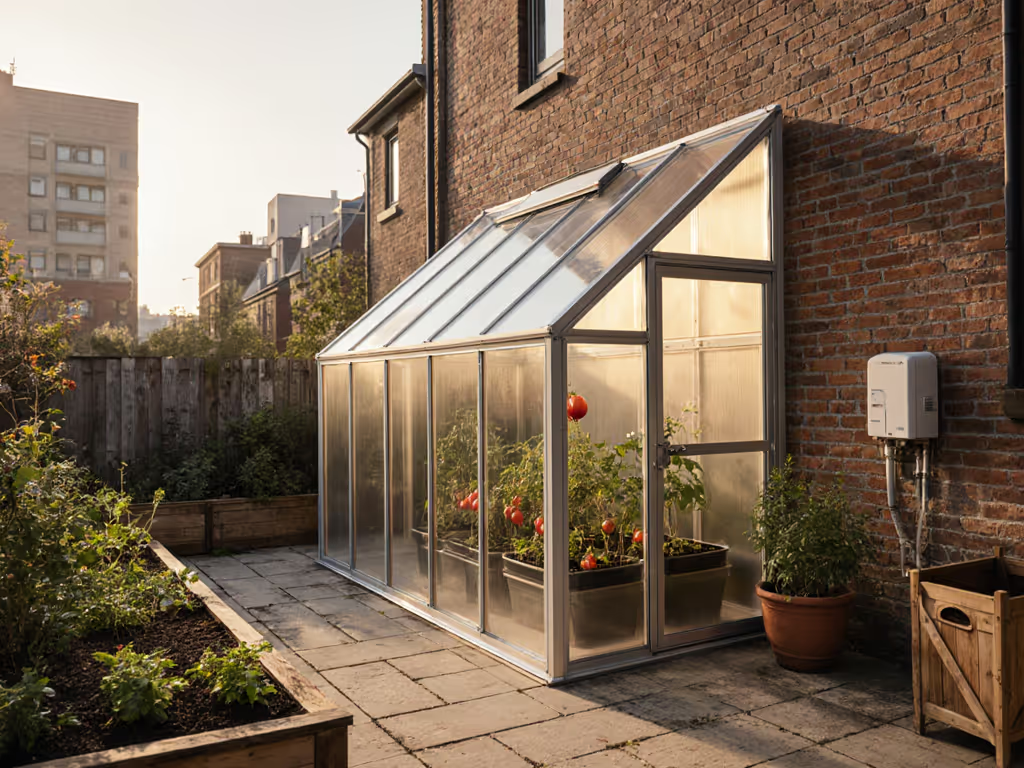
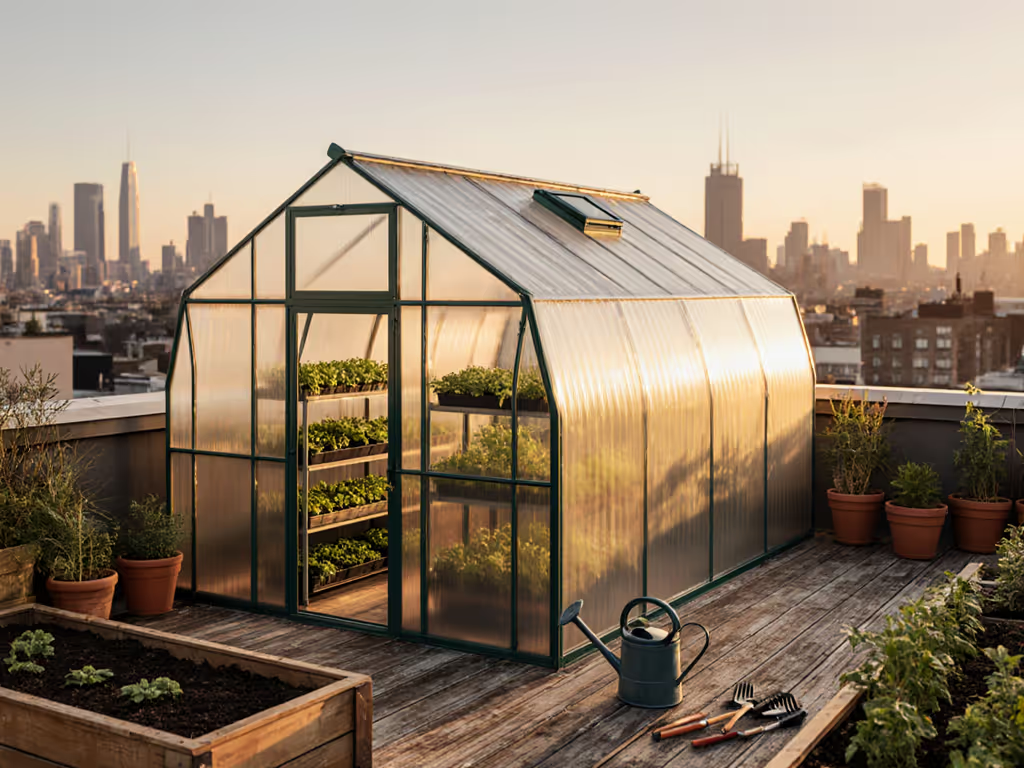
For a household that wants a place to raise transplants and tend plants directly, a traditional greenhouse may be the more natural format. A greenhouse is not "uncontrolled"; it regulates key environmental factors. But its real capability depends on the particular structure, covering, and equipment (not on the word kit).
If you are comparing an attached greenhouse, keep the decision narrow: the available information here does not establish which approvals apply to that type of project.
Which option is more resilient in wind, snow, or difficult weather?
The honest answer: neither category carries a universal storm rating
A shipping container is not proof of a safe growing installation, and a traditional greenhouse is not automatically fragile. The available information does not verify container modifications, anchoring, wind resistance, snow performance, or tornado performance for either category.
That gap matters. Do not accept a casual claim that "it is steel, so it is secure", and do not accept vague assurances that a kit is "heavy duty". Ask sellers what structural or storm-performance information is available for the exact configuration, but do not treat marketing language as verification.
For container conversions, practical pre-delivery planning should include the following. Before finalizing the site, review these greenhouse foundation considerations as part of site planning.
- Delivery access: Can the unit reach the intended location safely?
- Bearing surface: Is there an appropriate surface for the installed unit?
- Drainage: Where will surface water go at the site?
- Level: Is the intended location level enough for the planned installation?
Those are planning checks, not engineering approval. The available information does not provide engineering verification for container structural modifications or anchoring.
How should I compare water, energy, and automation claims?
Compare the operating system, not isolated numbers
Water figures can look precise while describing different crops, operating schedules, and production layouts. Do not directly compare one manufacturer's daily water statement with another manufacturer's monthly requirement unless operating conditions have been made comparable.
For context, Growcer describes its farms as using deep-water-culture technology and reports water requirements of approximately 1,900 to 2,500 litres per month, with continuous recirculation and periodic top-ups. As of August 11, 2026, Growcer’s manufacturer information listed remote monitoring and control, delivery and installation support, and operator training; verify current availability before buying because support offerings may change.
A useful decision sheet has four columns:
- What is controlled? List temperature, humidity, airflow, light, irrigation, and nutrients.
- What must the owner operate? List checks, replenishment, cleaning, and response to alerts.
- What does the manufacturer actually state? Separate stated features from assumptions.
- What must the site provide? Confirm the electrical and water arrangements needed for the specific unit with the seller and local professionals.
This is where many projects fail quietly: buyers compare water marketing, then discover the project is limited by electrical planning or operator workload. A reported 190 kWh-per-day draw on one named container farm is enough reason to make electrical capacity a front-end question, not a closing question.
What permits or code checks should happen before ordering?
There is no one North American answer. Requirements vary by jurisdiction, site, intended use, and modifications. In Larimer County, Colorado, check current county guidance: crop-only greenhouses may face lesser structural, architectural, and energy-code requirements, while plumbing, mechanical, and electrical requirements remain relevant. That is local guidance, not a rule to export to your property.
Before signing, ask the authority having jurisdiction what applies to your proposed structure and use. Then give the supplier the same site information you give the authority. A greenhouse and a container-based indoor farm use different control approaches; your review should match the actual project, not a category label.
FAQ
Can you make a greenhouse out of a shipping container?
Container-housed hydroponic and modular vertical farms do exist. FarmBox Foods describes its container farms as insulated shipping-container units with interior plumbing, electrical systems, and sensors, and Growcer describes a 40-by-10-by-10-foot modular farm footprint. But that is not the same as a universal recipe for converting a container into a greenhouse.
If your idea involves modifying a container, start with delivery access, bearing surface, drainage, and level, then check what local review applies. The available information does not provide engineering verification for container structural modifications or anchoring.
What is the downside of hydroponics?
Hydroponics requires deliberate control. Nutrients are delivered through water, so the grower must manage nutritional inputs and the crop environment rather than relying on soil. In CEA, temperature control can range from simple airflow measures to greenhouse ventilation equipment or HVAC in an indoor vertical farm.
The other downside is that system demands can be substantial for some configurations. The product-specific electricity claim above illustrates why you should request actual electrical requirements for the unit you are considering. The available evidence does not support a universal claim about hydroponic cost, profitability, crop quality, or failure rates.
The next step: choose your control level, then validate the site
Write a one-page brief before you compare quotes:
- Crops and harvest goal: household starts, seasonal produce, or managed hydroponic production?
- Control level: greenhouse management or equipment-led indoor control?
- Site facts: delivery route, bearing surface, drainage, and level for a container project.
- Weather and approval questions: ask the local authority what requirements apply, and do not infer storm performance from the structure’s appearance.
- Utility questions: ask sellers for the exact requirements of the named configuration.
A traditional greenhouse can be an excellent growing space. The manufacturer-described container systems discussed here use equipment-led production approaches. Pick the option whose control level you can operate, whose site you can support, and whose structural and regulatory questions you have answered before the truck arrives.
Related Articles