10 Data-Backed Greenhouse Dining Pod Rules for Bookings and ROI
By Maya Okonkwo • 23rd Aug
At a glance
The strongest overall choice is not a specific greenhouse kit: it is a verified, site-specific operating plan.
- Best overall: Use a professionally assessed structure with documented wind, snow, drainage, anchoring, ventilation, heating, shading, and emergency plans. Groundswell is the clearest documented rental example, but its source confirms garden rentals—not greenhouse-only access, rates, capacity, or inclusions.
- Best pilot approach: If local review supports the proposed use, test a limited special-occasion or hosted-dining offer rather than assuming year-round volume. Define the package, capacity, weather policy, deposits, cancellations, labor, and food-service responsibilities before opening bookings.
- What decides it: Build the pro forma from booked events, contribution margin, energy, labor, insurance, cleaning, refunds, and installed cost. Broad wedding benchmarks are scenario inputs only; no greenhouse-pod-specific evidence proves utilization, payback, or ROI.
Important: Confirm local zoning, occupancy, and fire requirements before taking deposits.
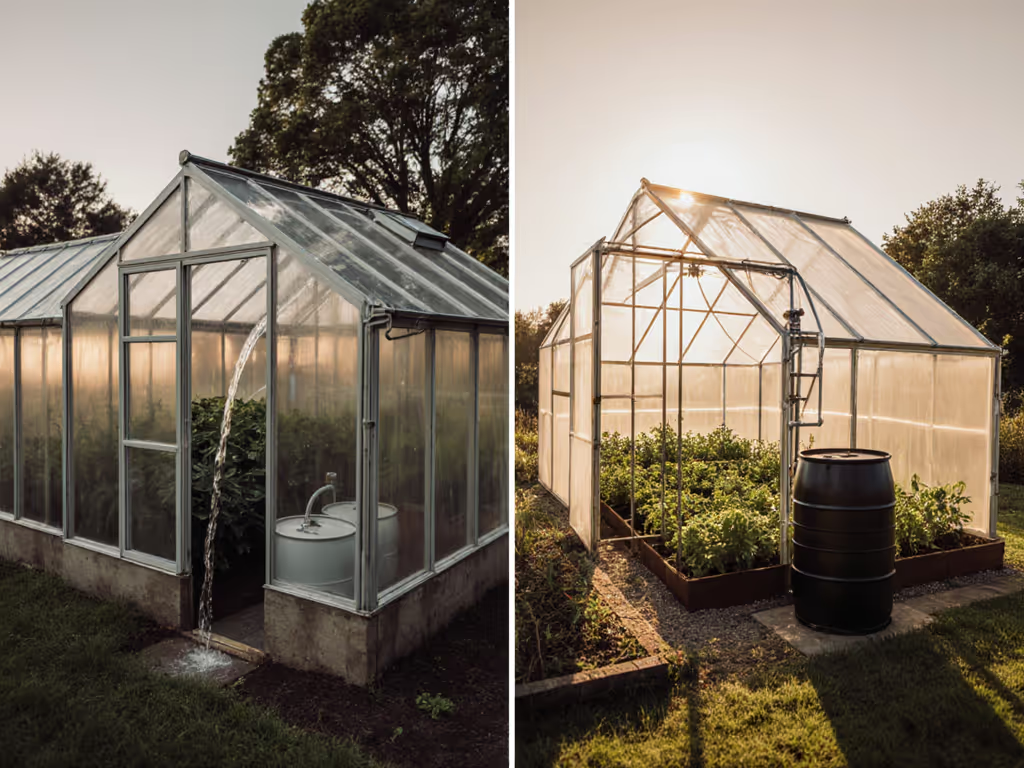
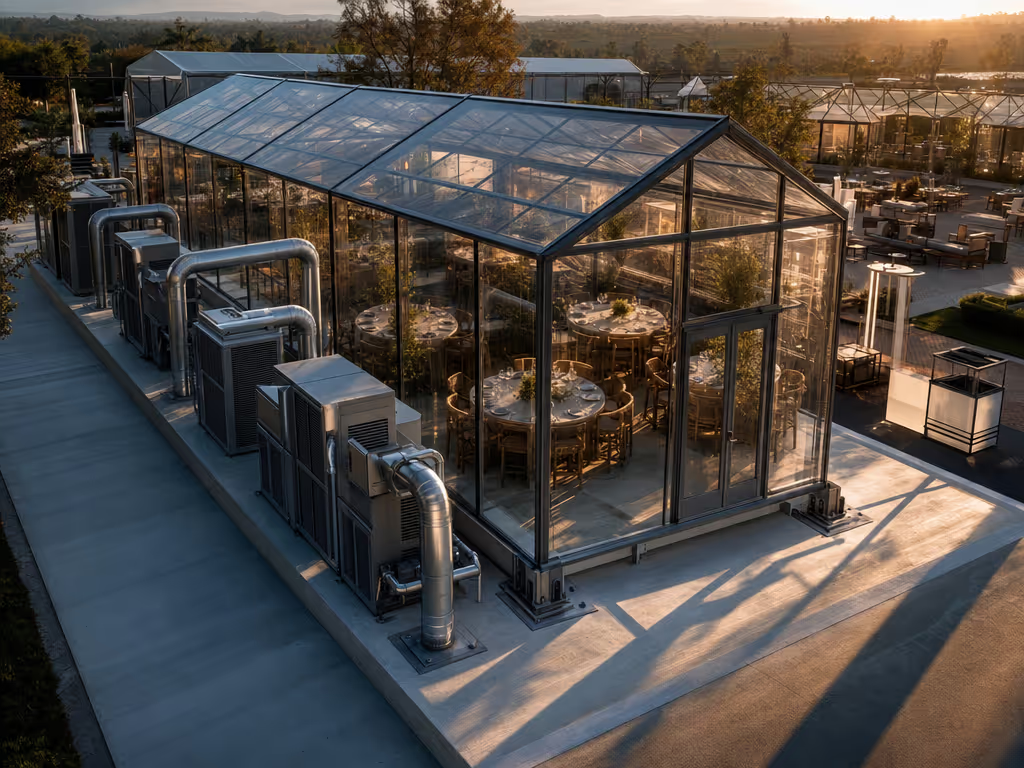
Historical Chicago reporting documents greenhouse-style pods in an outdoor-dining deployment, and Groundswell documents special-occasion rentals of its gardens. Neither example establishes that a greenhouse dining pod is automatically a viable venue. The commercial greenhouse design decision starts with occupancy approval, engineered structure, climate control, and a conservative revenue model, not with how photogenic a transparent dining dome looks at sunset. Numbers first, claims second. Your climate decides the kit.
The key distinction: a backyard greenhouse or outdoor greenhouse built for plants is not, by itself, evidence that it is appropriate for paying guests. Treat every structure, operating plan, and booking forecast as something to verify locally.
1. Confirm the legal use before taking a deposit
A booking calendar is not permission to operate. Before advertising dinners, private events, or a rental greenhouse dining pod, ask the authority having jurisdiction how it classifies the proposed use and what approvals apply to that site.
The 2021 International Building Code includes a chapter on occupancy classification and use, but it cannot tell you (without local interpretation) how your specific transparent dining dome, site, guest count, food service, electrical setup, and egress arrangement will be handled. Confirm the applicable local code edition, amendments, occupancy classification, zoning, and fire requirements with the authority having jurisdiction.
Your pre-booking file should document:
- Proposed use: private dinner, special occasion, ticketed event, or space-only rental.
- Maximum guest count and whether guests enter the greenhouse itself.
- Property zoning and the local occupancy and fire determinations.
- Approval correspondence, permits, and inspection requirements identified for the project.
- Entry, exit, parking, and emergency-response plans.
- Food and beverage responsibilities, including any vendor requirements identified locally.
Do not market a structure as "approved," "all-weather," or "event-ready" unless the relevant local authority and project documents support that statement.
2. Separate plant-greenhouse specifications from guest-safety evidence
A greenhouse for sale may list frame material, panel type, or dimensions. Those details do not establish suitability for commercial dining. The relevant authority and project professionals should determine what evidence your site and proposed use require. Questions about wind, snow, rain drainage, anchoring, glazing safety, foundations, electrical work, exits, and fire safety are location- and project-specific; confirm the applicable documentation rather than treating the list as a universal checklist.
A retailer-published stability guide correctly frames long-term stability as a combined question of rigidity, load distribution, drainage, and ground fixation. That is a useful screening concept, not an engineering certification or a substitute for stamped, location-specific design work.
Rule: If you cannot obtain the structural and site documentation needed for an occupied venue, do not use that structure as the foundation of a booking business.
This is where bargain-kit logic commonly fails. For a deeper look at when storm-proof custom greenhouse kits justify their higher upfront cost, compare the documentation and operating requirements rather than purchase price alone. A low purchase price is not evidence that a structure has the documentation needed for an occupied venue.
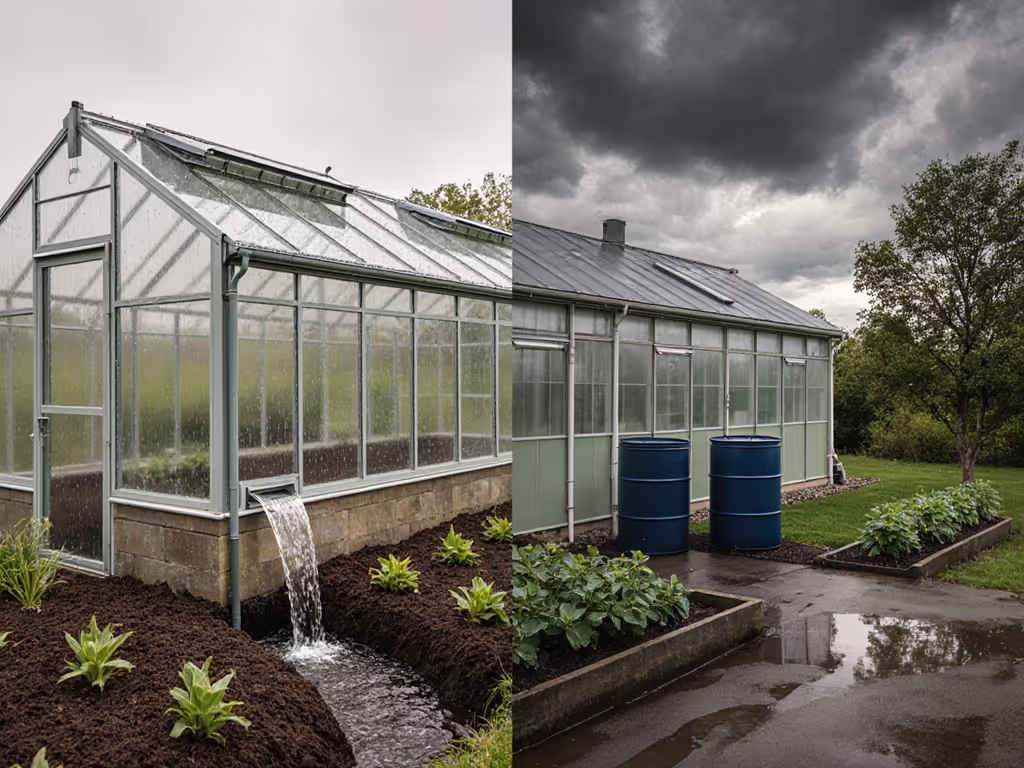
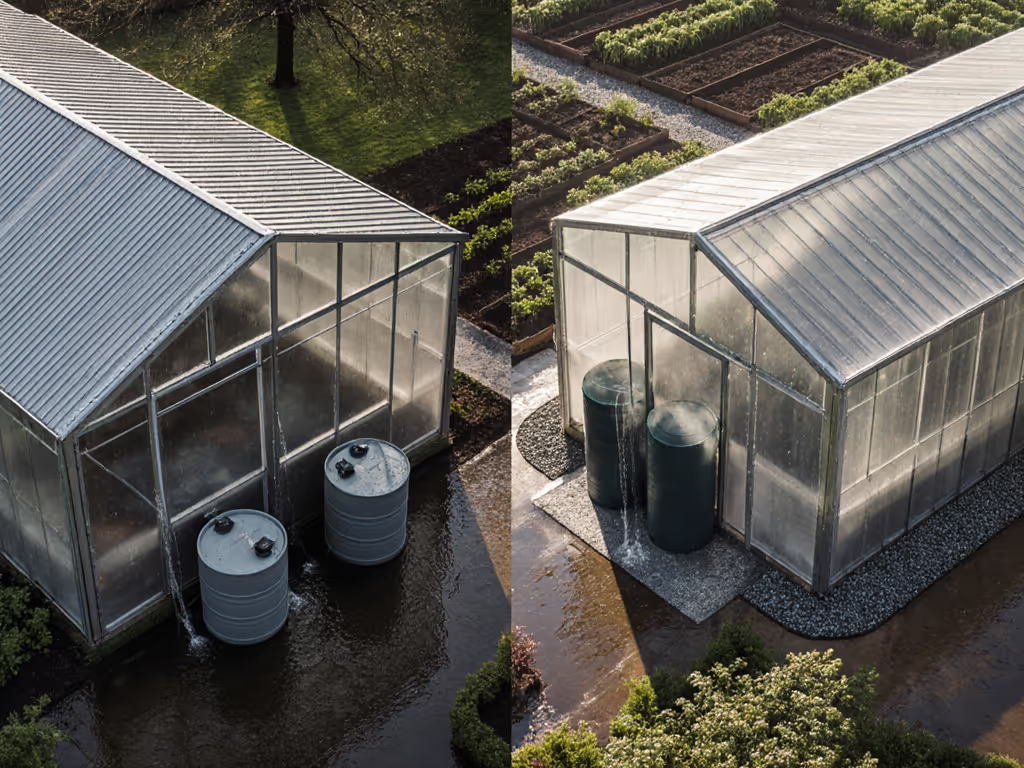
3. Underwrite wind, snow, drainage, and anchors as one system
Structure is not a frame-only decision. Wind is a heating input: the University of Alaska Fairbanks Cooperative Extension reports that greenhouse heating requirement doubles as wind rises from 0 to 15 mph. Use that relationship as a warning against calm-weather utility assumptions, not as a site-specific sizing equation.
Build a site record before requesting quotes or engineering review:
| Site variable | What to document | Why it changes the business case |
|---|---|---|
| Wind exposure | Prevailing direction, gust history, nearby windbreaks | Wind changes heating assumptions |
| Snow and rain | Local design conditions, drift zones, roof drainage path | Provides inputs for project-specific structural review |
| Ground condition | Slope, drainage, frost movement, soil stability | Provides inputs for project-specific anchoring and foundation review |
| Solar exposure | Morning, midday, and late-day sun; tree shade | Drives overheating, glare, and shading needs |
| Access | Delivery, emergency access, guest route | Affects installation and operating feasibility |
Ask a qualified supplier or licensed engineer for the design basis for your location. If the answer is only "it has held up elsewhere," keep looking.
4. Model summer heat as a booking constraint, not an afterthought
Yes, greenhouses can become too hot in summer. Air movement is needed to remove excess heat, and the University of Alaska Fairbanks Extension identifies shading as essential during the warmest part of clear, sunny Alaska days when maintaining or lowering greenhouse temperature is necessary. In hotter or sunnier locations, you should expect this issue to remain central rather than disappear.
The available greenhouse guidance supports heat and airflow risk in crop-production settings; it does not establish diner-comfort temperatures or code-compliant ventilation rates.
Design the operating plan around measurable conditions:
- Log indoor and outdoor temperature during representative sunny and windy days.
- Record when shading, ventilation, or cooling must be activated.
- Set a conservative "pause bookings" trigger until you have actual performance data.
- Include a weather relocation, rescheduling, or cancellation clause in every contract.
Until actual performance data exists, treat heat management as an operating constraint in the booking plan.
5. Treat ventilation as an operating requirement, not decorative hardware
Greenhouse ventilation systems support heat removal and management of humidity and carbon dioxide in crop-production settings. That evidence does not establish diner comfort, venue safety, or code-compliant ventilation rates. For a guest venue, you need an appropriate professional assessment of ventilation and indoor-air-quality requirements for the planned occupancy and equipment.
Historical Chicago reporting from 2020 illustrates why local rules cannot be guessed: temporary structures serving multiple parties had to have at least 50% of sides open, while enclosed structures were limited to one party at a time and required ventilation for air circulation. Those were pandemic-era local conditions, not a current rule and not a model to copy elsewhere.
The actionable lesson is simple: do not build your booking model around a sealed pod until local operating conditions are known. Confirm how doors, operable panels, mechanical ventilation, heaters, cooking equipment, and party separation affect the approved use.
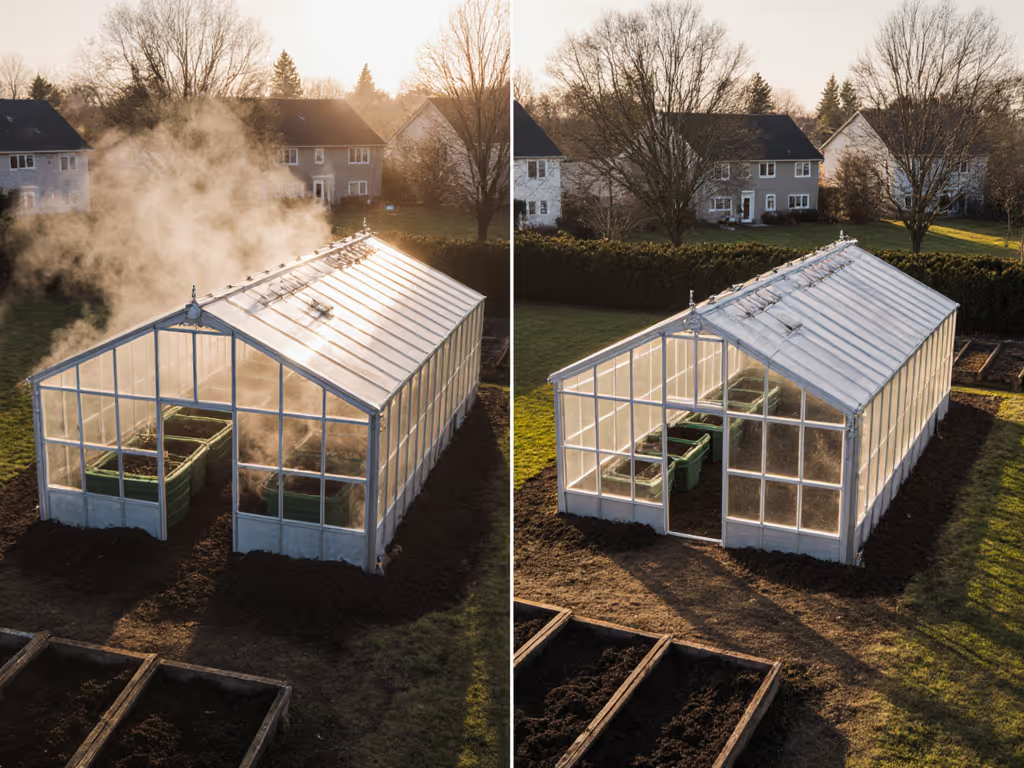
6. Price winter bookings only after you price heat resilience
Historical Chicago reporting documents cold-weather use of greenhouse-style pods in an outdoor-dining program. That example does not establish demand or operating economics elsewhere, and heating can be a major operating-risk line item. The University of Alaska Fairbanks Extension reports that heating represents 65% to 85% of annual energy cost for a year-round commercial greenhouse in national production context. That is not a dining-pod expense forecast, but it is enough to reject casual utility estimates.
Your winter model needs site-specific inputs:
- Rate structure for electricity or fuel.
- Expected operating hours per booking, including preheat and recovery time.
- Wind exposure and air leakage.
- Backup-heat plan and what happens during an outage.
- Labor for monitoring, reset, cleaning, and weather response.
- Minimum booking revenue that covers the variable cost and risk.
The same Extension guidance calls a backup system crucial for year-round commercial greenhouses in Alaska. A review of self-regulating commercial greenhouse kits can also help operators assess whether automated monitoring and climate controls are worth including in the resilience plan. Do not turn that into a universal code claim for venues. Do treat loss of heat as a high-consequence scenario that needs a written response plan before winter bookings open.
7. Build the ROI model from contribution margin, not peak-night revenue
There is no reliable greenhouse-dining-pod-specific dataset here for build cost, average check, utilization, cleaning time, insurance, cancellation rate, or payback period. So a promised ROI would be fiction. Use a transparent scenario model instead.
Start with this calculation:
Annual contribution = (booked events × revenue per event) − (booked events × variable cost per event)
Then calculate:
Annual operating result = annual contribution − fixed annual costs If the concept may later expand beyond one pod, a commercial greenhouse ROI comparison can help distinguish structures that scale seasonally from those that only work as a fixed installation.
And assess payback only after including the full initial cost:
Simple payback years = total installed project cost ÷ annual operating result
Variable costs may include energy, cleaning, linens, consumables, payment processing, event labor, food-and-beverage coordination, and weather-related refunds. Fixed costs may include insurance, permits, software, maintenance, seasonal setup, storage, and marketing.
Use three cases: downside, base, and upside. The downside case should assume fewer bookings, higher heating or cooling cost, and at least some weather interruption. If the project only works in the upside case, it is a hospitality concept, not an investment-grade plan.
8. Do not confuse broad wedding benchmarks with pod revenue
Broad venue-market commentary can help frame questions, but it cannot price your pod. One investment analysis reports that 69% of weddings occur from May through November, with December through February accounting for 9%; it also reports off-peak discounts of 20% to 40%. Those are broad U.S. wedding-market figures cited in investment commentary, not greenhouse dining pod performance data.
That same 2026–2030 investment analysis presents broad venue benchmark estimates of $3,000 to $8,000 per event for space-only rental and $12,000 to $25,000 or more per event for bundled venue, catering, and bar service. These are forecast-period market estimates, not verified prices for small private dinners, greenhouse rentals, or any particular pod. Do not put either range into a pro forma as an expected rate.
Instead, test local willingness to pay with a controlled offer:
- One clearly defined experience.
- One approved capacity.
- One date range and weather policy.
- One set of included items.
- A deposit and cancellation structure that matches your risk.
Track inquiries, conversion rate, booked dates, average revenue, add-on uptake, cancellations, and labor hours. After a meaningful operating period, those are your underwriting numbers.
9. Sell a defined package, because "the pod" is not the product
A dining enclosure is infrastructure. Guests purchase an occasion. The booking page must answer what is included, where the boundaries are, and what happens when conditions change.
Choose one primary package model before expanding:
| Model | Revenue logic | Main control point |
|---|---|---|
| Space-only rental | Fee for reserved use of the setting | Clear limits on setup, cleaning, and vendor access |
| Hosted private dining | Reservation includes service elements | Labor, food-service approvals, and timing |
| Special-occasion garden rental | Site is part of the event experience | Access boundaries, weather plan, and guest flow |
Package mix can matter more than simply raising the rental fee. Broad wedding-venue commentary reports that rentals, catering, alcohol, and space-only offerings are commonly combined in different ways, but that mix should not be treated as a prescription for your operation. Your permits, partnerships, and labor capacity determine what can responsibly be sold.
Write the contract before the launch campaign. Specify arrival and departure times, weather decisions, damage responsibility, cleaning scope, noise, alcohol, children, candles or cooking equipment, accessibility information, and the cancellation/refund process.
10. Compare available rental evidence honestly, and buy no structure on aesthetics alone
A true multi-provider review requires published details on rates, capacity, inclusions, availability, insurance, weather policy, and structure specifications. Those details are rarely published in full, so a ranked product comparison or ROI claim would be misleading.
The one documented example is Groundswell Community Greenhouse and Gardens in Invermere. Its operator describes an award-winning Community Greenhouse with a surrounding permaculture garden and states that the gardens are available for rent for special occasions. That supports considering it as a special-occasion rental example.
It does not establish greenhouse-only guest access, event capacity, rates, catering policy, operating season, amenities, or booking terms. A prospective customer should ask those questions directly rather than infer them from the greenhouse description.
For an owner evaluating a new greenhouse for sale, the comparison standard should be equally strict: published site-specific structural documentation, clear operating limits, a viable permit path, and tested climate performance. A beautiful backyard greenhouse is not proof of a commercial venue.
Final Verdict: Make the booking model earn the structure
If local review supports the proposed use, a limited special-occasion pilot may be worth testing, but no greenhouse-pod-specific operating data here establishes the business case. The decision should rest on approved use, engineered structure, real climate data, controllable ventilation and heat, and package economics that survive the downside case.
Start with a site and compliance review. Next, collect weather and operating measurements. Then run a limited, clearly contracted pilot before committing to a full calendar or a larger build. Do not use broad wedding statistics, a greenhouse kit listing, or a temporary-pod photo as a revenue guarantee.
The final buying rule is the simplest one: choose the structure only after you know the climate load, occupancy path, and minimum profitable booking volume. Test before trust.
Related Articles