Greenhouse for Sale vs Rental: Cost and Climate Fit
By Maya Okonkwo • 19th Aug
Quick verdict
Buying gives you an up-front kit price, while renting gives you provider-specific terms—but neither is automatically cheaper or more climate-suitable.
- Choose a purchase if: You need a long-term structure and want to compare dimensions, materials, and retail starting prices.
- Choose the documented rental if: You need a defined classroom activity: Profaqua describes a 30-day mini-greenhouse loan with delivery, installation, growing inputs, and training. Its terms are not evidence of a general residential or seasonal rental market.
- Main trade-off: Purchase prices can be compared more directly, but ownership leaves more project costs unresolved. Rental terms may include services, yet charges, responsibilities, removal, damage, and local suitability must be confirmed in writing.
Important: Profaqua’s page contains conflicting duration and pricing details, so its $60 weekly charge and separate $175 figure should not be combined into an assumed all-in 30-day cost.
A greenhouse for sale and a rental solve different problems, but neither transaction type answers the question that matters most: can the structure and its climate controls handle your site? If you plan to buy greenhouse equipment, compare the up-front kit price with the site work and environmental controls it will require. If you need temporary greenhouse access, first confirm that the rental is actually designed for your use case, not simply advertised as a greenhouse.
Numbers first, claims second. Your climate decides the kit.
What is the practical difference between buying and renting?
Buying gives you a retail kit price to evaluate; renting gives you provider-specific terms to scrutinize. Available examples document retail kit purchases and one educational mini-greenhouse rental. They do not support a general conclusion that renting is cheaper, more convenient, portable, or available for a home growing season.
Here is the clean comparison.
| Decision point | Greenhouse kit purchase | Documented rental example |
|---|---|---|
| What is documented | Retail listings for kits in varied materials, sizes, and styles | A classroom workshop involving a mini greenhouse |
| Known price basis | Up-front, seller-listed kit price | Provider-listed weekly equipment charge plus other possible charges |
| Included services | Not established by the retail listings | Delivery, installation, seeds, soil, and 30-minute training are provider-stated inclusions |
| Best use of the evidence | Set a starting purchase budget | Evaluate a specific educational, 30-day offering |
| What remains unknown | Delivery, assembly, foundation, electrical, climate equipment, permits, and operating cost | Damage, repairs, removal, utilities, insurance, and whether terms fit a home or farm use |
The key distinction is scope. For a structured way to match a greenhouse to your goals, site, and budget, use this greenhouse design planning guide. A kit listing tells you what a seller has for sale at a given time. A rental agreement should tell you what happens before delivery, during use, and at return. Do not fill in missing terms with assumptions.
What does a greenhouse for sale actually cost?
Use listed prices as an entry number, not a finished budget. As of August 19, 2026, a major retailer's category page listed a VEIKOUS 8 ft. × 10 ft. cedar greenhouse with a roof vent at $999.99 USD and a Backyard Discovery Zalie 12 ft. × 7 ft. all-cedar greenhouse at $2,999.00 USD.
Those are two current retail observations, not market averages and not installed-cost estimates. The same category allows filtering by panel material, frame material, style, dimensions, and floor options, useful for narrowing a search, but not proof that a given kit is suitable for wind, snow, or your local code.
Before you interpret a kit price as affordability, make a separate line for each of these:
- delivery and unloading;
- foundation or site preparation;
- anchoring method and any required engineering;
- electrical access;
- ventilation and shading equipment;
- heating, if you intend to operate through cold periods;
- permit review or HOA compliance where applicable; and
- maintenance and replacement parts.
A low advertised price can still be the right choice, but only after you identify what it excludes. Test before trust: request the exact structural and envelope documentation you need before treating a listing as climate-ready.
Is a short-term greenhouse solution available, and what does it cost?
One documented option is a classroom program, not evidence of a general residential rental market. As of August 19, 2026, Profaqua's "Greenhouse - Rental" offering was described as a classroom workshop and a 30-day mini-greenhouse loan.
Profaqua states that the rental includes delivery, the greenhouse, fine-herb and legume seeds, soil, installation, and a 30-minute training session. It also states that it handles delivery and installation, while the customer provides greenhouse storage space and access to electrical outlets. These are Profaqua's published terms, not standard rental-industry terms.
Its page listed a $60-per-week equipment-rental charge with a minimum of one month. Four weeks of that stated charge is $240, before travel, taxes, workshop charges, and any other fees. Profaqua also listed a minimum travel cost of $25, based on distance. The page displayed a separate $175 price but did not explain whether that amount is included in, additional to, or an alternative to the weekly equipment charge. Do not add the figures and call the result a 30-day total.
There is also a return-condition detail worth noting: Profaqua's page says equipment must be cleaned before the animator's scheduled arrival or a $50 plus taxes fee applies. Again, that is a service-specific condition, not a universal rental rule.
When does this kind of rental make sense?
A documented classroom rental makes sense when your goal is a defined educational activity with delivery, setup, inputs, and training included by the provider. It is not enough evidence to recommend it as a household's seasonal structure, a market garden's production space, or an alternative to buying a backyard kit.
For any prospective rental, get the agreement in writing and ask:
- What are the delivered dimensions, materials, and structural ratings?
- Who approves the site and confirms anchoring requirements?
- Who pays for electricity and environmental-control equipment?
- Who handles storm damage, repairs, cleaning, and end-of-term removal?
- Is insurance required, and who bears liability?
- What are the full charges: delivery, installation, deposits, travel, taxes, late return, and damage?
- Is the structure permitted at your address for the intended duration and use?
Why climate fit matters more than rent-versus-buy math
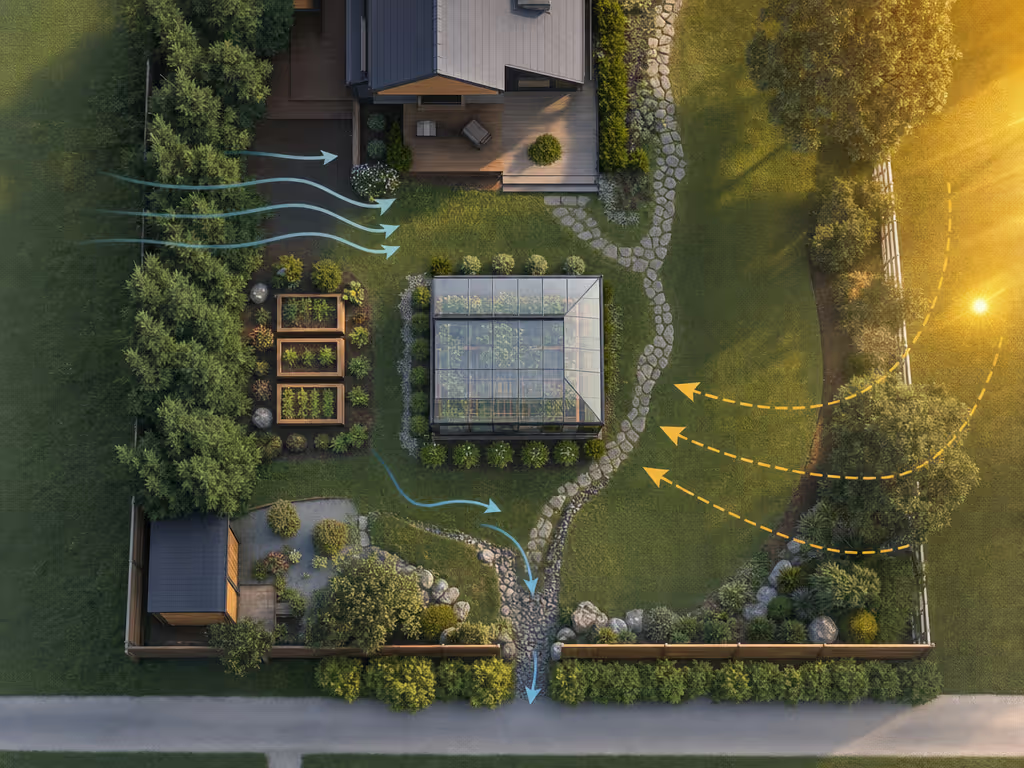
Climate requirements follow the greenhouse, not the payment method. A rented structure still needs a safe site, adequate airflow, and compliance with local requirements. A purchased kit still needs those same controls after the checkout page closes.
University of Alaska Fairbanks Cooperative Extension identifies airflow as necessary to remove excess heat and control relative humidity and carbon dioxide within the plant canopy. In plain English: vents and air movement are not decorative upgrades. They are part of the system that prevents a hot, damp interior from drifting away from the conditions you intended to create.
Heating exposure is equally site-dependent. The same Extension guidance reports that heating requirement doubles as wind speed rises from 0 to 15 mph in the greenhouse heat-loss context it describes. That does not predict your utility bill, but it does explain why a sheltered yard and an exposed ridge can produce radically different operating demands with the same greenhouse.
For year-round commercial greenhouses, heating represents 65% to 85% of annual energy cost in the national figure cited by the Extension publication. Do not apply that range as a homeowner budget. Treat it as a warning about the dominant variable: if your plan relies on winter heating, envelope performance, wind exposure, controls, and utility rates deserve more attention than the initial transaction type.
New York State energy guidance similarly notes that, where heating is required much of the year, more precise ventilation systems may help reduce heat loss and energy costs. It does not promise a specific savings amount for a particular greenhouse.
Build your climate-fit checklist before requesting quotes
Use this checklist for a greenhouse for sale and any rental proposal:
- Wind: Identify the most exposed direction and ask for published wind design information and anchoring instructions.
- Snow: Ask for published snow-load ratings in psf if snow is a credible local load. If the seller or provider cannot document it, do not substitute appearance for evidence.
- Heat: Map clear-day sun exposure and specify how excess heat will leave the structure, roof vent, side vent, fan, or another documented approach.
- Humidity: Define how air will move through the plant canopy, not merely whether the door opens.
- Shade: Plan shading before the warm season. UAF's guidance calls shading essential during the warmest part of clear, sunny Alaska days; your local threshold and solution still need local planning.
- Power: Confirm electrical access and who supplies, installs, and operates any powered equipment.
- Drainage: Inspect where water moves after rain or snowmelt. Do not site a structure in a low point simply because it is out of the way.
A late-season storm is a poor time to discover that an anchor plan was vague or that a frame lacks the bracing its site demands. Measure exposure first; then compare published ratings, bracing details, and installation instructions.
Does a temporary structure avoid permits?
Never assume it does. UMass Extension explains that greenhouse code enforcement and permit requirements vary across U.S. communities, with local building officials retaining significant discretion. Some projects may require an engineer's seal or foundation posts set in concrete.
There are narrow exceptions in some places, but they are not transferable rules. For example, UMass describes a New Jersey farm-structure exemption with specific conditions: a temporary greenhouse or hoophouse under 31 ft. wide, flame-retardant film plastic, no permanent anchoring, and exclusive use for live-plant production or storage. That example is not a universal exemption for a kit, rental, or backyard structure elsewhere.
Call the local building official before signing a rental agreement, ordering a kit, or preparing a foundation. Ask about setbacks, anchoring, snow and wind design criteria, electrical work, and duration limits. This is installation safety, not paperwork trivia.
Which choice fits your decision?
Choose based on the decision you are trying to make, then apply climate requirements without compromise.
- Consider the documented Profaqua-style rental only if you need a time-bounded classroom activity and its stated service area, site requirements, and charges work for you.
- Start with a retail kit search if you need to compare dimensions, materials, and up-front prices, but keep the purchase price separate from total project cost.
- Pause either path if wind, snow, ventilation, shade, site drainage, or permitting is unresolved. A quote cannot correct an unmeasured site. Also account for the seasonal maintenance tasks that protect performance and help control long-term ownership costs.
I favor verified wind and snow ratings, cross-bracing, sound anchoring details, and documented thermal performance over looks. That bias is practical: climate loads and heat management are the parts that decide whether a greenhouse remains useful after the first serious weather swing.
Frequently asked questions
Where is the best place to buy greenhouses?
No single seller can be called "best" from what is currently documented. As of August 19, 2026, Home Depot's greenhouse-kit category showed kits across multiple materials, frame types, styles, dimensions, and floor options. Use any retailer listing as a starting point, then compare the exact model's published structural specifications, delivery terms, parts support, and local-fit requirements.
Are backyard greenhouses worth it?
They can be worth evaluating when the structure's cost and climate controls match a defined use, site, and budget. The information available does not provide homeowner yield, lifespan, or utility-cost data that would justify a universal yes. Build a decision around your full project scope, especially wind exposure, heating need, ventilation, and permitting, not the kit price alone.
Can plants stay in a greenhouse all winter?
That depends on the interior conditions your greenhouse can maintain and on local winter exposure. Winter operation may require heating, and wind can materially increase heat loss. No general answer can establish safe winter conditions for a specific structure, site, or plant. Define the temperature, humidity, airflow, and energy plan first.
Where can I find discounted or cheap greenhouses?
Retail listings can show current prices or sale prices, but one listing does not establish the best discount source or the lowest total cost. Compare the delivered, installed, climate-ready scope. A lower kit price may omit the items that make it safe and functional on your property.
Further exploration: turn comparison into a site-ready decision
Before you buy greenhouse equipment or pursue temporary greenhouse access, create a one-page brief: intended duration, site exposure, expected snow and wind, electrical access, drainage, ventilation plan, and local permit answer. Then request quotes or product documents against that same brief.
That method prevents false comparisons between a bare kit price and a service-inclusive rental fee. More importantly, it keeps the decision grounded in the conditions your greenhouse must actually survive. Test before trust.
Related Articles