Gothic Arch Greenhouse Roofs: Choosing the Safest Shape
By Takumi Sato • 17th Sep
What to do
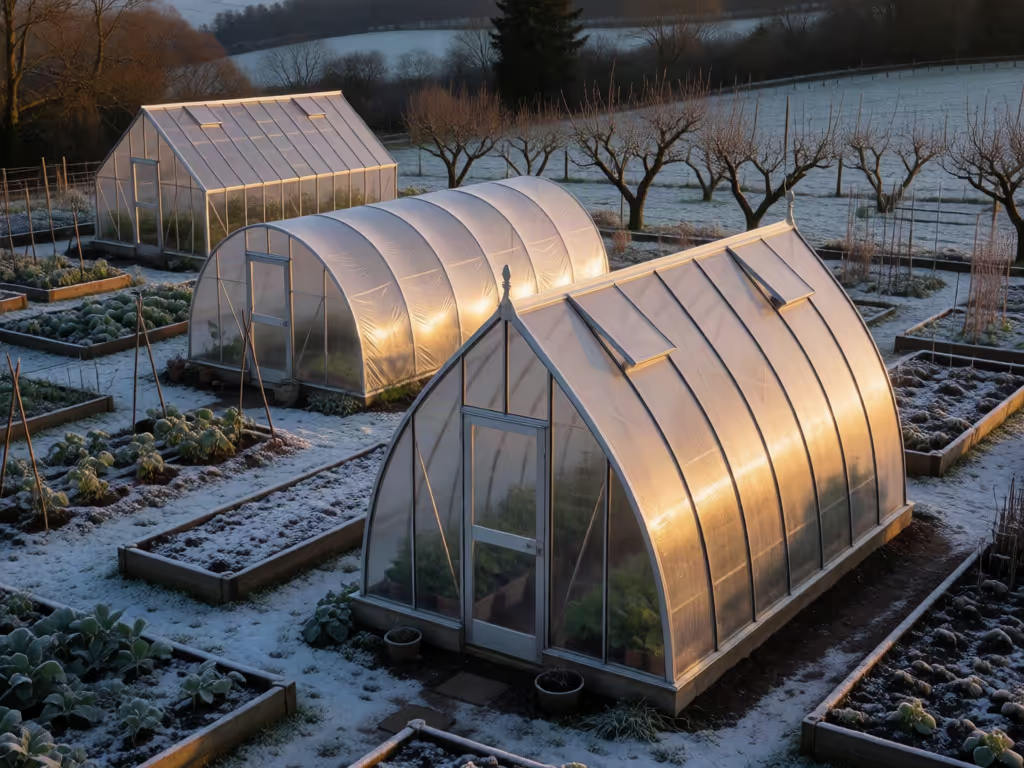
Choose a gothic arch only as a documented, site-matched structure—not because its pointed roof looks safer. Roof shape affects snow behavior, light, headroom, and ventilation, but the complete design, anchoring, foundation, and installation determine structural suitability.
- Start with: Assess sunlight, wind exposure, drainage, tree-line clearance, and local requirements before comparing roof profiles.
- Then: Compare gothic, round, and gable options by their documented snow and wind design, supports, connections, foundation, anchoring, and glazing—not by silhouette alone.
- Important prerequisite: There is no universal safest shape or ideal pitch. Confirm current local requirements and obtain complete engineering and installation information for the actual site.
Important: A steep or pointed roof may help with snow shedding or vertical crop space, but it does not eliminate snow-load design, inspection, or site-specific wind and foundation concerns.
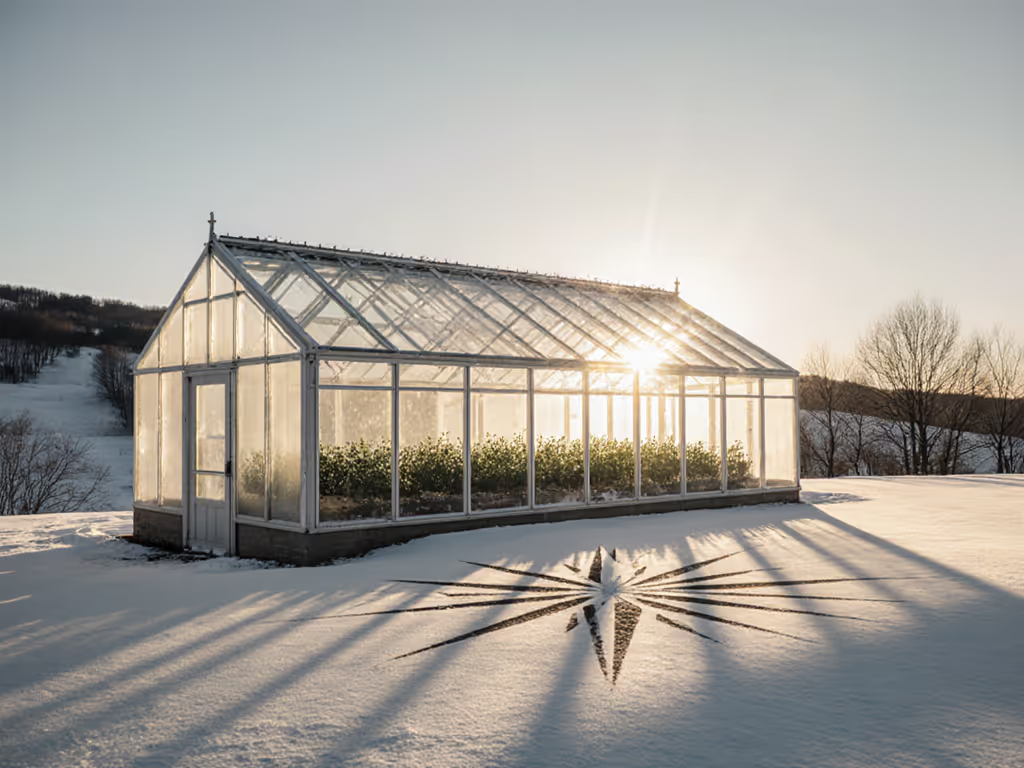
A gothic arch greenhouse can be a sensible choice when snow is part of your design problem, but a greenhouse roof shape is not a safety rating. The safest shape is the one supplied as a complete, documented structure for your local snow and wind exposure, then installed exactly as designed on a suitable site. Strong enough is not enough. A handsome pointed roof on token anchors is still a failure waiting for the first bad forecast.
That distinction matters because roof silhouette is easy to shop; structural integrity is harder to verify. After one coastal storm, I saw too many twisted hoops whose owners had trusted the curve and skipped the serious work underneath. The structures rebuilt with stronger anchoring, added support, and a more deliberate roof profile were the ones still standing when the next hard wind arrived.
Is a Gothic Arch the Safest Greenhouse Roof?
Not universally. The available evidence does not support naming gothic, round, or gable as the safest greenhouse roof in every climate.
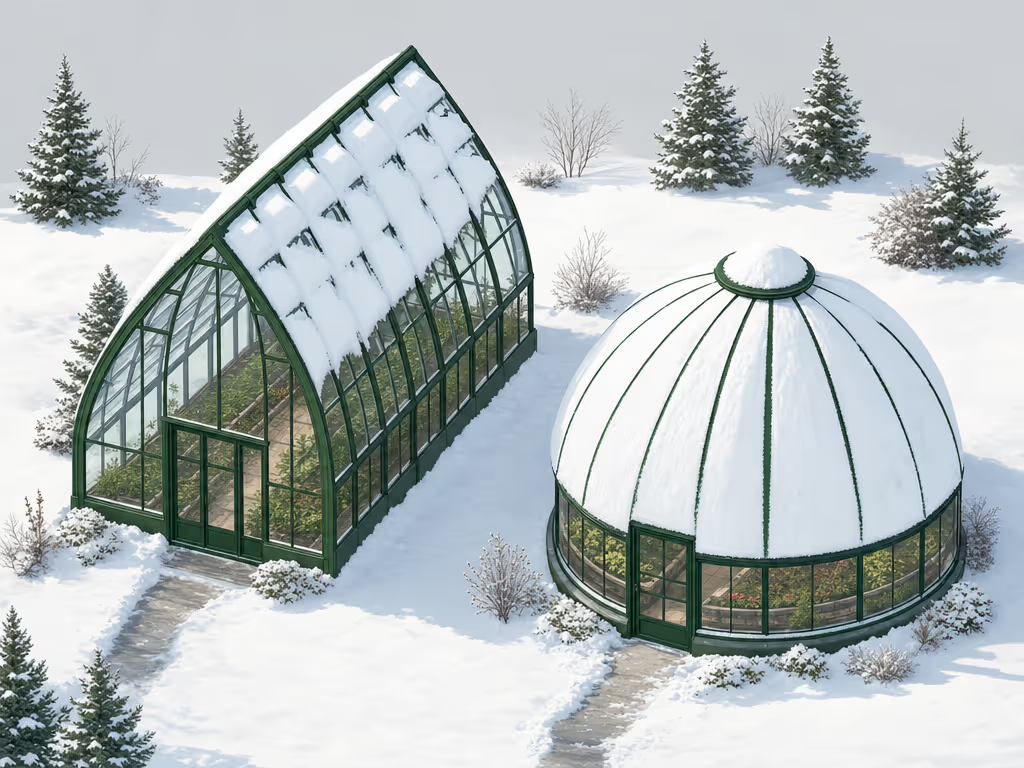
A gothic-style hoop has a tall, pointed peak and steeper-sloped sides. A round, or Quonset, hoop is a half-circle. Purdue training also includes a gable-style single-span design example. These profiles create different practical tradeoffs, but none tells you the critical details on its own:
- frame size and member spacing;
- span and support layout;
- connections and glazing attachment;
- foundation and anchoring;
- wind exposure, terrain, and site conditions;
- documented snow and wind design information; and
- installation quality.
Purdue's greenhouse-construction guidance treats snow, live, dead, and wind loads as structural loads, with overall design using the higher of snow or live load. In plain terms: do not select a kit because its roof looks like it will shed snow. Verify what the complete greenhouse is documented to handle for your location with these snow load ratings.
Overbuild once; sleep through the wind warnings at night.
Why the Gothic Profile Still Deserves a Close Look
A pointed profile is not proof of safety, but it is a legitimate starting point for a snow-conscious buyer. A retailer describes gothic hoops as tall, peaked structures with steeper roof slopes and associates them with greater vertical room for trellising than round hoops. Purdue also illustrates a gothic-arch high-tunnel design with horizontal beams and end-wall support (an important reminder that the roof form shown in a catalog is not the whole structure).
For tall tomatoes, cucumbers, or other trellised crops, the high central zone may be useful. Treat that as a layout benefit, not as a universal dimension or a substitute for engineering documentation.
How Much Does Roof Pitch Matter for Snow?
It matters, but not alone. Purdue notes that sloped-roof snow load is calculated from ground snow load using several inputs: wind exposure, terrain, whether the greenhouse is heated, and roof pitch. That is the right mental model. Pitch is one variable in a load calculation, not a permission slip to ignore snow.
Purdue training also states that snow sliding does not occur below a 30-degree roof angle. The collected material does not specify snow type, roof surface, temperature, or maintenance conditions behind that statement, so do not stretch it into a guarantee that snow will slide at any particular pitch.
The numbers get serious quickly. Purdue reports that just 3 inches of wet, heavy snow can add 5 pounds per square foot to a greenhouse roof. That is why “it has a steep peak” is not an adequate answer to “what load is this structure designed for?”
Is There an Ideal Greenhouse Roof Pitch?
No universal ideal pitch is supported. Current design practice cited in a Rutgers-authored workshop places roof slope around 27–30 degrees, approximately a 1-in-2 slope, while Purdue training lists common greenhouse pitches of 4:12, 5:12, and 6:12. Those are reference points, not a universal safety prescription.
Pitch also affects light. The amount of solar radiation reflected by and transmitted through glazing changes with roof angle. Maximum transmitted light occurs when a glazing surface is perpendicular to the sun, although that alignment is brief during the day. Choose pitch as part of a whole plan for structural loads, seasonal light, and crop use.
Gothic vs. Round vs. Gable: What Is the Practical Difference?
Gothic arch greenhouse
Choose this profile for closer evaluation if you want a tall, pointed interior shape and intend to trellis vertically, then compare commercial gothic arch greenhouse kits for structural details. Supplier and retailer materials describe the steeper, peaked profile as favorable for snow shedding, but that is not an independently verified load rating. Ask for the actual structural documentation, including the support configuration used for the stated conditions.
Round greenhouse
A round greenhouse is the familiar half-circle or Quonset form. It may be a viable choice, but do not assume a curved roof is automatically safer in snow or wind, or automatically weaker. The evidence does not provide an independent, otherwise-identical comparison of round and gothic structures.
Round greenhouse ventilation should be evaluated as a complete layout question: where openings are located, how air will move through the growing space, and how you will manage hot periods. There is no reliable head-to-head evidence here establishing a general passive-ventilation winner between round and gothic forms.
Gable greenhouse
Purdue's single-span design example includes roof ventilation and a Fink truss for even load distribution. That is an example of one design, not proof that every gable greenhouse has those components or that gable is safer than a gothic arch.
If you are comparing a greenhouse shed or other yard structure with a greenhouse, resist the urge to transfer a familiar roof preference without reviewing the greenhouse's actual documentation. Select the greenhouse on its own listed structural design and site fit.
What Should You Verify Before Buying Any Roof Shape?
Use this short failure-prevention checklist before you place an order or break ground.
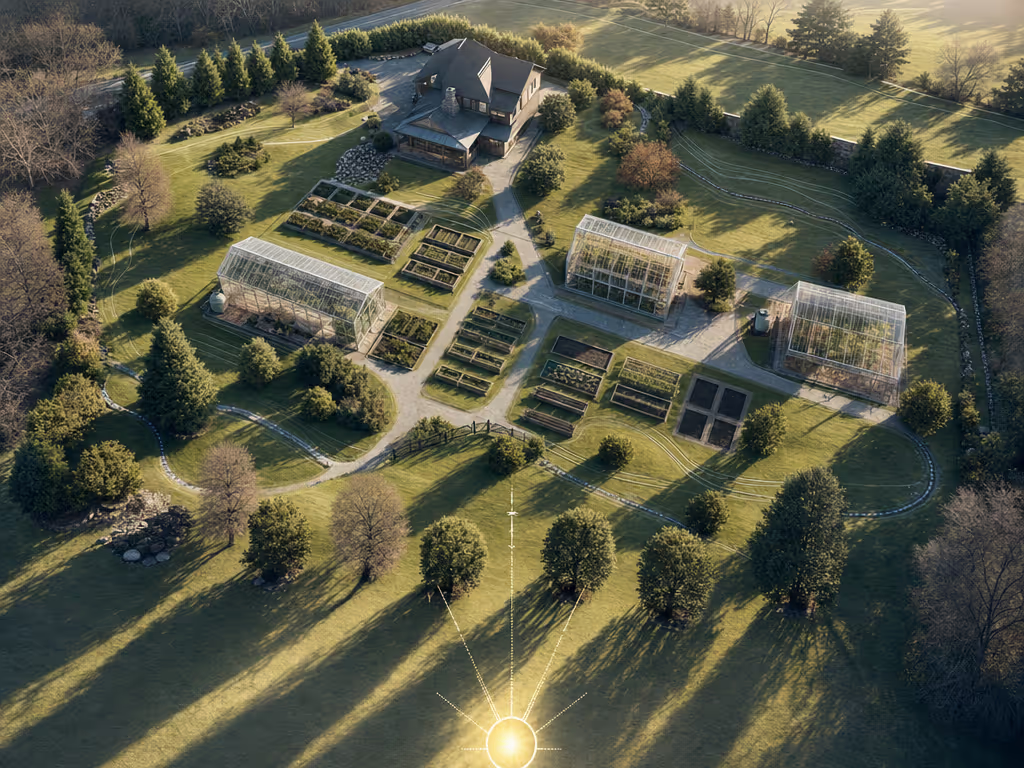
- Start with the site. Map sunlight patterns, wind exposure, drainage, utilities, accessibility, and future shade. Avoid high-wind sites where possible; Purdue warns that high winds can raise winter heating costs and damage roofs and structures.
- Check tree-line clearance. Purdue recommends keeping the longer of 2.5 times tree height or 100 feet from a tree line to avoid snow drifts and shadows.
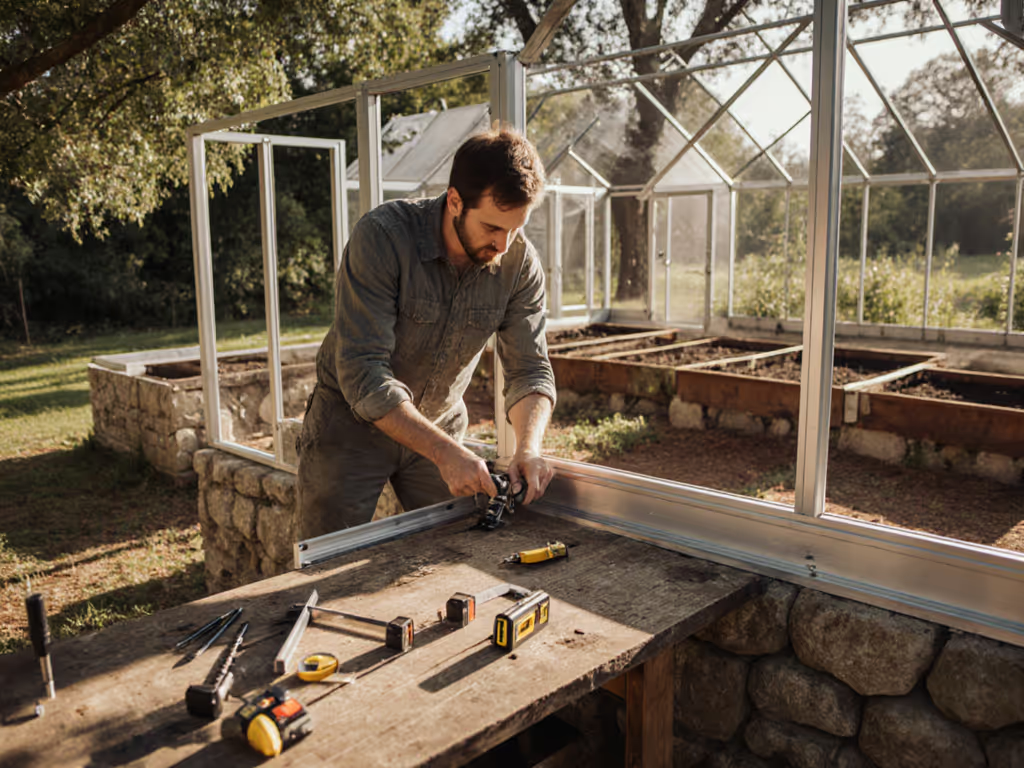
- Request complete structural information, including guidance on foundations for different soil conditions. Do not accept a shape-only claim. Ask what support members, end-wall support, foundation, anchoring, and installation conditions are included in the documented configuration.
- Match the design to local conditions. Obtain current local requirements and confirm that the proposed structure and installation suit them. Do not bypass permits, HOA rules, or building-code guidance.
- Plan for inspection and snow management. A roof designed for snow load still deserves checks during prolonged accumulation. Do not climb onto a greenhouse roof or improvise rooftop snow removal; use a method appropriate to the structure and conditions.
For orientation, Purdue recommends an east-west ridge for single-span greenhouses above 40° north latitude to plan for winter light from the south. Its guidance for multi-span greenhouses above that latitude is north-south ridges for better light distribution. Those are specific recommendations, not a replacement for a site assessment.
Does a Greenhouse Need a Clear Roof?
Not necessarily. The evidence does not establish that an optically clear roof is required. What matters is transmitted crop light, which depends on glazing, roof angle, and shading from structural supports.
For example, the Rutgers workshop reports laboratory total PAR transmittance for new polyethylene film of about 90% with one layer and 80% with two layers. Those figures apply to new polyethylene film in the PAR waveband; do not use them to compare other glazing materials. Separately, a polycarbonate manufacturer describes multiwall panels as using internal air chambers for insulation and diffuse transmitted light.
The practical lesson is simple: judge glazing and roof form together using tested comparisons of polycarbonate, glass, and plastic film glazing. More apparent transparency does not automatically mean more useful light at crop level once angle and structural shading enter the picture.
FAQ: What Are the Advantages of a Gothic Arch Greenhouse?
The supported advantages are qualified rather than absolute: a gothic arch is a tall, pointed, steep-sloped form; sellers associate it with snow shedding; and a retailer describes more vertical trellising space than in a round hoop. Its high central space can be attractive for tall crops.
The non-negotiable caveat is that greenhouse structural integrity depends on more than shape. Foundation integrity, hardware, anchoring, and installation precision remain critical alongside the profile.
FAQ: What Is the Best Roof for a Greenhouse?
The best roof is the one that has documented structural suitability for your site while meeting your crop, light, and operating needs. For a snow-prone location, a gothic profile may be worth prioritizing in your comparison, but only after you have confirmed the complete structural design. For a windy or exposed location, evaluate site selection, specified anchoring, and installation alongside the roof profile.
Your Next Step: Compare the Documents, Not the Drawings
Make a one-page comparison sheet for every candidate greenhouse roof. List its form - gothic, round, or gable - then add the documented snow and wind design information, support layout, anchoring/foundation requirements, glazing, and siting constraints. Cross out any option that cannot answer those questions clearly.
A gothic arch greenhouse may be the right shape for your property. But the safe decision is never “pointed versus round.” It is a complete structure, matched to the site, with no weak link left for snow or wind to find.
Related Articles