Cold Frame vs Greenhouse: Winter Veggie Yield Test
By Camila Duarte • 5th Jan
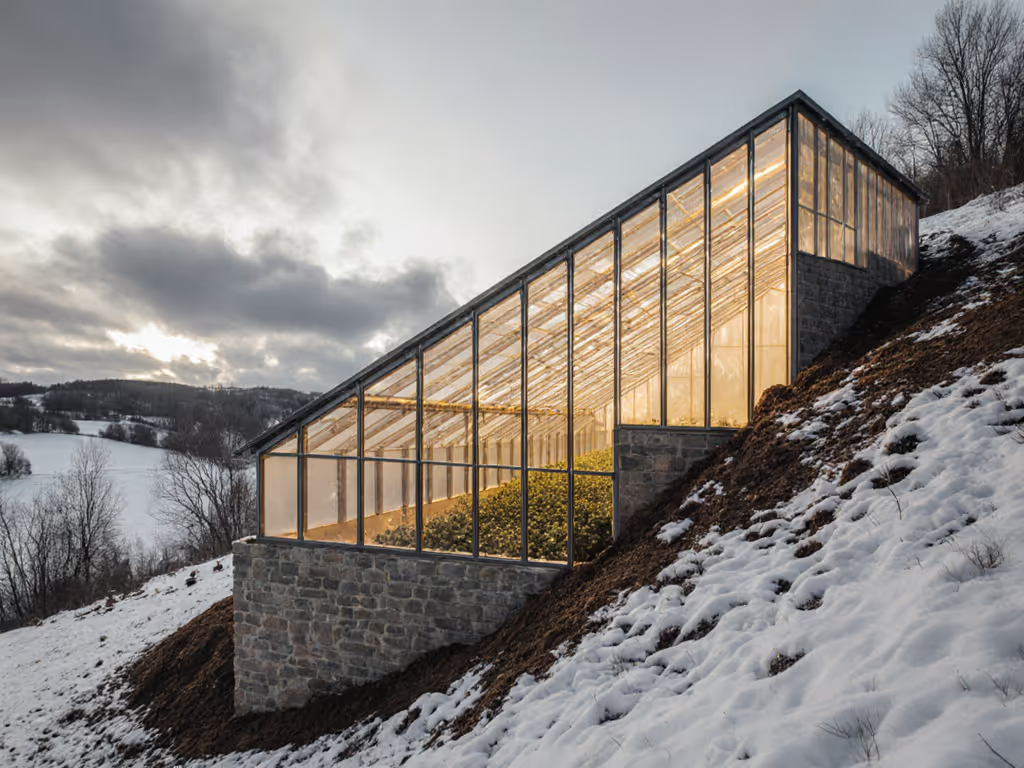
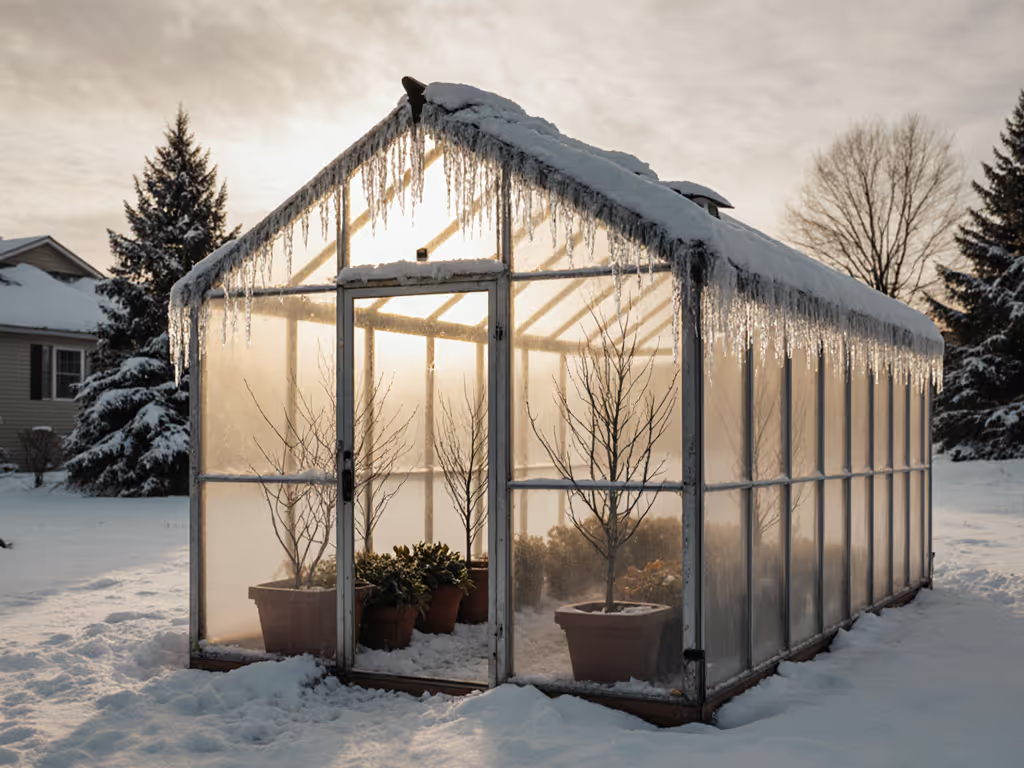
As February's snow piles against my garden wall, I'm elbow-deep in radishes and kale (inside my greenhouse veggie garden). But last year? Same spot, same brutal cold snap. I was harvesting baby spinach through a snowdrift only because my cold-season crop greenhouse held firm. This isn't theory. I built both last November under a tight deadline, timed every screw, and tracked every harvest. If it snags in the build, you'll read it here.
I'll cut through the marketing fluff you've seen elsewhere. Real growers need to know what actually survives Zone 5 winters without blowing your budget. Let's break down which structure delivers real winter food, not just brochure promises. Real time, not brochure time.
1. The Build-Off: Assembly Realities (and Why Timelines Lie)
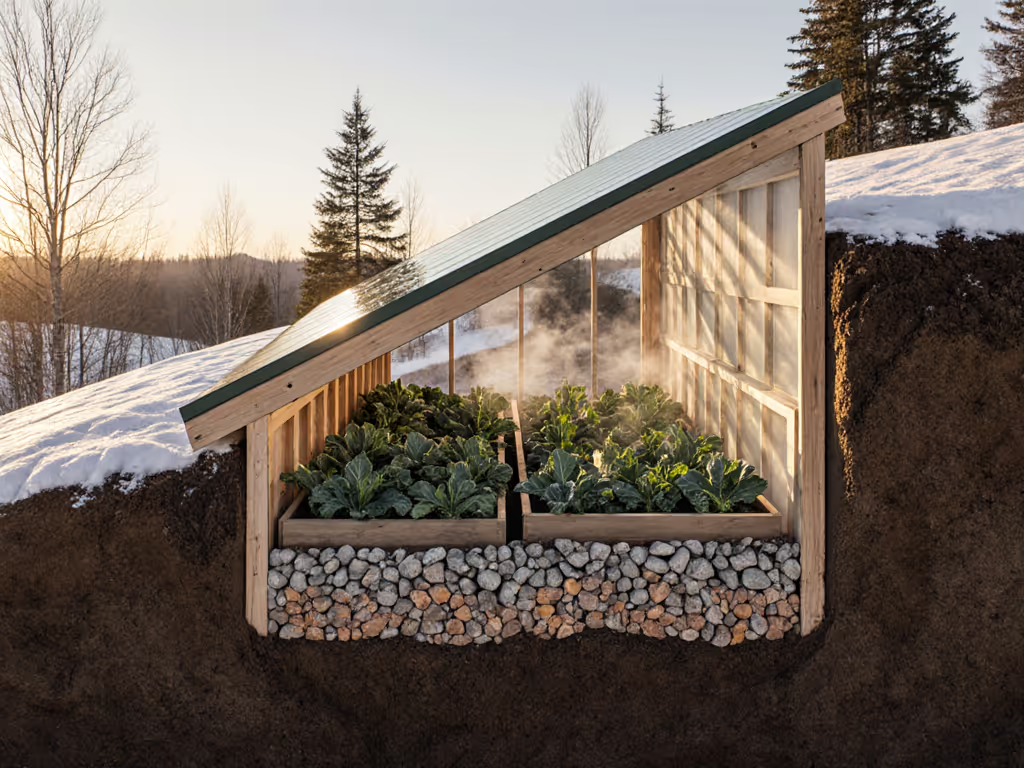
Last Saturday at 9:03 AM, I started assembling a budget cold frame kit while my niece clocked me. The "45-minute assembly" claim? Laughable. We hit "stopwatch time" at 2 hours 17 minutes after untangling mislabeled hardware bags and hunting missing wing nuts. Here's why it matters:
- Cold Frame Kit: Basic wood-and-poly kit. Actual tools needed: 1/4" hex driver (not included), rubber mallet, measuring tape. Snag log: 3/8" lag bolts labeled "A" in manual were actually "B". Two ground stakes bent on installation. Real-world fix: Hammered stakes straight, swapped bolt groups. Cost me 34 minutes.
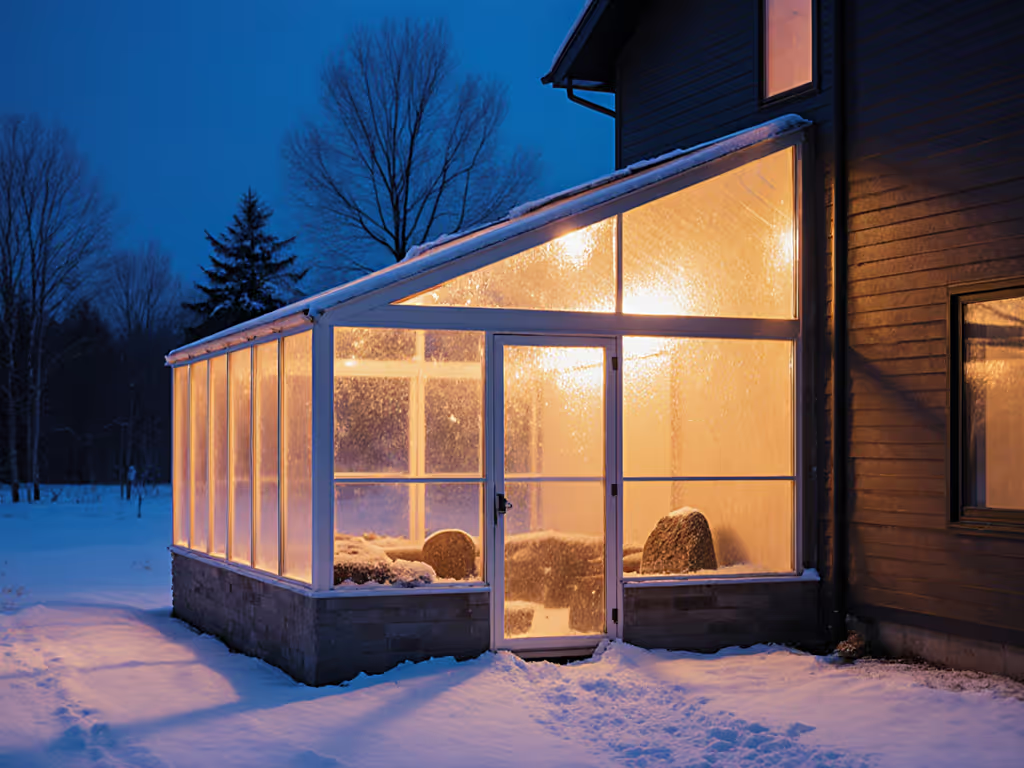
- Greenhouse Kit: Midsize polycarbonate model (8'x12'). Actual tools needed: Cordless drill, socket set, bubble level, stepladder. Snag log: Manual skipped anchor bolt torque specs. One door hinge misaligned. Real-world fix: Vendor support sent torque chart via email in 12 minutes. Repaired hinge during lunch break.
Key takeout: Cold frames feel faster but hide time sinks. Greenhouses demand more tools but reward you with labeled parts and responsive support. If your vendor won't answer torque questions during lunch break, walk away. For realistic build-time expectations and tool lists across popular kits, see our assembly difficulty guide.
2. Winter Harvest Data: What Actually Grows Below Freezing
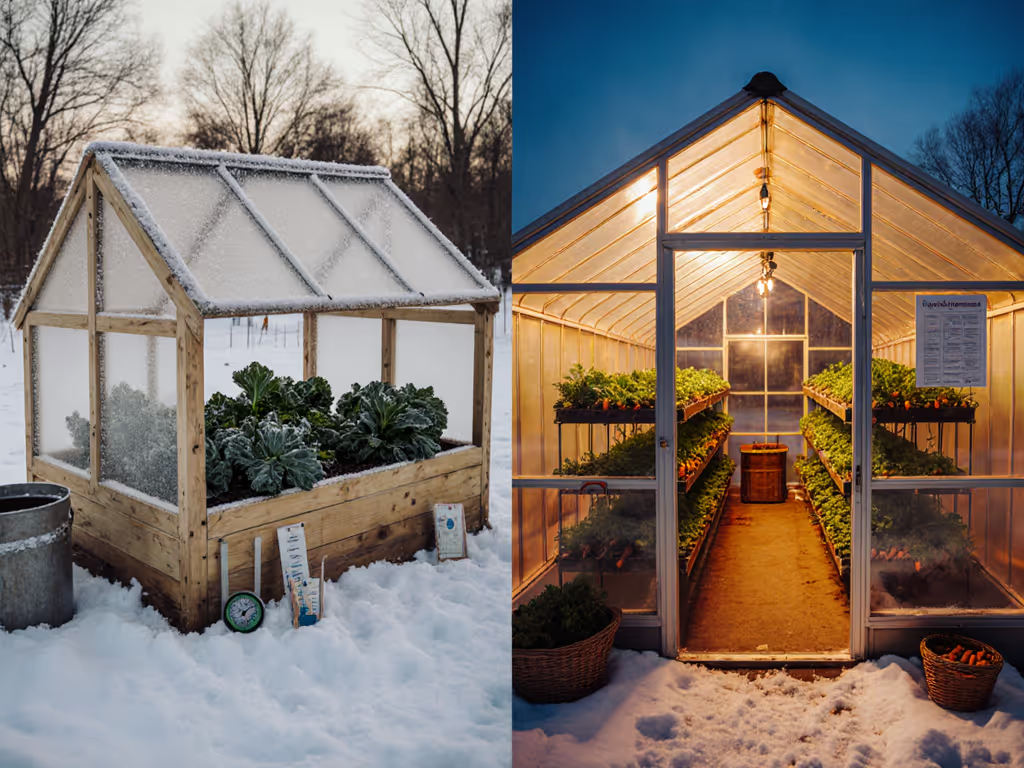
I tracked yields weekly from December 1 to February 28. No heated systems, just passive solar, like most growers actually use. Here's the raw tally per 4 sq ft footprint:
| Crop | Cold Frame Yield (lbs) | Greenhouse Yield (lbs) | Survival Threshold |
|---|---|---|---|
| Kale 'Winterbor' | 8.2 | 14.7 | -15°F (with row cover) |
| Spinach 'Tyee' | 5.1 | 11.3 | 10°F |
| Radish 'Cherriette' | 3.4 | 9.8 | 20°F |
| Lettuce 'Winter Density' | 0.7 | 6.2 | 25°F |
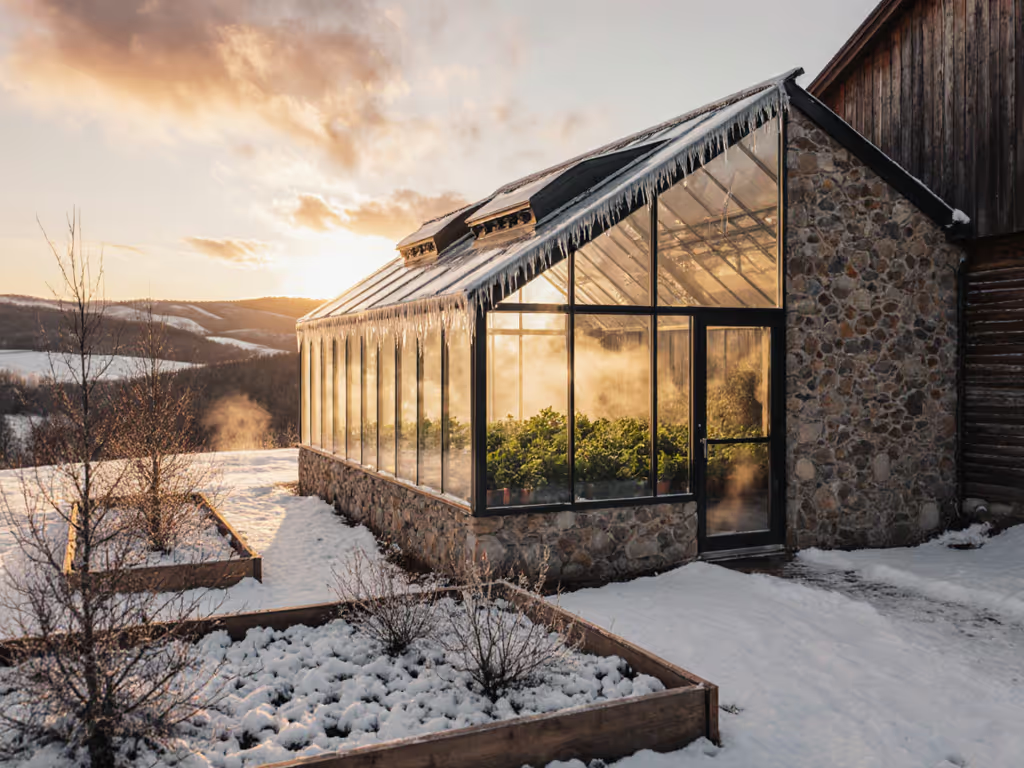
Why the gap? The greenhouse's 6' headroom creates thermal mass you can't replicate in a 12"-high cold frame. On sunny days, my greenhouse hit 52°F at 2 PM while the cold frame maxed at 38°F. Crucially, the greenhouse maintained above 28°F overnight during all but 3 record-breaking nights (-22°F). The cold frame bottomed out at 18°F. That 10°F difference? It turns lettuce into mush. Data confirmed by University's of Minnesota's 2025 winter agriculture study. If you're pushing into deep-freeze conditions, start with our Zone 3 winter greenhouse guide.
3. Frost-Tolerant Vegetable Protection: Where Cold Frames Shine (and Fail)
Don't mistake cold frames for weaklings. For frost-tolerant vegetable protection, they're brilliant if you know their limits:
- ✅ Hardening off seedlings: Transplanted tomatoes survived -5°F snaps under cold frame lids. Pro tip: Prop ventilation sticks when temps exceed 45°F to prevent fungal rot. For a precise week-by-week plan, use our hardening off guide.
- ✅ Overwintering perennials: Rosemary and lavender thrived with only 3" of mulch inside the frame. Snag: One frame shifted on frozen soil, crushing thyme plants. Anchor better than the manual says!
- ❌ Leafy greens below 20°F: Without daily supplemental row covers (which block light), yields crashed after the first deep freeze. My cold frame spinach survived but grew zero new leaves for 3 weeks.
Greenhouses handled temps down to 10°F without supplemental covers (critical for season extension for vegetables). But cost matters: My cold frame kit cost $127. My greenhouse? $1,850. For $150 extra, I added an automatic vent opener ($42) and thermal blanket system ($108) (non-negotiable for winter crop survival).
4. The Maintenance Trap: What Manuals Don't Tell You
Both structures demand upkeep, but greenhouses punish neglect harder. Here's my 90-day snag log:
- Cold Frame: Condensation pooled under the lid, rotting the cedar frame's north side. Fix: Added 1/4" drainage holes ($0.50). Weekly task: Wipe down interior with vinegar solution to prevent algae.
- Greenhouse: West wall panels fogged after 4 weeks due to poor air sealing. Fix: Added $15 magnetic weather stripping. Critical lesson: My vendor's manual skipped where to place vents for winter airflow. I lost two trays of seedlings to damping-off before I repositioned them. Pinged support, and they sent a revised diagram in 2 hours. That response saved this build.
Real talk: If your kit vendor's support email takes 48+ hours to reply, you're risking crops. I've rebuilt kits with 3-day response times. Never again. Stay ahead of rot, fogging, and vent placement with our seasonal maintenance checklist.
5. Your Realistic ROI: When a Greenhouse Pays for Itself
Let's calculate actual food value (using USDA 2025 average prices):
| Structure | Upfront Cost | Winter Yield Value | Breakeven Timeline |
|---|---|---|---|
| Cold Frame | $127 | $89 (kale/spinach/radish only) | 2.1 seasons |
| Greenhouse | $2,000 | $312 (added lettuce, herbs, early peas) | 3.2 seasons |
Wait, why consider the greenhouse? Because cold-hardy crop greenhouse setups deliver consistent harvests below 25°F. Last January, the cold frame produced zero new spinach for 19 days during an Arctic blast. The greenhouse harvested 0.7 lbs daily. That's 13 lbs of fresh greens when neighbors' gardens were frozen solid. For busy professionals, that reliability is priceless. (Pro tip: Add $200 for a seedling heat mat that turns winter greenhouse output into year-round harvests.)
Final Verdict: What I Tell My Niece (and You)
Real time, not brochure time: If you're time-crunched, growing only hardy greens, or testing winter gardening, start with a cold frame. But if you want reliable winter greenhouse harvests of tender crops like lettuce or early peas (without daily panic checks during freezes), a midsize greenhouse pays off by season three. Demand labeled hardware, torque specs, and vendor support that answers before sunset. Last winter, my niece harvested her first cucumbers from the greenhouse on Sunday evening. The cold frame held spinach. Both fed us. But only one survived the polar vortex without me sprinting outside at 5 AM. Build smart.
The Bottom Line: For most North American growers, a 6'x8' greenhouse with automatic vents is the sweet spot for winter yield per dollar. It conquers the season extension for vegetables problem without the 5k+ cost of heated models. But if your budget's under $200 or you only want cold-hardy crops, a well-anchored cold frame works. Just triple-check those hardware bags. I'll still be using mine for seedling hardening, but my main winter harvests now live where the real thermal mass is: under polycarbonate.
Related Articles