High-Altitude Desert Greenhouse: The Climate-First Buyer's Guide
By Maya Okonkwo • 6th May
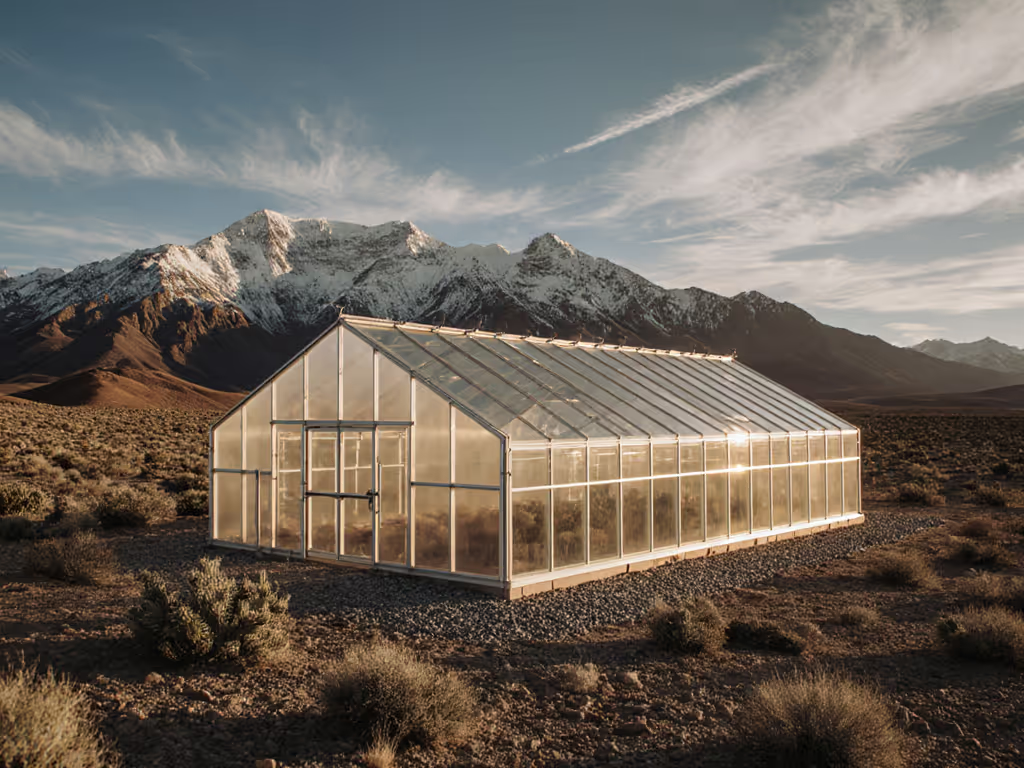
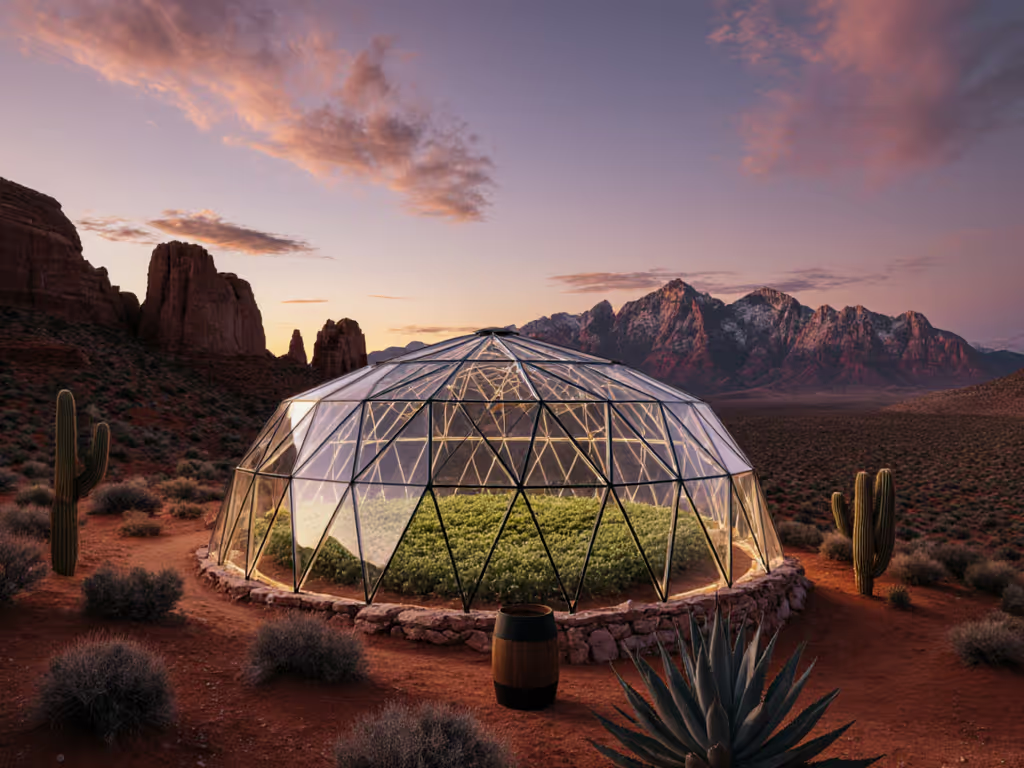
At elevation in arid terrain, a high-altitude desert greenhouse isn't a luxury; it is a precision instrument. The wrong envelope fails. Temperatures swing 40-60°F between day and night. Snow loads, wind gusts, and UV intensity demand that a high-elevation arid-climate greenhouse match measurable local conditions, not marketing promises. This guide addresses the technical questions that stop high-altitude desert gardeners cold, with data-backed answers tailored to thin air, intense sun, and moisture scarcity.
Structural & Load Performance
Q: How do I know if a kit will survive snow load and wind at my elevation?
A: Load ratings aren't opinions. Compare published specs: pounds per square foot (psf) at a 20° slope for single-layer poly, or per the kit's documented angle. At 8,000+ feet, a 1-in-50-year snow event can deposit 40-60 psf. In Colorado or New Mexico high deserts, this is real.
Verify these details:
- Purlin spacing and diameter. Closer spacing (36-48 inches) handles more load than 60+ inches.
- Connection method. Bolted or welded joints? (Bolted is stronger if torqued correctly.)
- Cross-bracing. Last spring, I logged field deformation on three kits during a late-April 55 mph wind with wet snow; the two with diagonal wind bracing held shape, while one lost a purlin. Design choices matter.
- Foundation anchoring. Frost-line depth (3-5 feet in high-altitude zones) and anchor type (concrete footings, earth screws, or in-ground rebar) determine whether your structure lifts during wind or heaves during freeze-thaw.
Request the manufacturer's load rating with specific wind speed and snow load scenarios. For elevation-specific specs and model picks, see our mountain greenhouse kits guide. If they won't specify both, move on. Your greenhouse must be rated for the 50-year storm event in your zone and slope angle.
Q: What about hail and UV degradation at altitude?
A: Altitude intensifies both. Every 3,300 feet of elevation, UV-B radiation increases ~10%. At 9,000 feet, you're receiving roughly 30% more UV than sea level. Single-layer poly degrades in 2-3 years; multi-wall polycarbonate lasts 10-12 years under the same exposure.
For hail protection, multi-wall panels (6 mm twin-wall or 10 mm triple-wall) provide better impact resistance than film. Some growers in high hail zones use a 50% shade cloth overlay during peak season (May-July).
UV protection greenhouse strategies overlap with high-altitude water conservation: reflective shade cloth cuts interior temps by 8-12°F while extending panel life by 20-30%. For impact resistance, R-values, and light diffusion under stress, compare polycarbonate vs glass glazing.
Climate Control & Thermal Management
Q: How do I manage extreme temperature swings in a high desert?
A: Desert thermal swings are brutal. At 8,500 feet, you can see 50°F swings: dawn at 35°F, peak at 85°F. Single-layer poly offers R-0.83; twin-wall offers R-1.6-1.8. For true four-season reliability, aim for R-2+ via thermal mass plus multi-wall glazing. For off-grid buffering methods, see our thermal mass heating strategies.
Thermal mass strategies:
- North wall: 55-gallon dark-painted water barrels (21 BTU/°F per barrel).
- Bench substrate: 4-6 inches of wet sand or gravel (100-120 lbs/sq ft).
- Concrete floor poured to 4 inches (118 lbs/sq ft capacity).
In early spring and fall, thermal mass buffers a 40°F swing down to 18-22°F internal variance (the difference between healthy transplants and bolted lettuce).
Q: What ventilation and heating setup is needed?
A: Auto-vents trigger at set temps (65-70°F). Two opposing roof vents provide cross-draft. For a 10 x 14 ft greenhouse, a single 40 CFM fan plus passive vents handles most summer peak loads.
For winter, clear skies and high solar angle mean passive gain supplies 30-50 BTU/sq ft/hr at solar noon, even at 30°F outside. Supplement with:
- Propane heater: 15,000-30,000 BTU, thermostat-controlled. Cost: $400-$800. Runtime: ~4-6 hours per winter night.
- Electric coil heater: 1.5-3 kW, cheaper upfront ($200-$400) but higher operating cost above $0.12/kWh.
ROI: A modest heater keeping lows at 45-50°F allows spinach, kale, and arugula through December-February, extending harvest by 16 weeks. At $50/week greens value = $800 gross, against a $1,500-$2,500 kit plus a $600 heater = 2-year payback for serious growers.
Ventilation, Shading & Water Use
Q: How do I cut water waste in an arid climate?
A: High-altitude water conservation is non-negotiable. Desert rainfall averages 8-12 inches annually; supplemental water is essential.
Drip irrigation:
- Subsurface drip: 0.5-1 GPH emitters, buried 3-4 inches. Cuts evaporation by 30% vs. overhead. Setup: $200-$400 for 10 x 14 ft.
- Overhead spray: Cheaper ($60-$100), but loses 25-40% to evaporation and increases disease. If you're deciding systems, our greenhouse drip irrigation kits comparison tests water savings and setup complexity.
Water capture: A 500-gallon cistern fed by greenhouse roof runoff supplies ~300-400 gallons per 2-inch rain event. Over 12 weeks, that's 5-10% of total need. Cistern + stand + filter = $800-$1,200; payback over 8-10 years through reduced utility costs.
Pair drip irrigation with high altitude desert gardening best practice: 30-50% shade cloth (May-August) reduces evapotranspiration by ~20% and cuts interior temps by 8-12°F.
Site Selection & Installation
Q: How do I choose the right location and ensure proper anchoring?
A: Measure three variables:
- Solar exposure: South-facing, unobstructed November-February. Deciduous shade is fine; year-round evergreen is a deal-breaker.
- Wind corridor: Ask neighbors or use a handheld anemometer. Consistent gusts >25 mph demand cross-bracing and low-angle roofs (20° vs. 30°).
- Drainage and soil type: Dig a 12-inch post hole, fill with water, measure drawdown at 1 hour. Standing water signals clay; budget for a rubble trench foundation. Frost depth by region:
- Colorado (8,000 ft): 48-60 inches
- New Mexico (7,000 ft): 30-42 inches
- Utah (6,000 ft): 24-36 inches
Contact your county extension office for frost maps and soil profiles; it saves guesswork.
Q: What about permits and realistic timelines?
A: Most counties treat permanent greenhouses as structures. Check setback requirements (5-10 feet from property line), footprint limits, and HOA aesthetics rules. Permits typically take 2-4 weeks.
Assembly at altitude: Plan 2-4 days with two people. Budget extra time if wind is forecast (you can't glaze safely in gusts >15 mph) or if your crew is unaccustomed to elevation fatigue. A local installer ($1,500-$3,000 labor) often saves frustration and reduces assembly errors that compromise durability.
Decision Framework
To simplify your tradeoffs (durability, efficiency, assembly ease), measure your local conditions and align specs accordingly:
| Factor | Minimum | High-Desert Ideal |
|---|---|---|
| Snow load (psf) | 20 | 50+ (8,000+ ft) |
| Wind speed rating | 60 mph | 80+ mph |
| Glazing R-value | 0.83 | 1.6+ (twin-wall) |
| Ventilation (CFM/100 sq ft) | 1.5 | 2-3 + auto-vent |
| Thermal mass (lbs/sq ft) | None | 100-150 |
| Shade cloth (summer) | Optional | 30-50% |
| Foundation depth | 12 inches | Below frost line |
What Comes Next
A high-altitude desert greenhouse demands honest climate data before purchase. Collect your local snow load, 50-year wind speed, frost depth, and summer high temp. Request published load ratings from manufacturers; if they hedge or quote "typical" conditions, walk.
Further exploration:
- Request a soil profile and frost map from your county extension office.
- Measure your site's solar exposure and wind profile before finalizing placement.
- Compare at least three kits using the decision table above; align specs to measurable local conditions.
- Connect with local greenhouse owners (gardening clubs, farmer's markets) for real-world durability and utility feedback in your elevation zone.
- Track a winter heating cycle (4-6 weeks) to validate utility projections before full commitment.
Your greenhouse will outlast your enthusiasm if you measure first and choose second. Load ratings aren't opinions. Neither is your success.
Related Articles