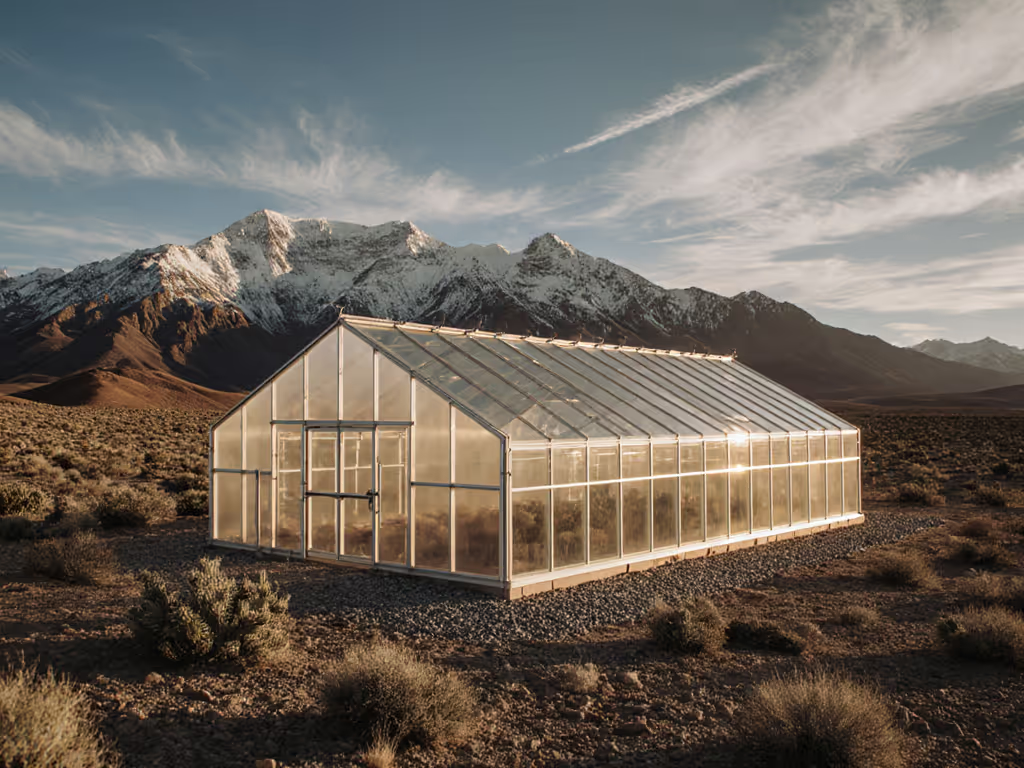
High-Altitude Desert Greenhouse: Your Climate Blueprint
By Hana Al-Khalil • 31st Mar
A high-altitude greenhouse is not a one-size-fits-all solution, it's a carefully tuned response to the unique pressures of thin air, short seasons, wild temperature swings, and precious water. If you garden above 6,000 feet, you already know that standard greenhouse advice often misses the mark: a design that works in temperate lowlands can become a solar oven by midday or a frost trap by dusk in high elevation. This guide walks you through the sensory and structural foundation of building a high-altitude greenhouse that works with your climate, not against it. For elevation-specific tactics, see our mountain greenhouse guide.
The High-Elevation Reality Check
High elevation gardens face a trifecta of challenges: compressed growing seasons (often zone 3-5), intense solar radiation paired with rapid heat loss at night, and water scarcity. Research from agricultural demonstration projects in the Southwest confirms that many high-desert regions receive as little as seven inches of annual precipitation, while elevation and exposure can cut the outdoor season to just a few frost-free months.
Yet here's the truth: these constraints are also your design gifts. The same intense sun that risks scorching crops can heat a greenhouse passively through nine months. The daily temperature swing (the difference between a 70°F afternoon and a 35°F night) teaches you exactly where to invest in thermal mass and insulation. And scarcity of water forces elegance: high-altitude water conservation becomes not a luxury add-on but the heart of your system.
Core Design Principles: The Four Pillars
Passive solar greenhouses succeed when they integrate four non-negotiable principles: orientation, glazing, insulation, and ventilation. In high altitude, each one compounds the others.
Orientation: Let the Sun Do the Work
In most of North America, a high-altitude greenhouse thrives with a ridge running north-south. This alignment captures low winter sun (when your greenhouse is most valuable) without throwing afternoon shade across your beds. At high altitude, where winter sun angles are already shallow, even a small east-tilt in your ridge can rob you of precious light by February.
Before breaking ground, map sun angles on your site. Use our winter sun path guide to position for maximum cold-season light. Stand at the spot in early morning, noon, and late afternoon. Note where shade falls: from trees, buildings, terrain. That north side? It's your coldest zone. Plan for leafy greens, not heat-lovers.
Glazing: Clarity and Insulation Are One Choice
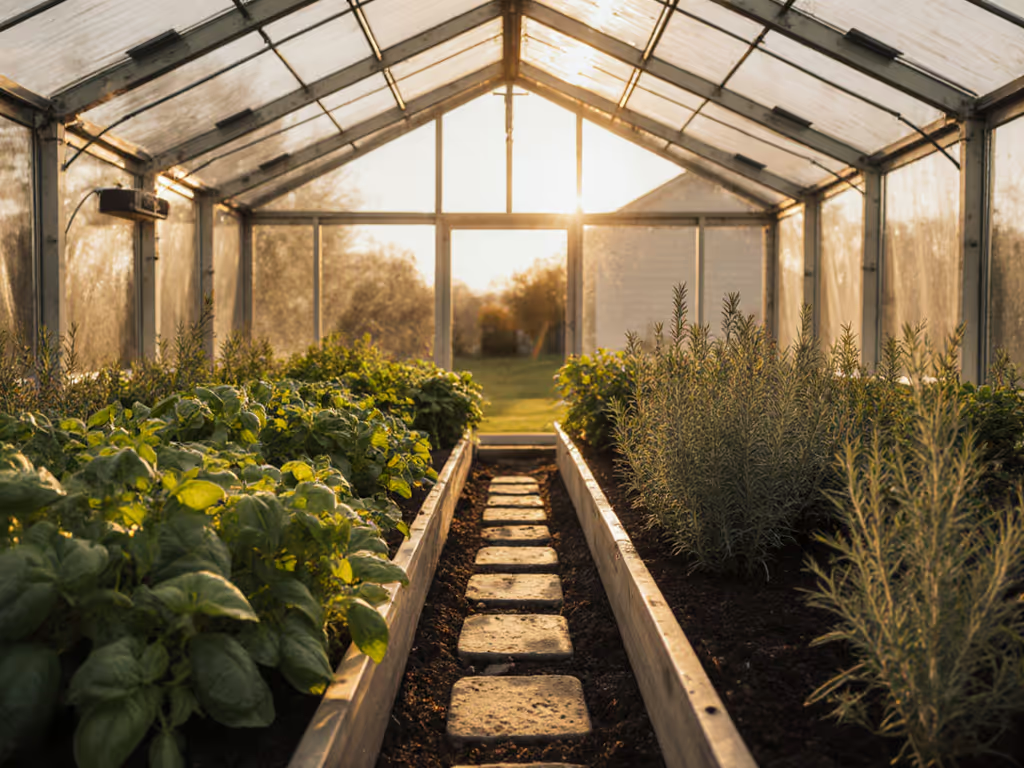
High-altitude sites experience extreme UV exposure due to thinner atmosphere and higher elevation. Standard single-layer polyethylene degrades fast and offers poor insulation; double-layer poly or polycarbonate panels are the practical middle ground. Polycarbonate glazing lasts longer and provides better insulation value, critical for a region where night temperatures plummet. The trade-off is cost and a slight reduction in light transmittance, but at 8,000 feet, you have light to spare.
Insulation: Build Thermal Mass Into Your Footprint
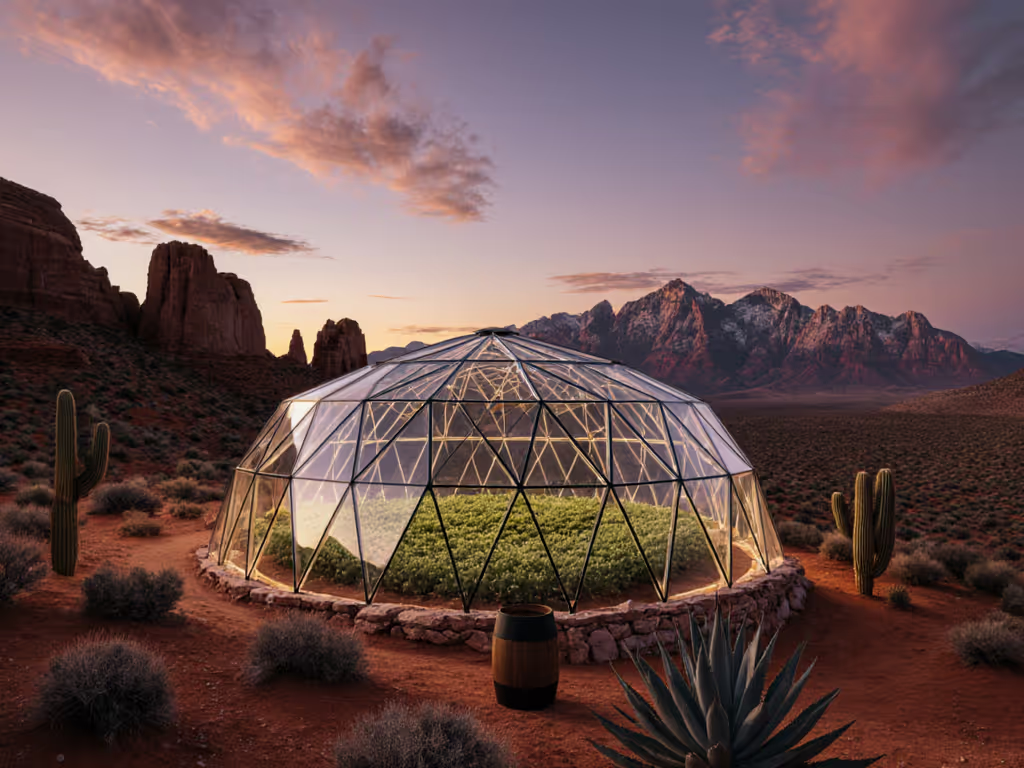
This is where comfort meets yield. One proven strategy is rammed-earth tire construction, proven at 8,300-foot elevations in New Mexico: tires packed with earth serve as both foundation and thermal mass, passively moderating interior temperature to around 70°F without supplemental heating. For a system-level approach that pairs mass with orientation, see our passive solar greenhouse guide. Water barrels (a gentler, more accessible option) tucked along the north wall or under benches absorb heat by day and release it at night, smoothing the swing.
A simple rule of thumb: for every 100 square feet of growing space in high altitude, aim for 50-100 gallons of thermal mass (water, earth, or stone). Place it where afternoon sun hits but it won't block your main growing beds.
Ventilation: The Breath of the System
High-altitude sites heat and cool fast. You'll need more cross-ventilation than a lowland greenhouse. Roof vents, gable vents, and operable side panels (positioned to allow summer sun to flow through without stalling) are non-negotiable. The magic number: at least 30-50% of your growing space should receive direct, unobstructed summer sun, and ventilation pathways should allow air to move from cooler (often north) to warmer zones without dead pockets.
This is where many high-altitude gardeners stumble: they build airtight and regret it by June. Sensory check: if you step inside at midday in late May and feel stillness, your airflow isn't working.
Site Assessment: Read Your Land First
Before you order a kit, spend a season reading your microclimate. Wind corridors shift by elevation; frost pockets collect in depressions. Walk your site at dawn, midday, and dusk across four seasons if you can wait. Note:
- Sun exposure: Which direction does winter sun hit? Where does shadow pool in summer?
- Water runoff: Does water drain away or pond after snow melt?
- Wind patterns: Does wind funnel through a gap or blast from one direction consistently?
- Temperature refuge: Where is the warmest sheltered pocket? The coldest corner?
Use these observations to orient your greenhouse and choose where to place thermal mass. A greenhouse tucked into a south-facing slope with the north side sheltered by terrain behaves very differently from one on open, exposed ground.
Temperature Swing Management: Your Biggest Leverage
The temperature differential between day and night is the single hardest challenge at high altitude, and the one most easily addressed by passive design. Finding ways to minimize that gap while keeping light levels high is the core puzzle.
Start with the fundamentals: shade cloth (30-50% density) deployed from May through August cuts afternoon temperatures by 8-12 degrees without dimming winter sun. Raised roof vents, opened early and closed by evening, expel accumulated heat before night. Water barrels and thermal mass absorb that afternoon surge and release it slowly as air cools.
None of this requires electricity. All of it requires attention: opening vents at the right time, monitoring interior conditions, learning your greenhouse's rhythms. But that attention is the habit that sustains you. Comfort grows plants, and keeps you tending through storms.
Water and Materials: Closing Loops
In water-scarce high-altitude regions, passive water capture and recycling shift from luxury to survival strategy. Roof runoff (abundant during monsoon or snowmelt) can be channeled to gutters and directed into cisterns or a climate battery (thermal mass fed by collected water). If you're planning collection from day one, review our rainwater harvesting greenhouses guide. This water then trickles through drip irrigation, minimizing waste and keeping humidity stable.
For materials, favor durability and repairability over novelty. Double-layer glazing, stainless fasteners, and wood or steel frames last decades if maintained. Recycled materials (tires, reclaimed lumber, salvaged polycarbonate) reduce cost and environmental footprint while proving their resilience in harsh conditions.
Workflow and Accessibility: Tend Year-Round
A high-altitude greenhouse demands seasonal tending: venting in spring, shading by late April, mulching before frost, monitoring humidity through fall. If the work hurts your back, feels tedious, or requires climbing awkward ladders, you won't keep it up. Comfort is a yield multiplier.
Design for ease: benches at elbow height, aisles wide enough to move a hand truck or wheelchair, vent openers (manual or automatic) within arm's reach. South-facing beds catch light and warmth; use north beds for shade-tolerant greens. This layout thinking, grounded in how your body actually moves through space, shapes the difference between a greenhouse that welcomes you and one you dread entering.
A Closing Vision
The most successful high-altitude greenhouses aren't the most complex; they're the ones that fit the land, match the climate, and feel good to be inside. A space that's 68°F on a January afternoon, where you can peel off a layer, where condensation doesn't drip and air moves gently, where you can see your tomatoes ripening and taste the first lettuce in March: that's the greenhouse that keeps you coming back through unpredictable weather, through shoulder seasons, through storms.
Your high-altitude site is not a limitation. It's an invitation to design with intention, to build something that will outlast trends, and to grow food year-round in a place where most people say it's impossible.
Further Exploration
As you move forward, deepen your understanding by: researching your specific USDA hardiness zone and local frost dates; mapping your site's microclimate across a full season; exploring passive solar designs tested at your elevation (university extension offices often have regional case studies); and connecting with local gardeners who have solved high-altitude challenges in your specific climate. The knowledge you gather now will shape every decision that follows, and every harvest that rewards it.
Related Articles