Heat Small Greenhouses Without Cooking Your Crops
By Camila Duarte • 21st Sep
What to do
To keep a small greenhouse from cooking crops, build the airflow plan first: size exhaust capacity, match intake or vent area, move air through the canopy, and add porous shade when sun load remains high.
- Start with: Calculate about one air exchange per minute, or 8–10 CFM per square foot of floor area.
- Then: Use balanced ridge and sidewall openings where possible, place controls at plant height, and verify temperatures during hot weather rather than relying on appearance or fan diameter.
- Important prerequisite: Evaporative cooling depends on outdoor wet-bulb conditions and is limited in humid weather; no universal shade percentage applies to every warm-season crop.
Important: Thermal mass can release stored heat at night, but the available figures do not provide a whole-greenhouse sizing formula or a substitute for climate-specific heating analysis.
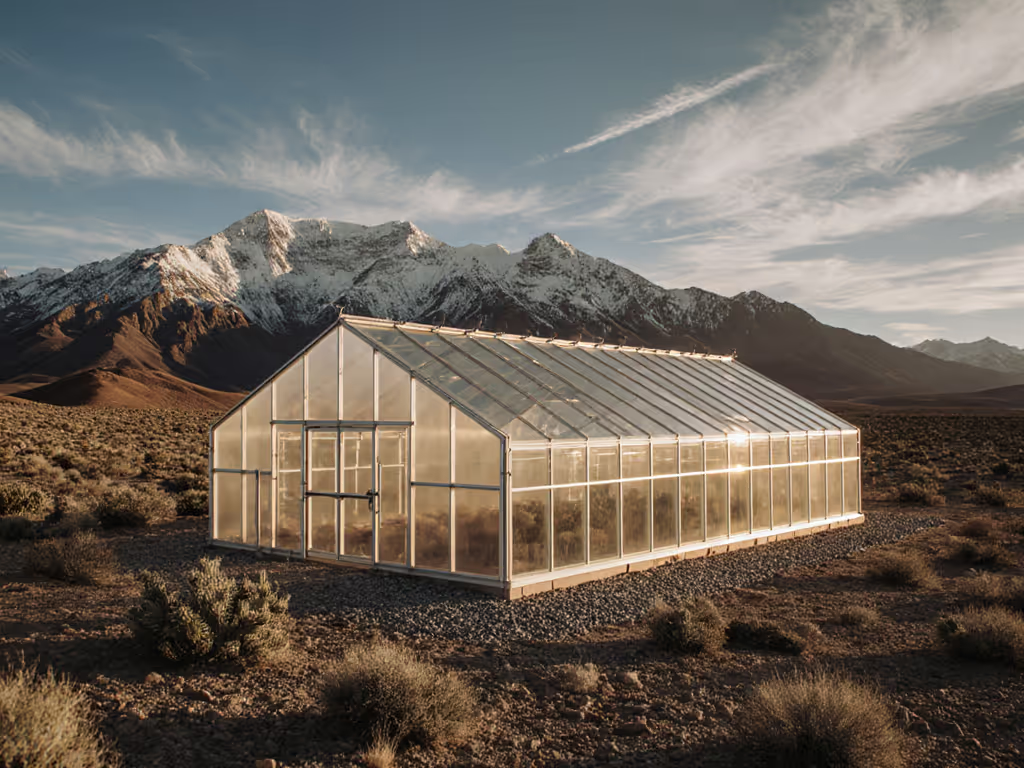
If you searched for ways to heat small greenhouse spaces, there is an uncomfortable companion problem worth solving first: high greenhouse temperatures can impair crop growth and increase watering needs. A greenhouse fan, correctly sized vents, and porous shade work as a system, not as a pile of optional add-ons. For a closer look at heat-management ventilation kits, compare how automated vents, airflow design, and thermal features work together before choosing individual components. This guide focuses on hot-season control rather than choosing a winter heater, because dependable summer heat management is what keeps a small structure productive instead of becoming a crop cooker.
I approach this the same way I approach a kit build: start with the measurements, then inspect the weak points before plants pay for them. Real time, not brochure time. If it snags in the build, you'll read it here.
Why Summer Heat Is a Crop Problem, Not Just a Comfort Problem
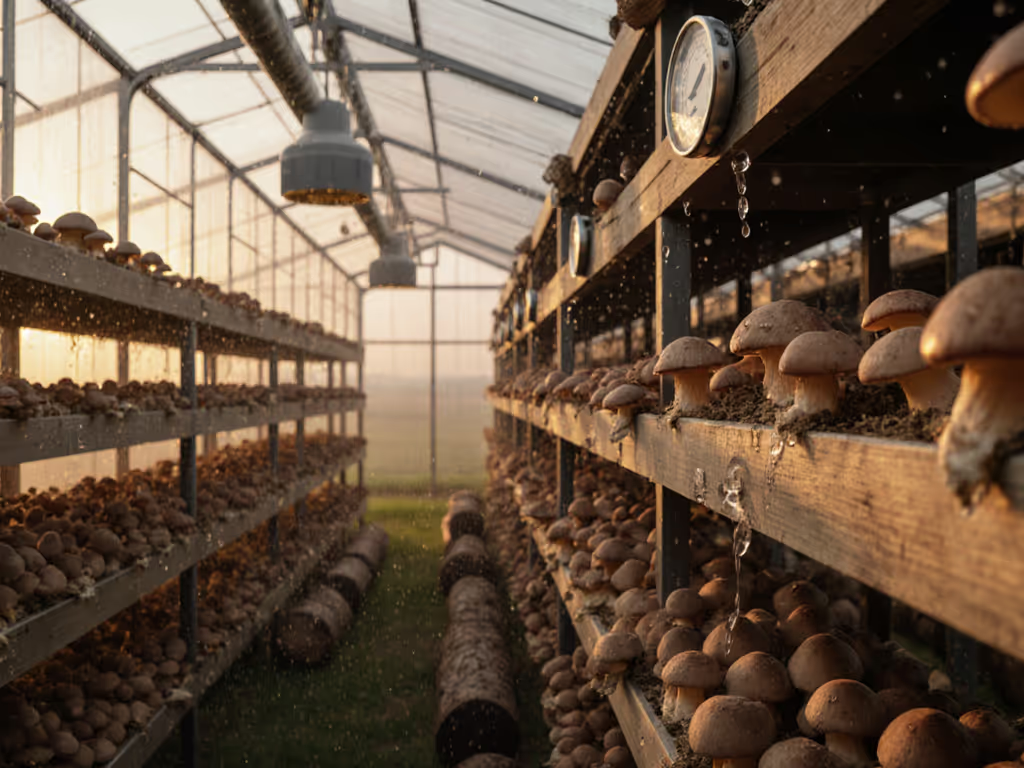
Yes, greenhouses can get too hot in summer. High temperatures can mean poor plant growth and more watering, but the damage is not always obvious until fruit set or ripening slips.
For tomatoes, sustained temperatures that exceed 85°F by day and 70°F at night can stress plants, impair pollination, and cause blossoms to drop. Tomato maturation is best at 68-77°F, and the pigments that make fruit red are not produced above 85°F. Cucumbers and other vining cucurbits can produce more male than female flowers above 90°F by day and 70°F at night; many bees also slow their pollinating activity around 90°F.
That is why "I'll just open the door" is not a complete summer plan. If you are growing crops with different temperature preferences, our guide to greenhouse temperature zones can help you plan separate growing areas within the same structure. A door may help, but a greenhouse needs enough opening area and an intentional path for air to travel across the crop canopy.
Start With Ventilation Capacity
The most useful first calculation is exhaust capacity. For summer ventilation, use approximately one greenhouse air-volume exchange per minute, calculated to an 8-foot height. Another practical expression is 8-10 cubic feet per minute (CFM) per square foot of floor area.
A quick sizing example
Start with your greenhouse's measured floor area and calculate the summer airflow target two ways:
- Multiply floor area by 8 feet to calculate the design air volume.
- Use that volume as the approximate CFM target for one air exchange per minute.
- As a cross-check, multiply floor area by 8-10 CFM per square foot.
That gives you a transparent starting range rather than a vague "small fan should be fine." In southern climates, sizing calculations sometimes use a 10-foot height for a greater ventilation rate.
When comparing greenhouse fans, look beyond a marketing label. Fan output can vary among manufacturers. Select fans tested to Air Movement and Control Association standards when possible, and compare the ventilating efficiency ratio; 15 CFM per watt or higher is a desirable benchmark.
Intake area and fan placement matter
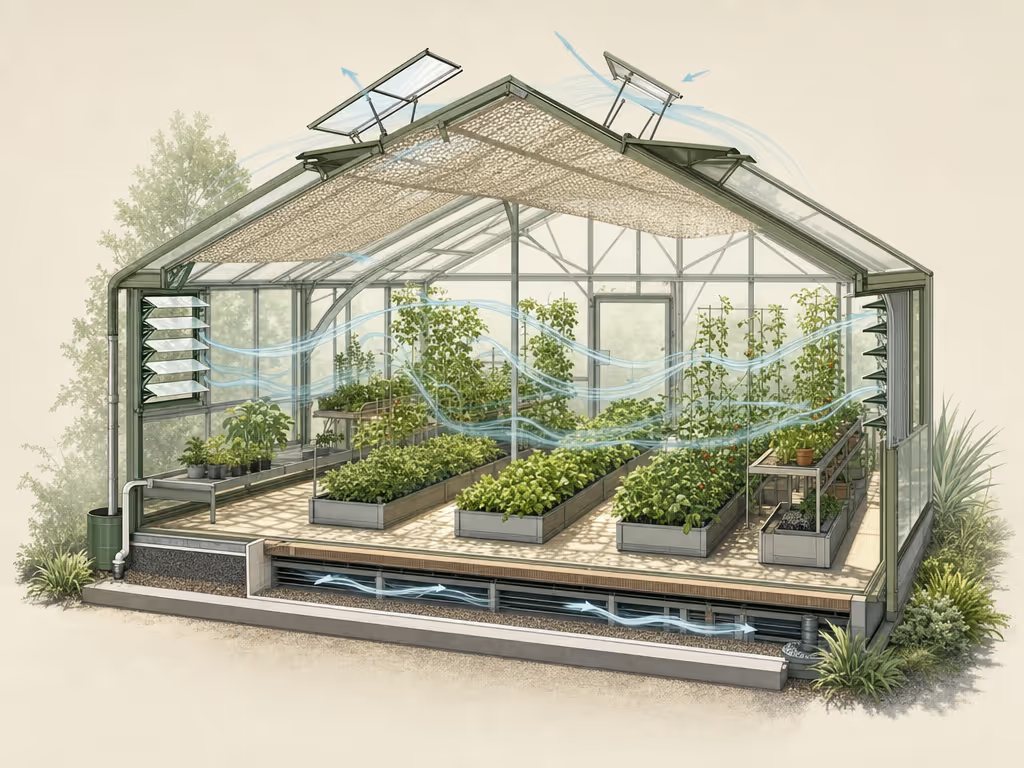
An exhaust fan is part of a matched system. Intake-louver area should be at least 1.25 times the fan area, particularly in poly-covered houses. For most greenhouses, place the fan on one end wall and the intake louvers on the opposite end. Fan systems work best with a draw distance under 150 feet (well beyond the scale of most backyard houses, but still a useful reminder not to block the airflow path with solid storage or bench layouts).
Set fan and louver openings so the air travels over and through the crop canopy, not beneath benches or only at the ridge. A useful installation detail: the bottom of a fan or louver is generally located about 3 feet above the floor.
The goal is not merely to own a fan. The goal is to move enough replacement air through the plant zone.
Natural Ventilation: Measure the Openings, Not the Hope
Roof-and-sidewall ventilation can work very well, especially where wind is reliable. In a properly designed greenhouse, a 2-3 mph wind can provide 80% or more of ventilation. But on hot days, buoyancy-driven ventilation can be almost nonexistent when indoor and outdoor temperatures differ by only 5-10°F.
For conventional structures with ridge and sidewall vents, use this check:
- Combined sidewall vent area: 15-20% of floor area
- Combined ridge vent area: 15-20% of floor area
- The sidewall and ridge totals should be equal
Calculate each opening target from your measured floor area, then compare it with the usable opening area rather than the overall size of the vent frame.
This is where small greenhouse plans often disappoint me. A vent may look generous in a product photo yet be small once you calculate it against floor area. When evaluating automatic vent systems, note the actual vent area. For conventional roof-and-sidewall designs, compare it with the floor-area checks above.
Add Shade Without Trapping More Heat
Shade is useful on hot, sunny days, but choose porous shade material so heat generated beneath it can escape upward. That detail matters more than a universal shade percentage.
You will see confident recommendations for one exact shade-cloth percentage for tomatoes, peppers, cucumbers, or a mixed greenhouse. I would not treat any single percentage as a universal prescription. There is no one-size-fits-all number established here for warm-season vegetables.
Instead, treat shade as a testable layer in your summer heat management plan:
- Establish adequate venting or fan capacity first.
- Use porous shade material when sun load is driving temperatures beyond your crop's comfort range.
- Watch crop response and greenhouse temperatures at plant height.
- Keep the shade plan seasonal rather than assuming it belongs on all year.
If you are covering greenhouse glazing with seasonal shade, leave yourself a simple way to inspect the vents, fan shutters, and fasteners. I have lost enough Saturday hours to poorly labeled hardware bags (and once to missing anchor bolts) to value any setup that remains easy to check and adjust on a busy morning.
Where Controls Belong
Put ventilation thermostats near the greenhouse center at plant height. That is the air your tomatoes and cucumbers experience, not the hot pocket near the roof or the artificial cool spot on an outside wall. Aspirating the sensor can provide a more representative air sample.
Avoid wide thermostat differentials. A cooling thermostat set at 75°F with a ±5°F differential, for example, can keep cooling until 70°F, using more electricity than necessary. When both heating and cooling controls are operating during changeable weather, set the cooling thermostat 5-10°F above the heating thermostat to avoid running both systems at once.
Before the heating season, adjust vents so they close evenly and tightly to limit heat loss. That seasonal reset is mundane, but it is exactly the kind of detail that separates a usable greenhouse from an expensive, drafty ornament.
Is Evaporative Cooling Worth Considering?
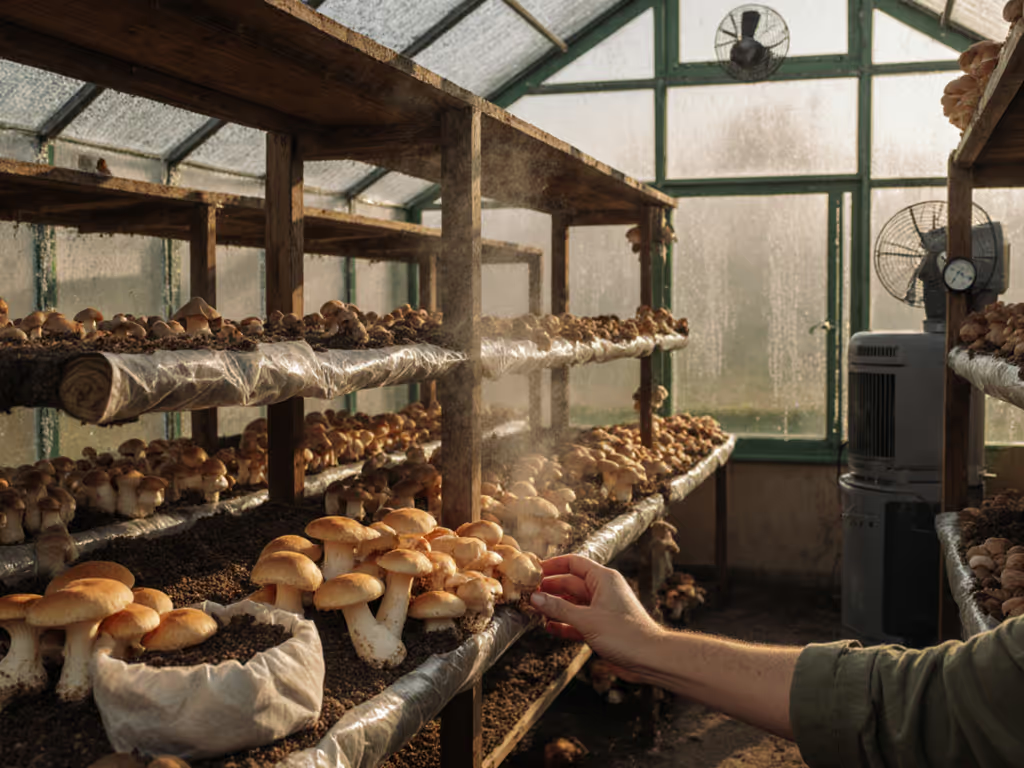
Fan-and-pad evaporative cooling can be effective, but it is not a promised fixed temperature drop. Its cooling potential is limited by wet-bulb temperature, which reflects moisture in the outdoor air. A well-designed system may reach up to 85% efficiency, yet hot, humid weather limits what evaporation can accomplish.
In a fan-and-pad layout, the coolest air is near the pads and warms as it travels toward the exhaust fans. On sunny summer days, the increase can be about 1°F per 10 feet, depending on airflow and greenhouse configuration. Fans for this kind of system should still provide at least one air change per minute.
A humidistat can help control pumps and fans to prevent excessive humidity, but it should be checked regularly and located at plant level rather than on an outside wall. This is not a set-it-and-forget-it feature.
A Note on Heat Storage and Night Planning
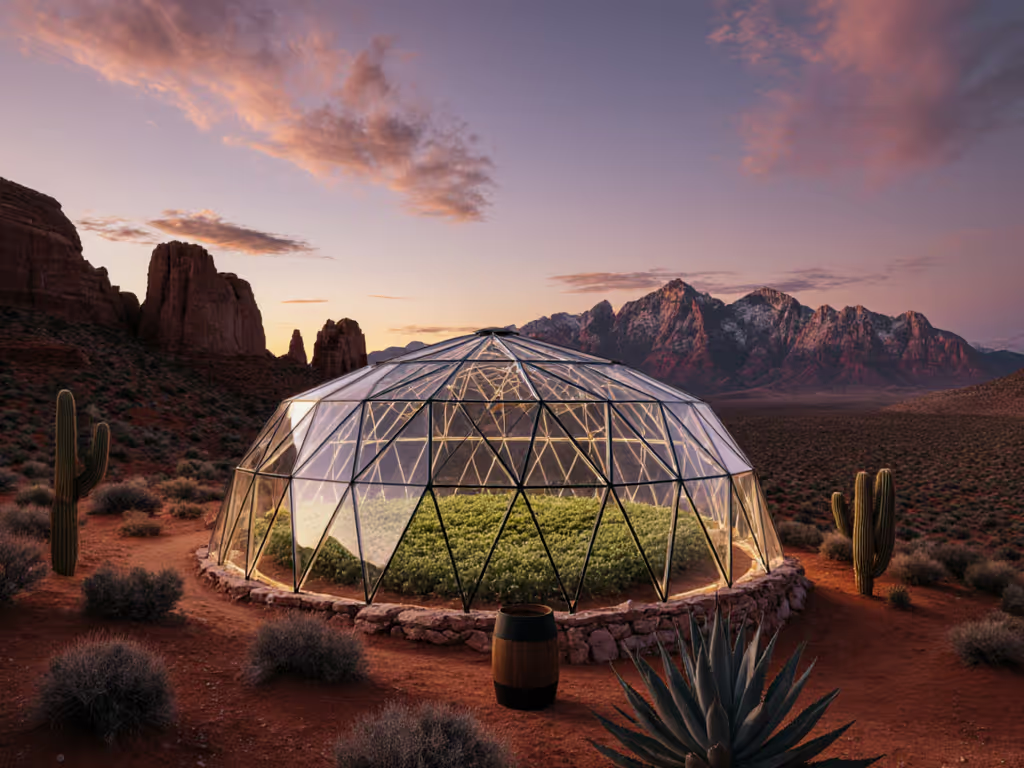
Purpose-built greenhouse storage can hold solar energy for nighttime release; the available storage table includes water, masonry, and rock. For more no-electricity options, see our guide to thermal mass heating solutions, including practical ways to use stored heat without relying on a powered heater. For perspective, a 55-gallon water barrel stores 9,170 Btu at 70°F and 13,760 Btu at 80°F in a table that assumes a 50°F minimum greenhouse temperature.
Those figures are useful for understanding stored energy, but they are not a whole-greenhouse sizing formula. They do not account for your glazing, geometry, cloud cover, local weather, or night setpoint. Use ventilation calculations for summer cooling decisions and treat thermal storage as a separate nighttime planning question.
Final Verdict: Build the Airflow Plan Before the Heat Arrives
The best way to prevent crop losses is a layered plan: calculate ventilation capacity, provide sufficient intake or vent area, direct air through the canopy, use porous shade, and place controls where plants actually live.
My final verdict is simple: do not buy a greenhouse fan by diameter alone. Measure your floor area, run the CFM and vent-area checks, then test temperatures at plant height during your first hot spell. That is the practical path to keeping a small greenhouse productive, without cooking the crops you built it to grow.
Related Articles