Custom Greenhouse Kit For Year-Round Container Citrus
By Maya Okonkwo • 1st Sep
Quick answer
Yes—but a custom greenhouse kit for year-round container citrus must be designed around the trees’ environmental needs, not just enclosure size. Plan for at least 8 hours of light, temperature protection, summer ventilation and shading, controlled humidity, irrigation, drainage, and reliable utilities.
- Key distinction: Prioritize year-round solar access, then assess heat loss and specify heating, air circulation, alarms, ventilation, and shade control as one system.
- Important caveat: There is no universal thermostat setting, orientation, heater size, or kit rating. Use a location-specific sun-path assessment, calculate site-specific heat loss, and verify structural, utility, and local requirements before ordering.
Important: Cold exposure can severely damage lemons and limes in the mid to high 20s°F, while poor drainage and prolonged saturation can cause serious root rot. Regional Extension guidance does not replace local design verification.
A custom greenhouse kit for year-round container citrus should be specified from the trees outward: light first, winter temperature protection, summer heat removal, humidity control, then the structure required by your site. A lemon tree greenhouse is not simply a sheltered patio with clear panels. Container citrus needs at least 8 hours of sunlight and roughly 30-60% relative humidity for optimum growth and development; optimum temperatures for fruit production are 65-85°F. The enclosure must also avoid the two failures that undo those targets: freezing during a cold event and overheating on a bright day.
Numbers first, claims second - your climate decides the kit.
This FAQ deep dive gives you a repeatable way to turn "I want lemons through winter" into a functional greenhouse brief - without pretending one glazing, orientation, or thermostat setting fits every climate.
Can lemon trees grow well in a greenhouse?
They can, provided the greenhouse delivers enough light and manages temperature, moisture, and air movement as a system. The greenhouse is an environmental tool, not a guarantee of fruiting by itself.
For container citrus gardening, start with these crop benchmarks:
| Design input | Planning benchmark | What it changes in the kit brief |
|---|---|---|
| Daily light | At least 8 hours | Site selection, seasonal shade analysis, glazing area |
| Fruit-production temperature | 65-85°F | Heating, ventilation, shade-control plan |
| Relative humidity | 30-60% | Ventilation and air circulation |
| Mature container diameter | 18-36 inches | Floor area, aisle width, door clearance |
| Root-zone condition | Moist, not dry or saturated | Drainage, irrigation access, floor drainage |
Plan the floor around the largest likely mature container diameter and allow access clearances for plant care.
What does "custom" need to mean?
Custom should mean climate-matched specifications, not a decorative shape. Put these decisions in writing before choosing a kit:
- Your site’s winter low-temperature exposure and summer heat exposure.
- Whether the structure will need reliable supplemental heat.
- The tree count, mature pot diameter, and service aisle.
- Water and electrical access for environmental controls.
- Published structural documentation appropriate to the installation site.
Ask the supplier for the exact frame, glazing, door, vent, and anchoring documents for the configuration you are buying. Then verify what local requirements apply with the relevant local authority before ordering. Request configuration-specific structural documentation rather than relying on broad marketing language.
Cross-bracing and anchors matter, but only documented, locally appropriate structural specifications can guide a purchase.
Should a greenhouse be located in full sun or shade?
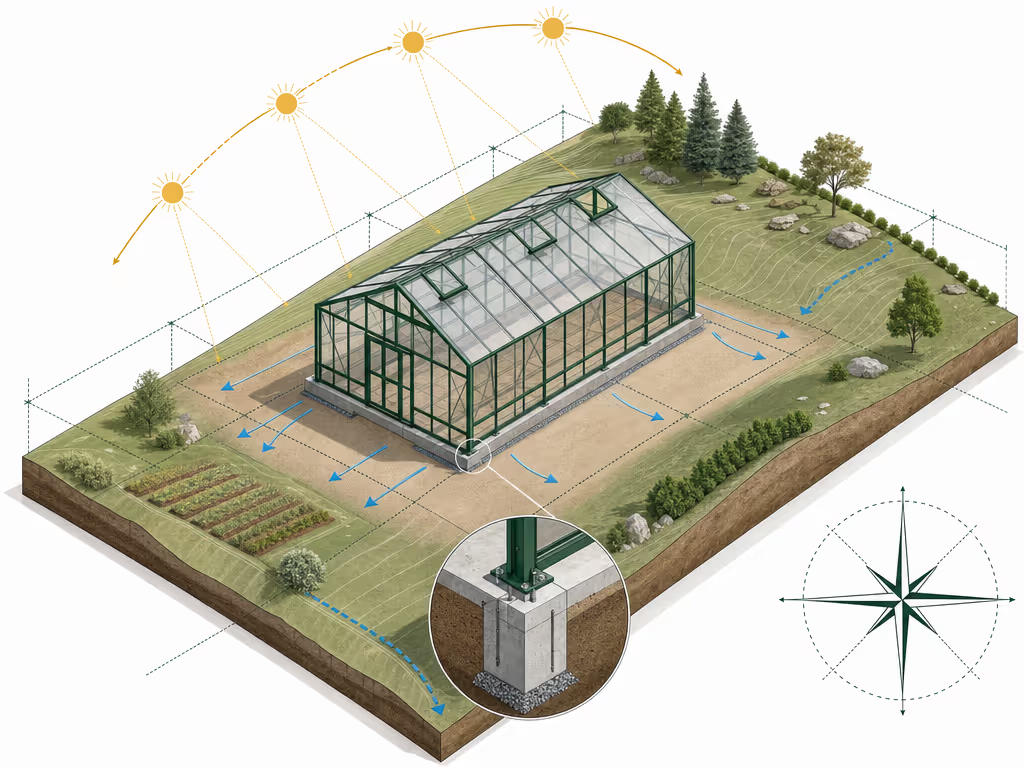
Choose the site with the best year-round solar access, especially morning light, then design shade control for hot weather. Citrus needs substantial sun; locating the structure in permanent shade solves overheating by creating a light deficit.
Do not evaluate a site on the day you happen to visit it. Terrain, nearby structures, and trees can block sun differently across the year. Use a location-specific sun-path chart to identify when each potential site is shaded - especially during the lower-sun winter period, when winter citrus protection depends most on captured daylight.
Is there one correct orientation?
No. One Extension recommendation for a solar greenhouse in Alaska places the ridge east-west within 20 degrees of true south, but that is a design-specific recommendation, not a universal rule for every greenhouse, latitude, or yard. Your sun-path assessment, building layout, prevailing exposure, and the chosen structure determine the practical answer.
The useful rule is simpler: preserve the light your citrus needs, and make sure you can reduce solar gain when clear summer conditions push the house beyond its target range. Shade can be essential during the warmest portion of sunny days. Climate dictates design.
How do I prevent winter losses without oversizing the heater?
Calculate heat loss from the actual enclosure, then build in failure protection. A greenhouse’s conductive heat-loss estimate is:
Where:
- Q = heat loss in BTU/hour
- A = greenhouse surface area
- Ti - To = indoor-to-outdoor temperature difference
- R = resistance to heat flow, or R-value
This equation is a starting point, not a complete heater specification. Wind, air leakage, perimeter losses, the age and condition of the greenhouse, and door/vent/shutter seals also affect heating demand. For context, UGA Extension lists an overall R-value of 2.00 for a double acrylic or polycarbonate covering assembly; do not assume that value applies to any particular kit without documentation for its exact glazing and assembly. For a closer look at how panel construction affects insulation and heating demand, compare 5-wall and triple-wall polycarbonate panels.
What winter temperature should I target?
Avoid a universal thermostat prescription. Clemson Extension describes 55-65°F for container citrus kept in a protected, naturally lit room during prolonged winter cold, while optimum fruit-production temperatures are 65-85°F. Those figures help define your operating goals, but they are not a one-size-fits-all greenhouse-heater setting.
What is clear: lemons and limes can be readily killed or severely damaged in the mid to high 20s°F. Fruit may freeze after several hours at 26-28°F. UGA Extension notes that citrus leaves on cold, clear, low-wind nights may run 3-4°F colder than ambient air because of radiative heat loss, but this is not a greenhouse-specific measurement. Use sensors and alarms, but inspect plants as well; an air-temperature number is not the same as tissue temperature.
For resilience, specify air mixing and consider redundant heating. Forced-air heat and circulation fans reduce warm/cool stratification. Two or more smaller heating units offer more protection against a single-unit failure than one large unit, and warning devices or battery-powered alarms provide another layer of response.
How do I stop a lemon tree greenhouse from overheating?
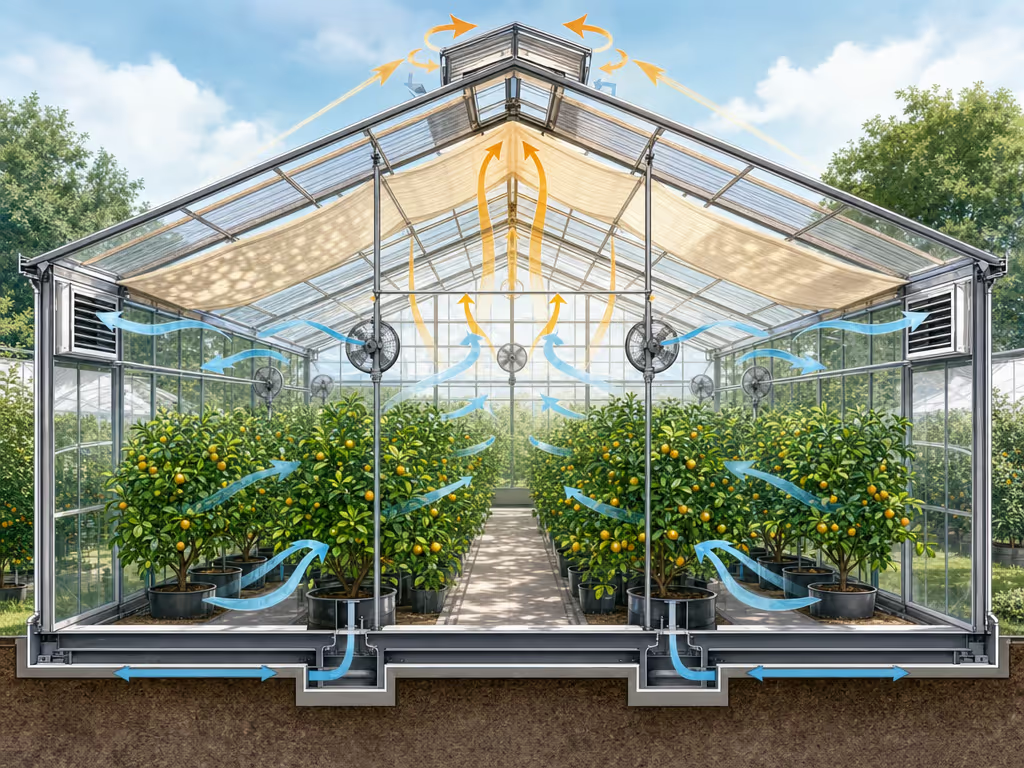
Ventilation, circulation, and shading are a matched set. Ventilation reduces indoor temperature, supplies carbon dioxide, and replaces warm moist air with drier air. Internal airflow moves that control into the canopy, removing excess heat and helping manage relative humidity. If you are growing citrus alongside plants with different temperature or humidity needs, a greenhouse microclimate strategy can help separate those conditions within one structure.
As a summer planning estimate, UGA Extension notes that one complete air exchange per minute through exhaust-fan ventilation, without evaporative cooling, should keep indoor temperature about 8°F above outdoor temperature. Treat that as an estimate rather than a promise: solar load, climate, and crop canopy all affect real conditions.
Specify the controls as a sequence:
- Ventilation to exchange hot, moist indoor air.
- Circulation fans to mix air through the tree canopy and reduce cold or humid pockets.
- Shading for the hottest portion of clear, sunny days.
- Sensors and alarms so you know when conditions move outside your intended range.
A tightly sealed house without purposeful air exchange can trap humidity. High humidity increases the likelihood of leaf and flower disease, so "more sealed" is not automatically "better for citrus."
Should I water a lemon tree every day in a greenhouse?
Not automatically. Check the top 2-3 inches of growing medium before irrigating. In hot, dry periods, container citrus may need water almost daily. That condition does not justify daily irrigation during every season or weather pattern.
The target is a root ball that neither dries completely nor remains overly saturated for extended periods. Each container needs adequate drainage holes, and the greenhouse floor plan should make it easy to catch runoff or direct it away from the growing area. Poor drainage raises the risk of serious root diseases, including Pythium or Phytophthora root rot.
Build irrigation access into the custom brief: a water source, a way to observe medium moisture, and a drainage plan. For a more automated approach, review greenhouse drip irrigation systems before specifying emitters, controls, and maintenance access. Automation can reduce missed watering, but it should not remove the moisture check that tells you whether the container actually needs water.
What are the most common design mistakes for greenhouse fruit trees?
The costly errors are usually mismatches between site, envelope, and controls - not a lack of accessories. Avoid these five:
- Selecting size before mapping mature pots. Mature container citrus may finish in containers 18-36 inches in diameter, depending on species.
- Choosing glazing before calculating heat loss. R-value matters, but so do surface area, temperature difference, wind, leakage, and perimeter losses.
- Treating passive solar gain as guaranteed winter heat. Supplemental heat may still be required during cloudy weather.
- Installing vents without canopy circulation. Exhaust and circulation perform different jobs, even when a small greenhouse uses one integrated approach.
- Ignoring tangerine pollination needs. Most citrus is self-pollinating, but tangerines require cross-pollination; plan compatible plants and an enclosed-greenhouse pollination strategy if they are part of the collection.
How long does a lemon tree take to produce fruit?
Clemson Extension states that lemons and limes may take 1-3 years to overcome juvenility before flowering and fruit production. That is not a timeline for a tree to become "fully grown." Design the greenhouse for the mature container and canopy access from the beginning rather than assuming a young tree will stay compact.
What should I do next?
Create a one-page procurement brief before comparing kits: seasonal sun-path notes, pot count and mature diameters, water/electrical access, intended winter protection approach, summer ventilation and shade sequence, and the published structural and anchoring documentation you need for your location.
Then take that brief to local permitting and utility conversations before purchase. The next productive step is not picking the prettiest enclosure; it is measuring the climate and site constraints that the enclosure must solve. That is how a custom greenhouse kit becomes dependable winter citrus protection rather than an expensive seasonal shelter.
Related Articles