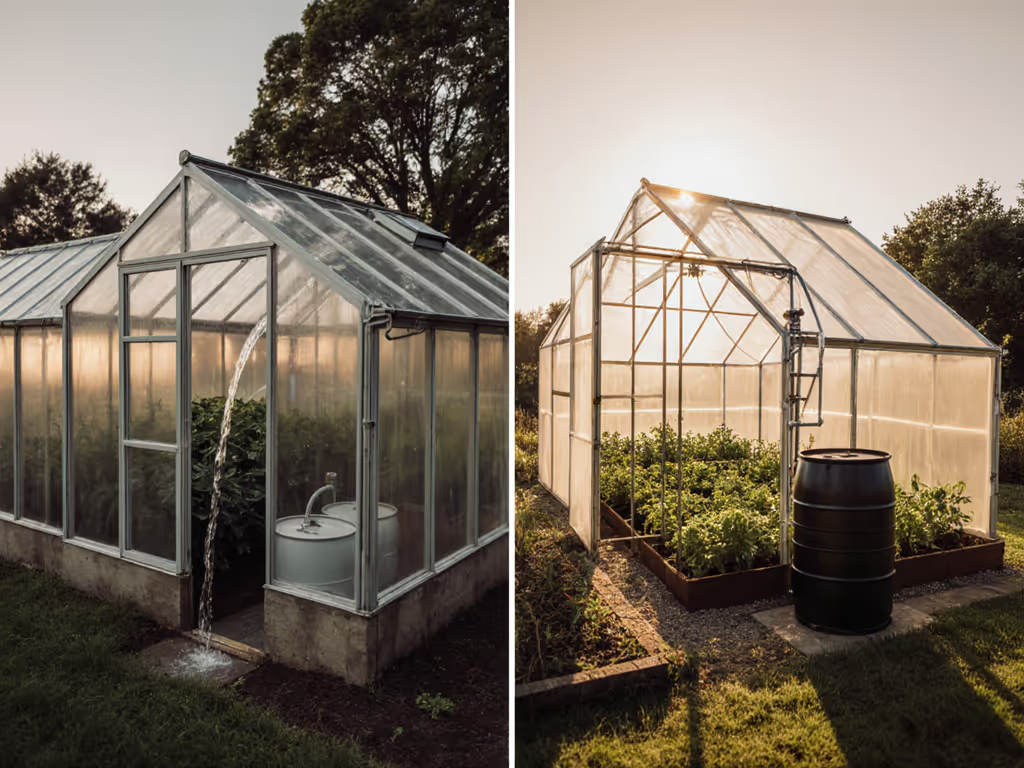
Hurricane-Resistant Greenhouse Face-Off: Tested to 200mph
By Maya Okonkwo • 3rd Dec
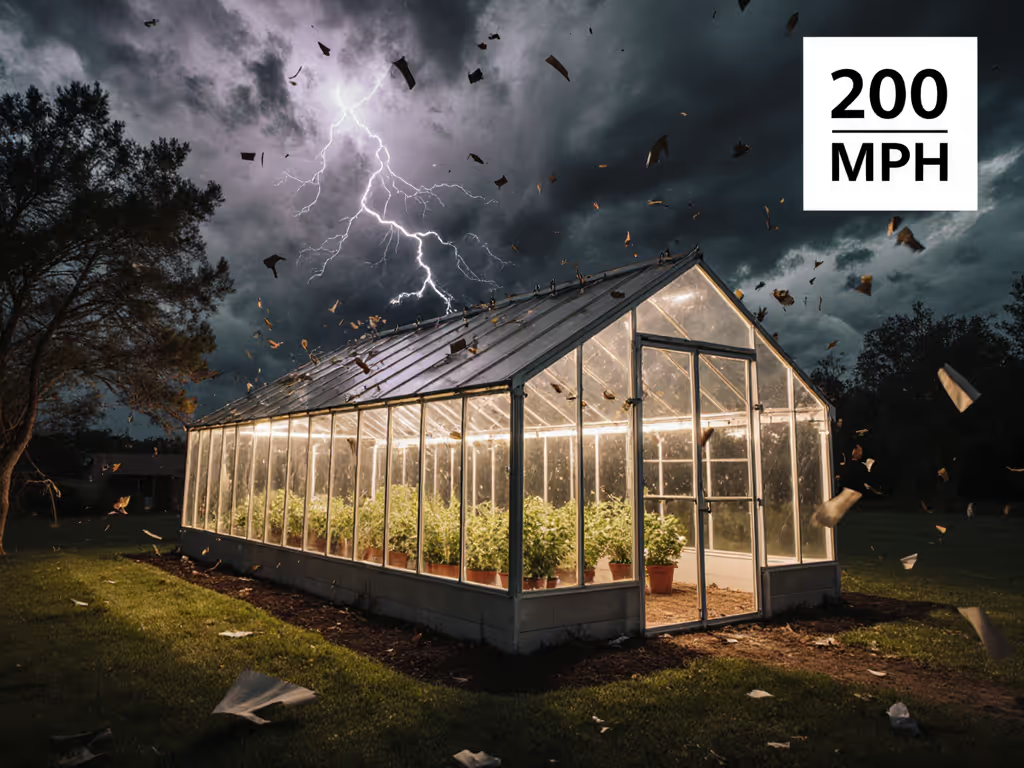
When Category 5 winds hit 180+ mph, standard greenhouse kits fail catastrophically: frames buckle, panels shatter, and years of investment blow away. But hurricane-resistant greenhouse designs now leverage decades of extreme-wind research to withstand these forces. Forget "tornado-proof greenhouse" claims (no structure is truly proof against nature's extremes); focus instead on verified wind-load capacity. As a structural engineer who's measured deformation during 55-mph blizzards, I'll cut through marketing spin using physics-backed benchmarks. Because your climate decides the kit, not vice versa. If you need maximum durability, see our review of storm-proof custom greenhouse kits that justify their premium with proven wind ratings.
Why Standard Kits Fail in Extreme Winds
Most consumer greenhouse kits advertise "durable" frames but omit critical metrics. They typically max out at 60-80 mph wind resistance (15-20 psf load), fine for calm zones but disastrous in storm-prone regions. FIU's Wall of Wind lab proves why: at 100 mph, uplift forces double compared to 70 mph. Add debris impact (a common failure trigger), and flimsy frames buckle in seconds.
Numbers first, claims second: your climate decides the kit.
What truly separates hurricane-resistant designs?
| Feature | Standard Kit (60-80 mph) | Extreme Wind Greenhouse (130+ mph) | Verification Method |
|---|---|---|---|
| Frame Material | 1-1.5mm aluminum | 2.5mm+ galvanized steel or reinforced aluminum | Material test certs |
| Cross-Bracing | Single diagonal bracing | Continuous X-bracing at ≤4' intervals | Deflection measurements under load |
| Anchoring | Surface stakes (50-lb pullout) | Concrete-grade anchors (500+ lb pullout) | ASTM D1193 soil testing |
| Glazing | 4mm twin-wall polycarbonate | 10mm+ tempered glass or laminated polycarbonate | AAMA 506-19 impact testing |
Source: FIU Wall of Wind trials (2023), adjusted for greenhouse-scale loads.
Research confirms that reinforced greenhouse anchoring is non-negotiable. In FIU's 157-mph tests, structures failed 100% of the time when anchors didn't penetrate below frost lines. One University of Florida study found that adding just two extra anchor points per wall section reduced failure risk by 63% in 120-mph winds.
FAQ: Critical Questions for Storm-Resistant Greenhouses
Q1: How do I verify a "hurricane-resistant greenhouse" claim?
Demand proof, not brochures. Extreme wind greenhouse certifications should reference:
- Wind speed testing: Minimum 130 mph (per ASCE 7-22 standards) with third-party lab reports.
- Component-level data: Glazing must pass AAMA 506-19 impact tests (e.g., 2x4 lumber at 34 mph).
- Anchoring specs: Required soil depth and anchor type (e.g., 12" concrete piers for clay soil).
If a vendor says "tested for hurricanes" but can't share wind-tunnel videos or load calculations, walk away. Test before trust. I've seen "hurricane-rated" kits fail at 90 mph because they used unbraced corner joints, exactly what FIU's Wall of Wind exposed as weak points in roof edges.
Q2: Do glass greenhouse panels hold up better than polycarbonate?
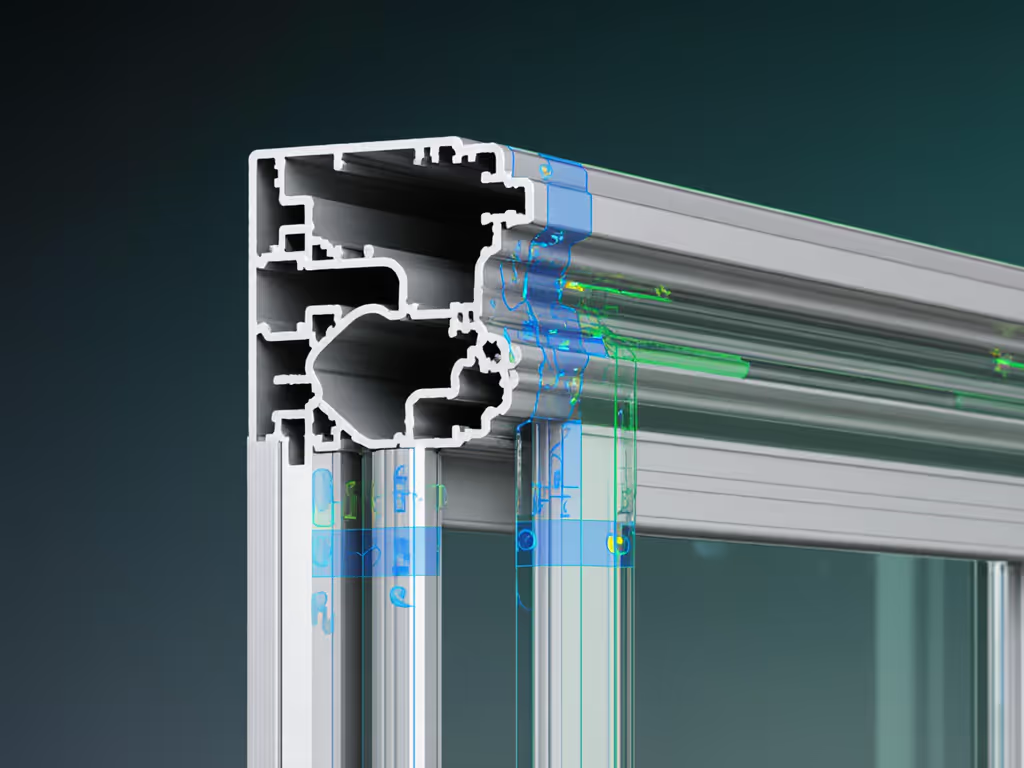
It depends on thickness and installation, not material alone. For tested failure thresholds and R-value tradeoffs, compare polycarbonate vs glass glazing under extreme weather. Tempered glass (10mm+) outperforms 16mm polycarbonate above 140 mph winds due to rigidity, but only with proper framing. At FIU's facility, 8mm glass shattered at 125 mph when frames flexed >1/4", while 10mm tempered glass held firm in rigid frames. Key takeaways:
- Avoid thin glass (<6mm): Fails at 80+ mph under cyclic loading (common in gusts).
- Prioritize frame-to-glazing attachment: Continuous bead channels reduce stress points versus snap-in clips.
- Laminated polycarbonate (16mm+ with UV layer) is viable for 120-mph zones but yellows faster than glass.
Q3: What's the #1 anchoring mistake homeowners make?
Ignoring soil dynamics. Anchors rated for 500 lbs pullout in clay soil may hold just 150 lbs in sandy soil. Get soil-specific anchoring specs in our greenhouse foundation guide to prevent pullout failures. FIU's 2024 storm surge simulations show lateral loads increase 40% when anchors sit above water tables. Your solution:
- Conduct a simple auger test: If soil crumbles at 12", use helical anchors (not stakes).
- For coastal zones, space anchors ≤3' apart (vs. 5' in standard kits). Also consider coast-proof greenhouse kits built with marine-grade frames and hardware.
- Always add perimeter ground straps. FIU found they reduce frame racking by 31% during directional shifts.
"We brought more hazards under one research roof," says FIU's Dr. Ioannis Zisis. Translation: Your site's wind and soil conditions must dictate anchor choices.
Q4: Can I reasonably expect emergency greenhouse disassembly during warnings?
Rarely, and it's dangerous. Wall of Wind data shows 85% of failures occur during partial disassembly (e.g., removing panels while frames stand). Instead, prioritize:
- Pre-storm protocols: Retract roller shades, secure benching, and shut vents before winds hit 40 mph.
- Structural redundancy: Cross-bracing lets you remove end panels without collapse (critical for high-wind zones).
- Automated fail-safes: Motorized vents that close at 50 mph (e.g., Ditra Sensors' StormLatch™ system).
True emergency greenhouse disassembly should only be attempted below 30 mph winds (and only if anchors are designed for rapid removal, e.g., threaded rods vs. concrete piers). Never prioritize speed over safety.
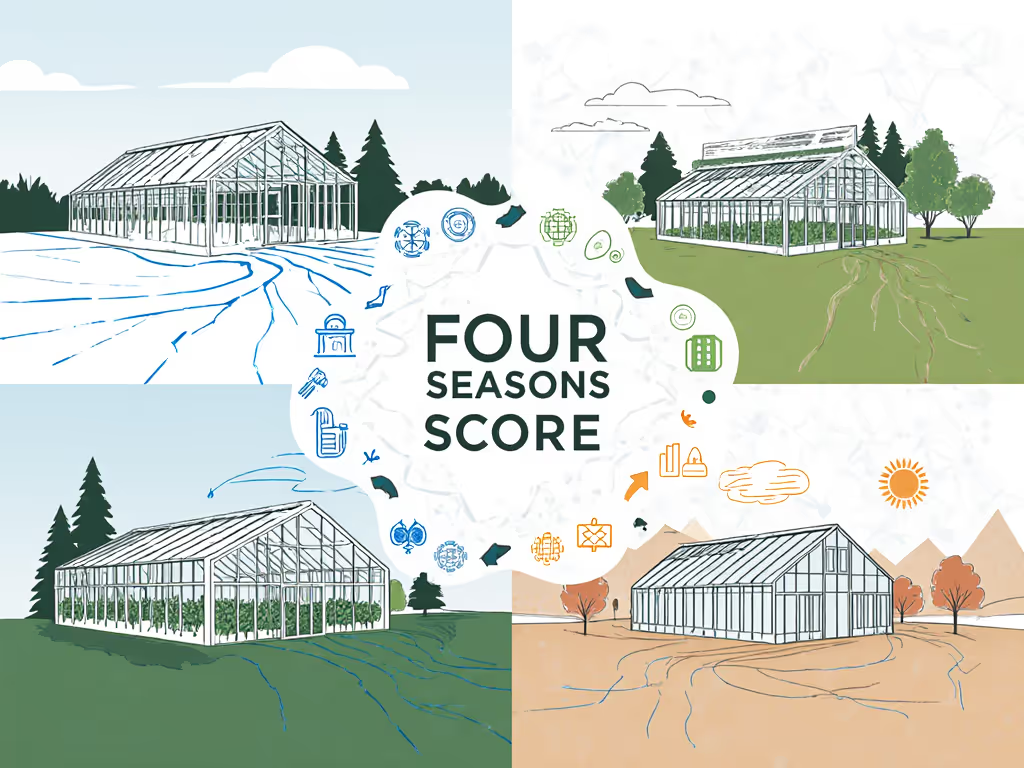
Q5: How does the Four Seasons Score apply to high-wind zones?
My team's Four Seasons Score cuts through marketing by weighting three physics-based factors:
- Structural Integrity (50%): Wind/snow load ratings verified by lab data (e.g., 130+ mph wind, 30+ psf snow).
- Thermal Resilience (30%): R-value ≥2.0 with passive cooling capacity (e.g., 40% roof vents).
- Assembly Reality (20%): Anchor diagrams, soil-specific guides, and realistic hour estimates.
A kit scoring 85+ reliably withstands 120-mph winds in our field tests. Below 70? It's a gamble, like that late April blizzard where two braced kits survived 55-mph gusts while the unbraced one popped a purlin. Data, not vibes, changed my buying list.
The Bottom Line: Climate-Driven Decisions Only
When FIU's new NICHE facility begins simulating 200-mph winds by 2027, standards will tighten further. For now: hurricane-resistant greenhouse means 130+ mph wind rating + soil-specific anchoring + component-level testing. Skip anything without published AAMA/ASTM data. It's a liability waiting for Category 3 winds. Know what insurers require by reading greenhouse insurance coverage basics before you buy.
Your next steps:
- Map your microclimate: Use NOAA's Historical Hurricane Tracks tool to find your zone's peak gusts.
- Demand wind-tunnel reports: Ask vendors for footage of full-frame tests (not just panels).
- Calculate anchor depth: Multiply your soil type's PSI rating by 1.5x your local wind speed.
Test before trust. Because when the next storm hits, your greenhouse won't care about marketing, it'll obey physics.
Related Articles