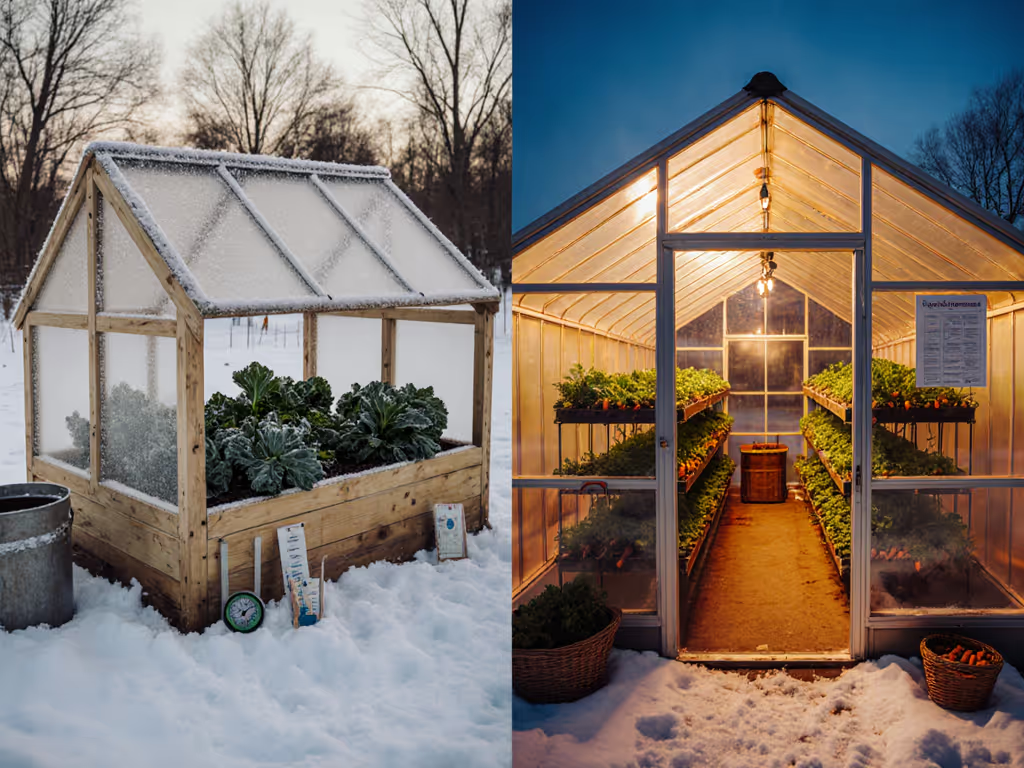
Winter Greenhouse Kits: Specs for Dormancy Plants
By Maya Okonkwo • 3rd Mar
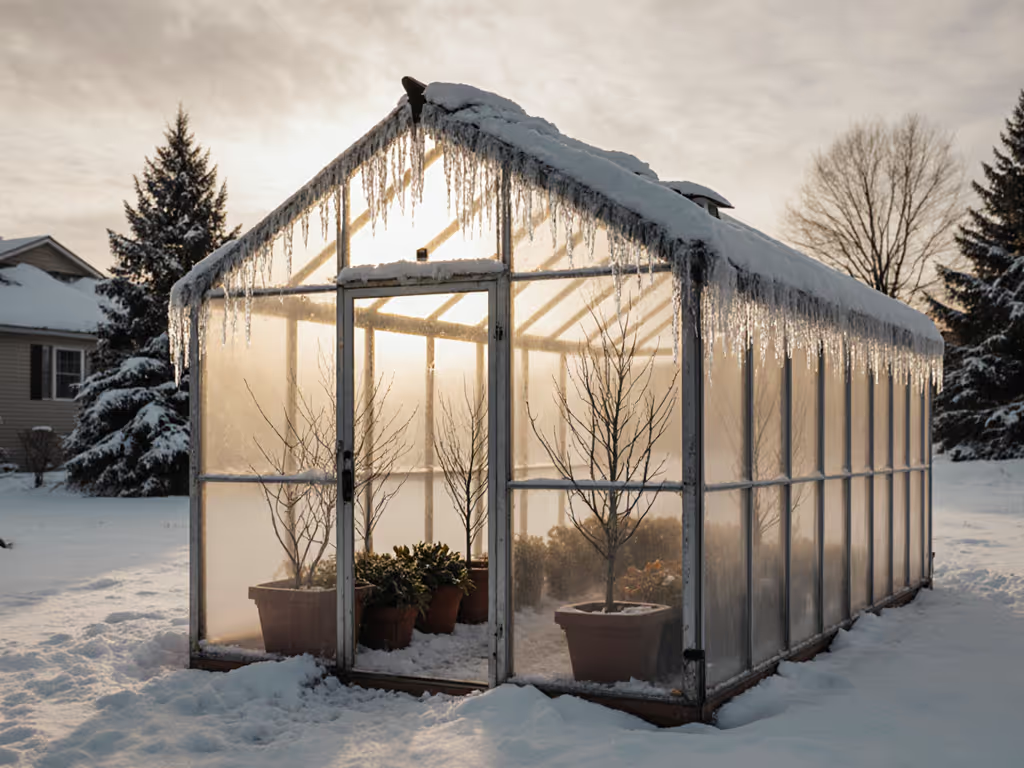
Choosing the right winter greenhouse for plants in dormancy means matching your structure's load capacity, insulation value, and thermal mass to your microclimate's actual weather data, not marketing claims. A dormancy cycle greenhouse must handle snow load in pounds per square foot, wind resistance in mph, and maintain root-zone temperatures precisely enough to keep dormant plants alive without guesswork. Numbers first, claims second. Your climate decides the kit. For cold-zone build details and heat-retention tactics, see our Zone 3 winter greenhouse guide.
FAQ: Winter Greenhouse Specs for Dormant Plants
What Load Ratings Should I Verify Before Buying?
Most winter greenhouse kits publish snow load capacity in one of two ways: total depth (e.g., "6 feet of light snow") or pressure rating in pounds per square foot (psf). The first is useless without density. Light snow compresses differently than packed snow, and a kit rated for 6 feet of light snow at 7 psf might fail under 3 feet of dense, wet snow at 20+ psf.
Verify three numbers from the manufacturer:
- Snow load (psf): Minimum 30 psf for temperate snow-belt regions; 50+ psf for Rocky Mountain and coastal zones with wet, heavy snow.
- Wind speed (mph): 90+ mph is baseline; 115 mph is the threshold where geodesic and cross-braced designs show measurable advantage.
- Anchor points and tie-down specs: A kit's frame is only as strong as its connection to the ground. Demand documentation of anchor bolt size, spacing, depth, and lateral-load rating.
When a vendor lists only depth or gives vague language like "suitable for harsh winters," you lack the data to compare two models or predict performance in your zone. Ask for engineer's specifications. If they don't exist, the kit is a gamble. To compare verified ratings by brand, use our cold climate snow load comparison.
How Do Dormant Plants Differ from Growing-Season Plants in a Greenhouse?
Dormant plants, bare-root asparagus crowns, rhubarb rhizomes, or hardened-off perennials in containers, have one critical vulnerability: root temperature. Above-ground shoots on dormant woody plants can tolerate subzero air; roots cannot. In field soil, a 2-3 foot buffer of earth insulates roots. In a pot or shallow frame, roots freeze directly.
A winter greenhouse for dormancy management must maintain soil temperature in the 25-35°F range, verified with a soil thermometer, not air temperature. Many growers confuse these and learn too late that their greenhouse's air stays at 40°F while pot soil hits 18°F on clear, windy nights.
Frostier dormancy (like asparagus or rhubarb) requires temperatures below 40°F for bud break and yield. But the roots need the 25-35°F buffer. A greenhouse that climbs above 50°F on sunny days without venting will break dormancy prematurely, exhaust the plant's energy, and cripple spring vigor.
What Thermal-Mass Systems Actually Work?
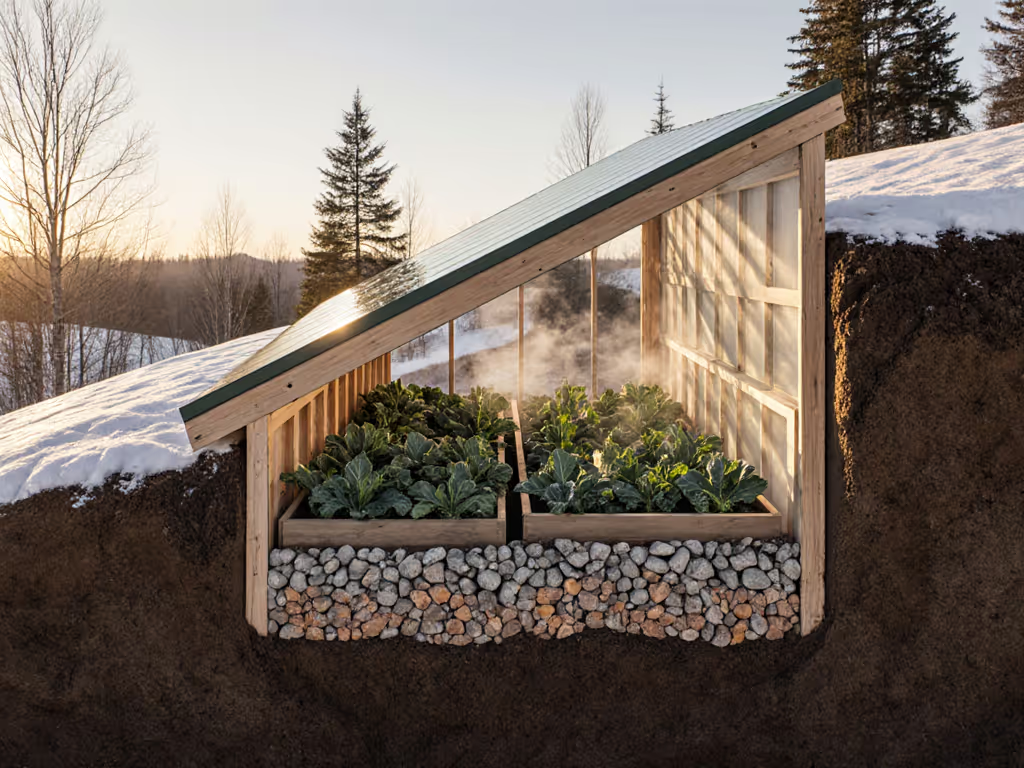
Passive solar gain alone is insufficient for winter dormancy storage in most North American climates. You need thermal mass: a structure that absorbs heat during the day and releases it at night. The most-cited system is an above-ground pond (roughly 200+ gallons for a 12×16 ft greenhouse) paired with circulation fans.
Data from real installations in the Rocky Mountains shows that a geodesic greenhouse with an above-ground pond and solar-powered central air system requires roughly one-third less supplemental heating energy than a traditional rectangular greenhouse, even in regions where winter nights drop to zero. The pond acts as a heat sink; the fan moves warm air from the top (where solar heat concentrates) to the root zone. Explore passive options in our zero-electricity thermal mass guide.
Alternative: Double-layer polyethylene with an air gap (6-12 inches) offers measurable insulation without the maintenance of water systems. A fact confirmed by commercial grower trials: two layers of clear poly reduce thermal loss by roughly 30-40% compared to single-layer.
Do I Need Supplemental Heat for Dormant Plants?
Not always, but only if you choose cold-hardy crops and match your kit's passive performance to your zone. Growing Dome documentation states that plants such as leafy greens, root vegetables, and cold-season herbs grow successfully through winter without supplemental heat in most U.S. climates when the structure is properly insulated and uses thermal mass.
If you want to maintain tender perennials or force early growth (asparagus, rhubarb, tree fruits), a heater becomes essential. Verify these specifications from the kit vendor:
- R-value of glazing material: Polycarbonate (5-6 mm double-wall) rates R-1 to R-1.6; polyethylene film with an air gap, R-2 to R-3.
- Total air-change rate when sealed: A tight seal reduces heat loss; excess ventilation for humidity control costs energy.
- Square footage of glazing exposed to north wind: Larger unprotected north faces require more heating to offset radiative loss. If insulation is your bottleneck, see how 5-wall polycarbonate panels cut heating demand versus triple-wall.
For smaller Growing Domes, a 9,000-14,000 BTU ceramic or propane heater maintains soil temps in the target zone during subzero snaps. Larger kits or more aggressive heating may require 30,000 BTU systems. Without your specific kit's insulation specs and your zone's 99th-percentile winter temperature, any heater recommendation is conjecture.
Which Crops Actually Thrive in Winter Dormancy?
Not all vegetables tolerate dormancy storage in a cool greenhouse. Focus on cold-hardy families: Brassicaceae (kale, broccoli, cabbage, arugula), Asteraceae (lettuce, endive), Apiaceae (carrots, parsley, dill), and Amaryllidaceae (onions, garlic, chives).
For asparagus greenhouse requirements, maintain soil temps at 28-32°F through winter; crowns need 800+ chill hours (hours below 45°F) to break dormancy reliably in spring. A winter greenhouse that dips below 25°F risks crown rot; above 40°F wastes the chill requirement and stalls bud initiation.
For rhubarb dormancy management, similar logic applies: crowns need 600+ chill hours and soil that stays frozen or near-frozen to prevent premature sprouting. A greenhouse that seesaws between 20°F and 50°F week to week causes energy waste and weak spring growth. Consistency (via thermal mass and steady micro-venting) is more valuable than absolute temperature.
Test before trust. On my test site, a late-April blizzard drove 55 mph winds across three kits. The one without cross-bracing and proper ground anchors couldn't hold shape; a purlin buckled under the snow deformation. The other two, braced and staked deep, kept their geometry. When the melt came, inside temps bounced back to growth mode fast. The structural data mattered more than the salesman's claims of "all-weather proof."
How Should I Calculate Heating Costs and Total Cost of Ownership?
A realistic winter greenhouse budget includes:
- Kit cost: $2,500-$8,000 for a 12×16 ft polycarbonate frame.
- Foundation and anchoring: $500-$2,000 (concrete footings, anchor bolts, land prep).
- Thermal upgrade: $300-$1,500 (insulation, thermal mass, double-poly covering).
- Heating system: $200-$2,500 (heater, thermostat, backup propane tank).
- Seasonal electricity/fuel: $400-$1,200 per winter (varies by zone, system size, and run hours).
Compare this against your grocery costs for winter vegetables and your current energy usage. A research-backed rule: if you grow $800-$1,200 worth of produce per season and reduce heating waste via cross-bracing, tight glazing, and thermal mass, payback spans 5-7 years in most cold zones. But only if you have documented insulation values and a tight seal.
Vendors rarely disclose blower runtime, thermostat setpoints, or seasonal energy draw in their marketing. Ask for this data. If it's not available, you can't calculate ROI honestly.
What Ventilation and Humidity Strategy Prevents Crop Loss?
Dormant plants in a sealed greenhouse face two killers: excessive humidity (fungal disease, mold on stems) and temperature swings (ice on foliage, bud crack from freeze-thaw cycles).
A winter greenhouse needs low-level passive vents (louvers or ridge-opening panels) to allow cool, dry outside air to seep in slowly, and active vent fans (thermostat-triggered) to purge excess moisture when inside humidity tops 85% on sunny days. The fan should run for 5-10 minutes per cycle, not continuously. For airflow data and kit comparisons, see our greenhouse fan performance guide.
For dormancy storage, humidity can drop to 50-60% without harm; this slows mold risk dramatically. Measure humidity with a sensor; don't guess. A $30 hygrometer data-logger reveals daily humidity swings and helps you tune vent timing without wasting heat.
Further Exploration
Moving forward, prioritize these steps before selecting a winter greenhouse:
- Obtain zone-specific load data. Contact your local extension office or a structural engineer for 99th-percentile snow load, peak wind speed, and frost-depth data for your zip code.
- Request published specs from vendors. Snow load (psf), wind rating (mph), R-value of glazing, and anchor bolt specifications. If they hesitate, move on.
- Calculate your crop mix and chill-hour needs. Match cold-hardy varieties (asparagus, rhubarb, leafy greens) to your target dormancy depth and season length.
- Model a 5-year total cost of ownership. Include foundation, heating fuel, and expected crop yield. Use this to justify your purchase to a partner or board.
- Site-test a smaller kit first, if budget allows. An 8×10 ft polycarbonate frame ($1,500-$2,500) lets you validate anchor performance, thermal behavior, and your maintenance appetite before committing to a larger structure.
Climate dictates structure, not the reverse. Measure first, choose second. Test before trust.
Related Articles