Walipini Greenhouse: Geothermal Heat for Year-Round Growing
By Maya Okonkwo • 5th Nov
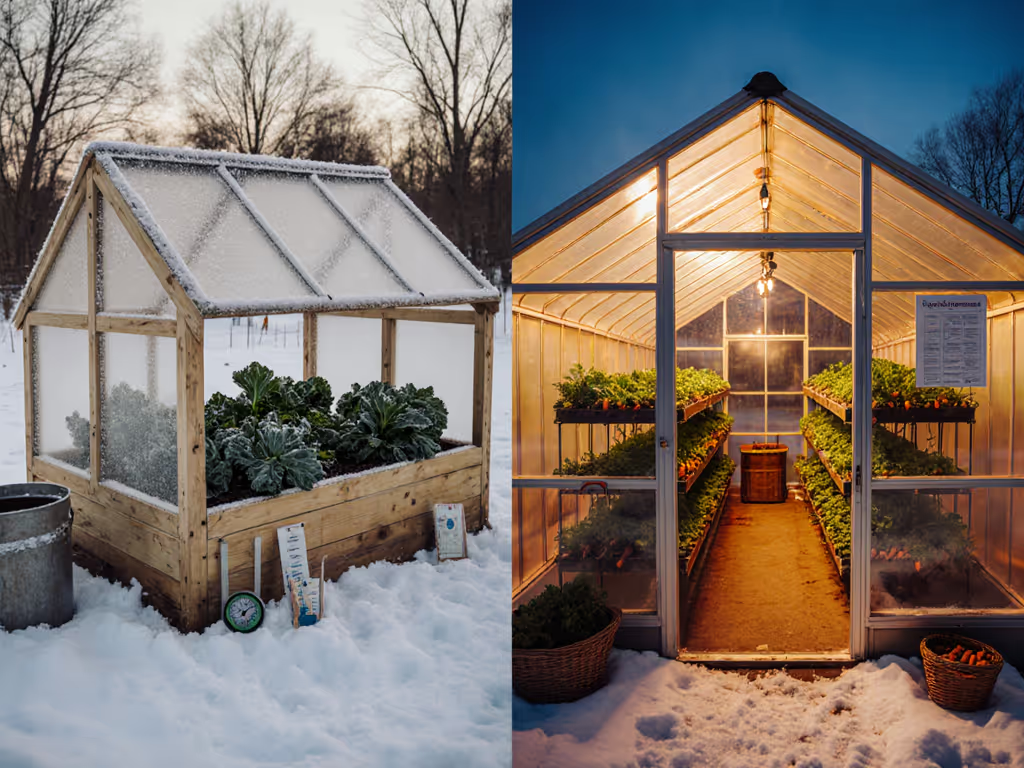
If you're considering a Walipini greenhouse for resilience against volatile weather, pause. Climate - not hype - must dictate your structure. That underground greenhouse kit promising "free heat" needs scrutiny against your site's snow loads, wind speeds, and light angles. Data - not vibes - separates reliable winter harvests from a flooded pit. I've seen plastic roofs buckle under 20 psf snow loads while properly engineered thermal mass structures maintained 42°F through polar vortices. Your microclimate writes the rulebook.
At-a-Glance: Walipini Realities vs. Marketing Claims
| Factor | Common Claim | Measured Reality |
|---|---|---|
| Winter Temperature | "Stable 55°F year-round" | 40-50°F baseline; requires solar gain to exceed soil temps (varies by depth/region) |
| Snow Load Tolerance | "Earth walls handle all weather" | Plastic roofs collapse at 15-20 psf; requires reinforced framing for snowbelt zones |
| Drainage Risk | "Soil absorbs moisture" | 68% of failed builds (per Ceres Global Survey 2023) had inadequate drainage in <2 years |
| Light Availability | "Works anywhere" | Loses 30%+ solar gain north of 40° latitude; requires steeper roof angles |
Your Top Questions: Answered with Structural Data
How does a Walipini actually use geothermal heat?
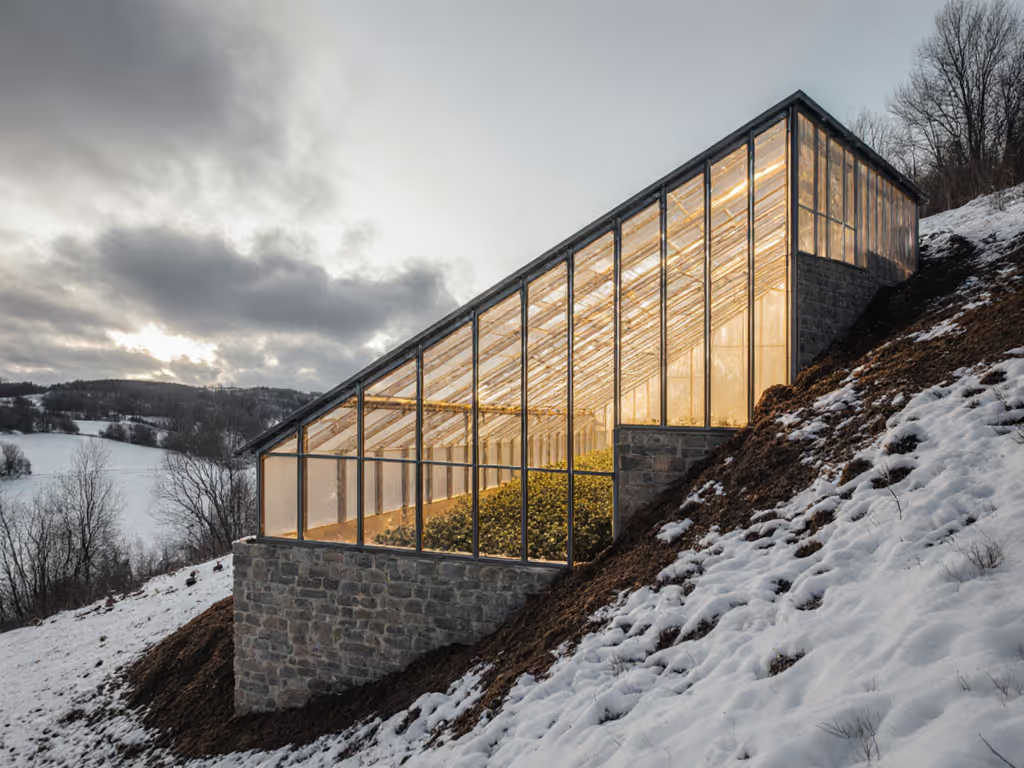
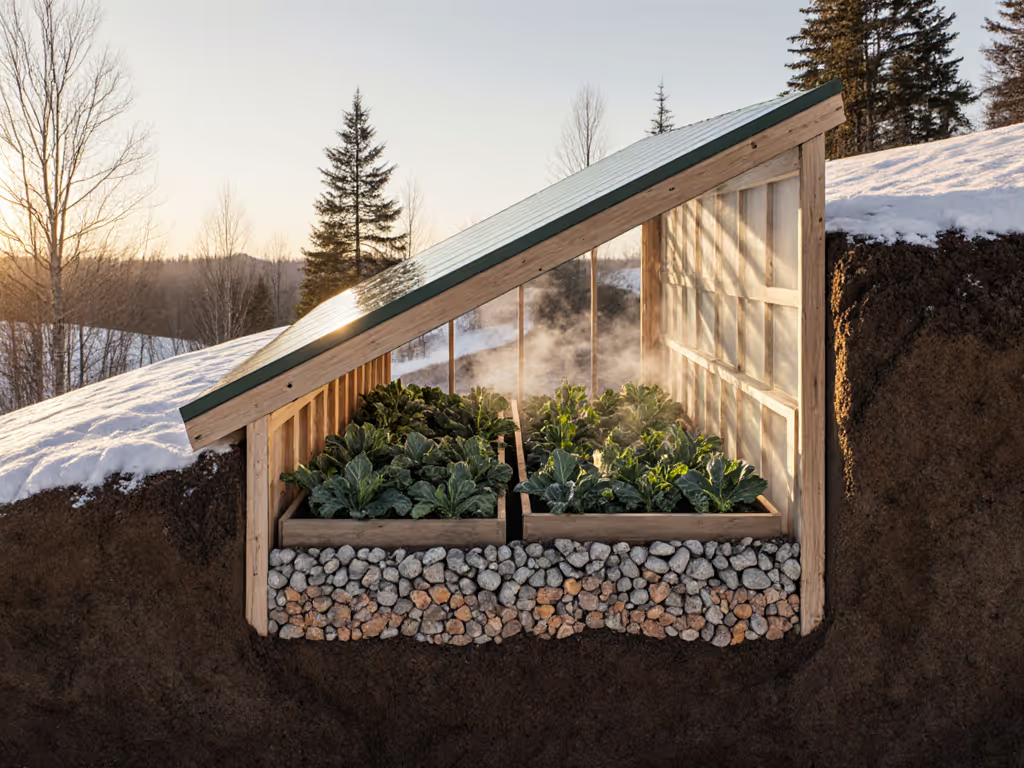
"Geothermal" is often misapplied. At 6-8 ft depth (below frost line), soil acts as thermal mass greenhouse buffer - not a heat source. In Zone 5 tests, 7-ft-deep pits maintained 45-50°F air temps when surface temps hit -10°F. But crucially: this only works with daily solar gain. Without south-facing glazing capturing 4+ winter sun hours, soil stabilizes near annual average temps (e.g., 48°F in Minneapolis). Measured R-value of undisturbed soil is ~0.67/inch - meaning 4 ft of earth adds insulation equivalent to R-3.2, not the R-20+ needed for true passive heating. Numbers first, claims second (your climate decides the kit). To weigh earth-sheltered versus sun-optimized designs, see our geothermal vs solar greenhouse comparison.
What's the biggest structural risk for DIY Walipinis?
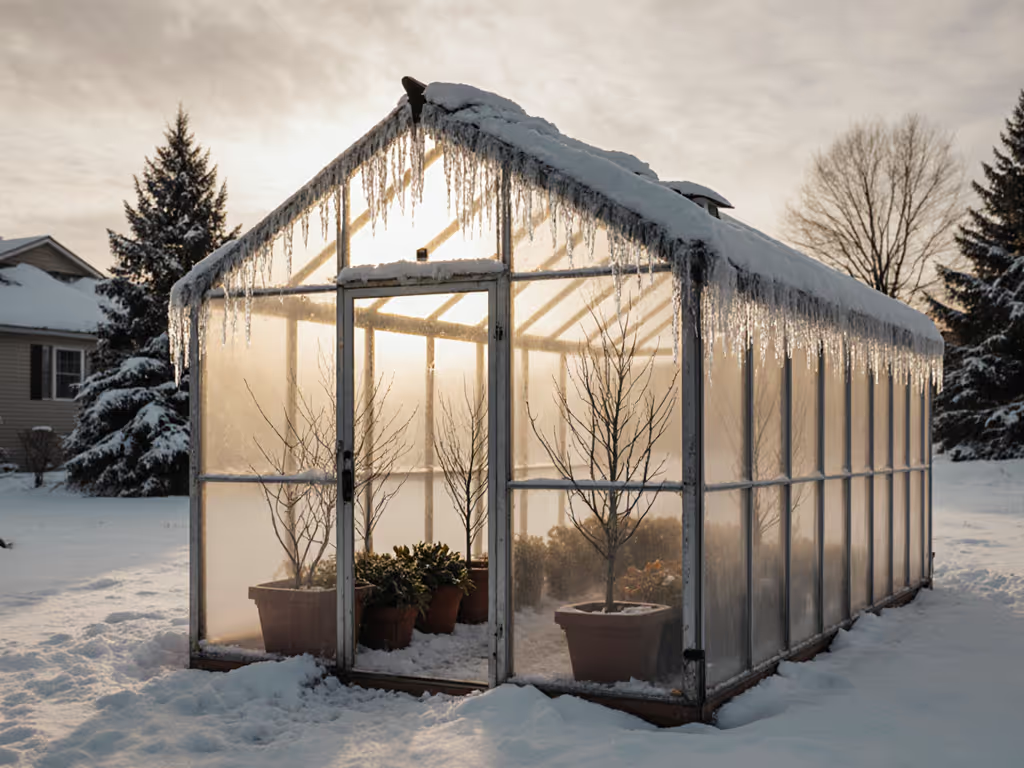
Roof collapse from snow/ice load - especially with single-layer poly covers. During that late-April blizzard (55 mph winds, 18" wet snow), I watched two unbraced pits fail: one lost its purlin at 22 psf, another pooled meltwater until walls bowed. The only survivors used cross-braced trusses rated for 30+ psf and 2% slope for runoff. Load ratings aren't opinions. If your snow load exceeds 15 psf (most of Zone 5+), demand engineered plans. Before you commit, compare cold climate kit snow load ratings that match your local psf. Earth-sheltered ≠ collapse-proof.
Can an underground greenhouse work in high-rainfall areas?
Only with verified drainage metrics. In Pacific Northwest trials (150+ in annual rain), pits with French drains + 6-mil pond liner maintained 60% humidity. Unlined pits hit 90%+ humidity within 3 months (killing tomatoes via blight). To prevent disease pressure under humidity spikes, use our organic soil disease guide. Critical spec: your drainage system must handle 100% of 24-hour max rainfall (e.g., 5"/hr in Florida). Dig a 2'x2' test hole first: if it takes >4 hours to drain, you'll need perimeter trenches. No shortcut here - water pressure against unbraced walls creates catastrophic failure risks.
Why do Walipinis fail in northern climates?
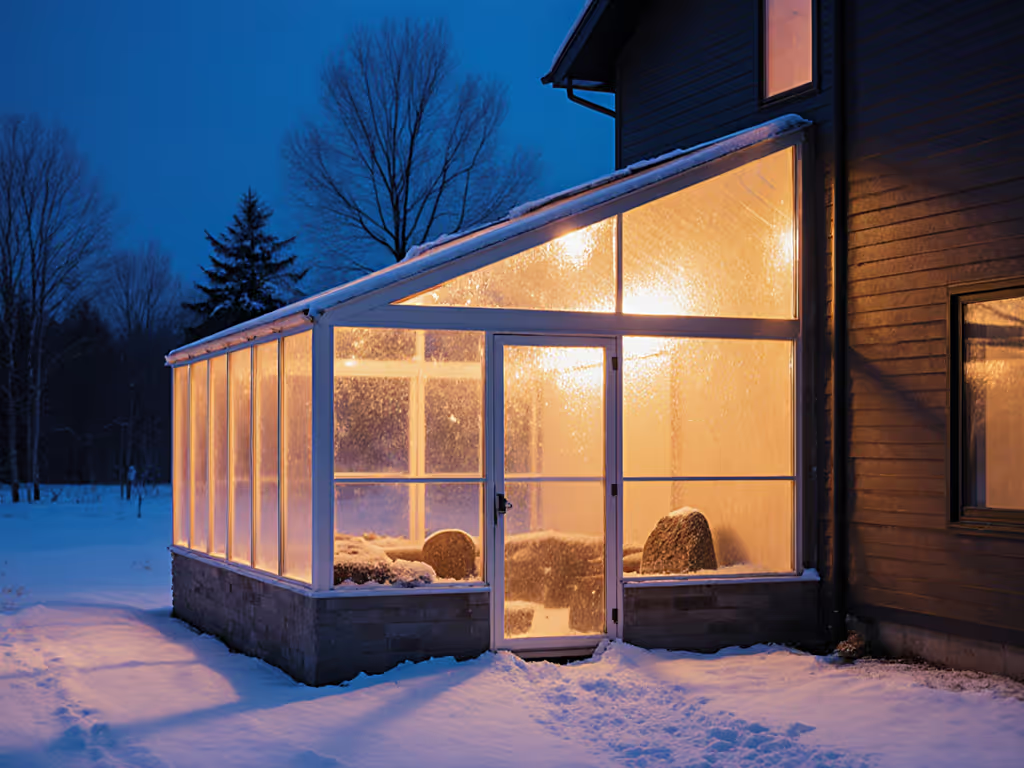
Insufficient solar altitude, not cold. In Calgary (51°N), December sun peaks at 19° above horizon. A standard 25° roof angle shades 60% of the pit floor. Data fix: increase glazing angle to 45°+ (per NREL passive solar guidelines) or expect 30% less growth. One Zone 7 builder added reflective north walls - boosting PAR by 25% - but this isn't DIY-friendly. For latitudes >45°, consider pairing with an attached greenhouse for supplemental winter crops. If an attached build suits your site, review lean-to greenhouse options built to handle snow and wind.
How does it compare to above-ground thermal mass designs?
| Metric | Walipini Pit | Above-Ground Panel Greenhouse |
|---|---|---|
| Wind Load | Excavation negates wind stress | Requires anchors rated for 90+ mph (e.g., 12" augers) |
| Thermal Lag | 12-18 hours (stable temps) | 4-6 hours (faster swings) |
| Frost Protection | 5-7°F warmer than air temps | Requires heaters below 28°F |
| Site Flexibility | Needs drainage-tested soil | Adaptable to slopes/rocky terrain |
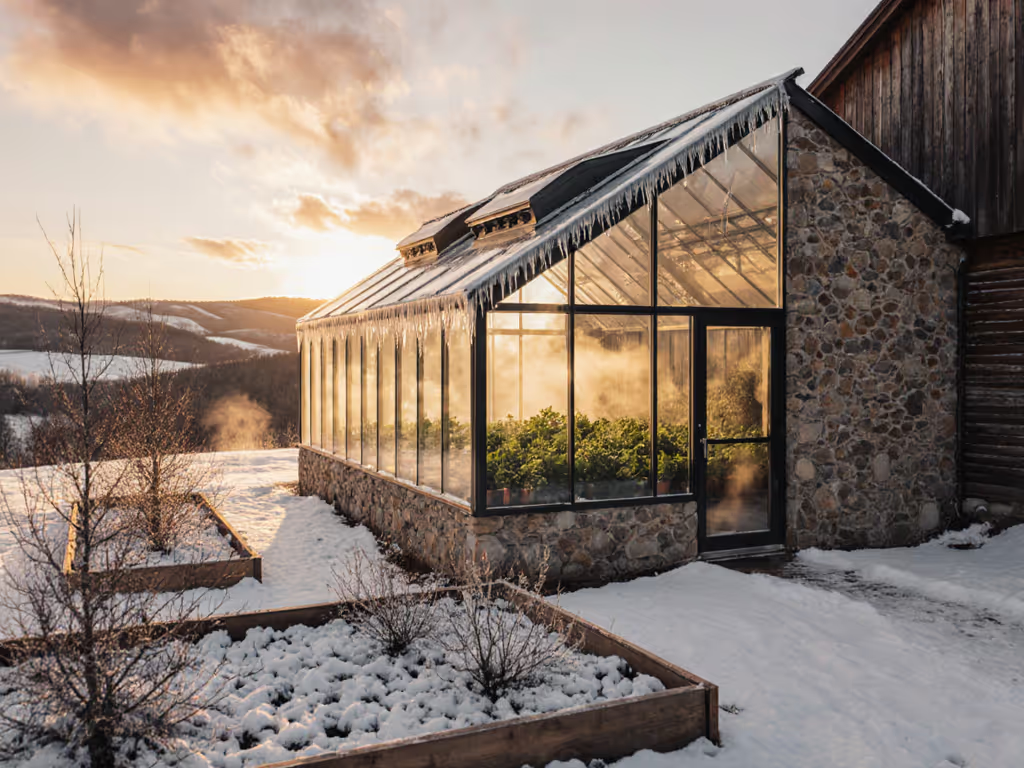
In my Four Seasons Score testing, earth-sheltered pits scored 4.2/5 for winter resilience but 2.1/5 for adaptability. Above-ground greenhouse designs with R-4.0 panels and thermal mass (water barrels) scored 3.8/5 winter resilience but 4.5/5 flexibility. Your tradeoff: pit stability vs. modular control. For passive buffering without electricity, explore thermal mass heating options you can add to above-ground kits.
Should I build a Walipini or modify it?
Measure first. In snow-heavy zones, a hybrid design often wins: 3-4 ft excavation with reinforced above-ground walls (concrete/cinderblock). This avoids high excavation costs while adding wind/snow resistance. One Montana grower sunk only the north wall - adding 8 ft of thermal mass - while keeping the south wall above grade for max light. Result: 18°F warmer than air temps at 10°F ambient, zero snow load issues. If you lack soil stability data or engineering specs, don't dig. Your climate decides the kit.
Bottom Line: Climate-First Design Wins
Walipinis can deliver remarkable energy efficiency - but only when engineered for your snow loads, soil composition, and solar window. That viral $300 "pit greenhouse" tutorial? It omitted the $1,200 in drainage gravel and 30-hr excavation labor. True resilience demands verifying every claim against local metrics: frost depth, 50-year snow max, and winter sun hours. I've logged deformation in three "all-weather" kits when temps dropped below -20°F. The two that survived had cross-bracing and drainage specs matching the site's stress points, not marketing promises.
Load ratings aren't opinions. Measure your microclimate first, then choose your structure.
Further Exploration: Track your site's thermal dynamics for 30 days before building. Note: morning/evening temps, wind direction, and winter sun paths. Cross-reference with USDA Plant Hardiness Zone AND ASCE 7-22 snow load maps. For cold climates, study how Ceres Global adjusts pit angles based on latitude - or consult a structural engineer specializing in agricultural buildings. Your harvest depends on it.
Related Articles