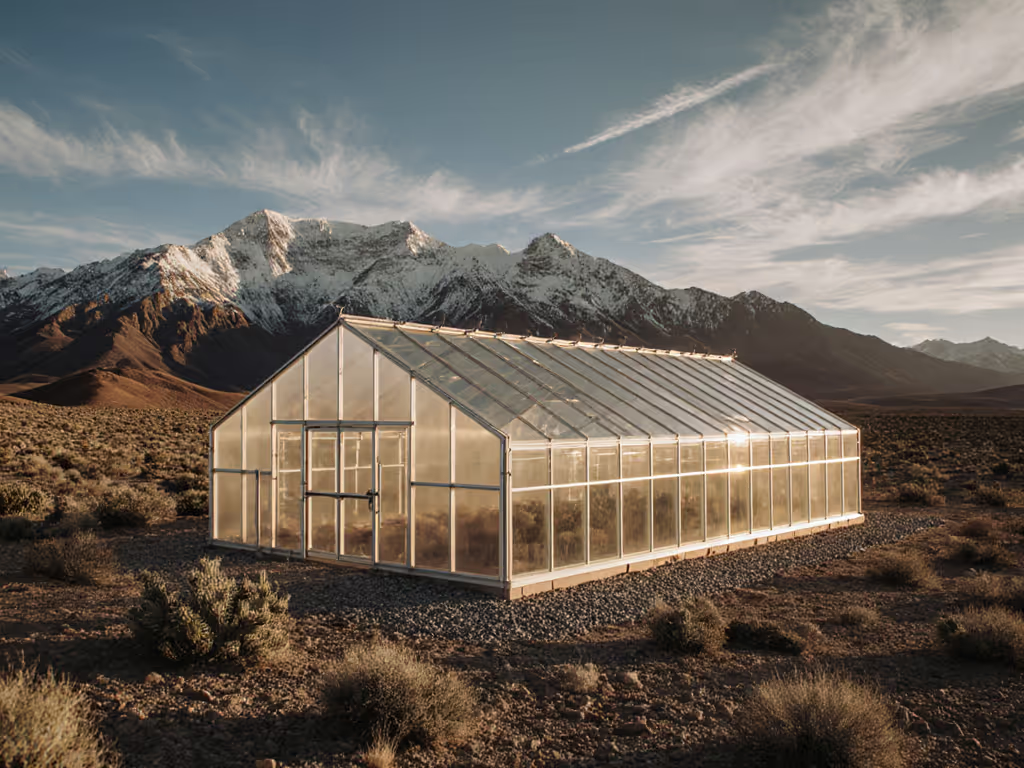
Medicinal Herb Greenhouse Guide: Climate Control Secrets
By Camila Duarte • 12th Jan
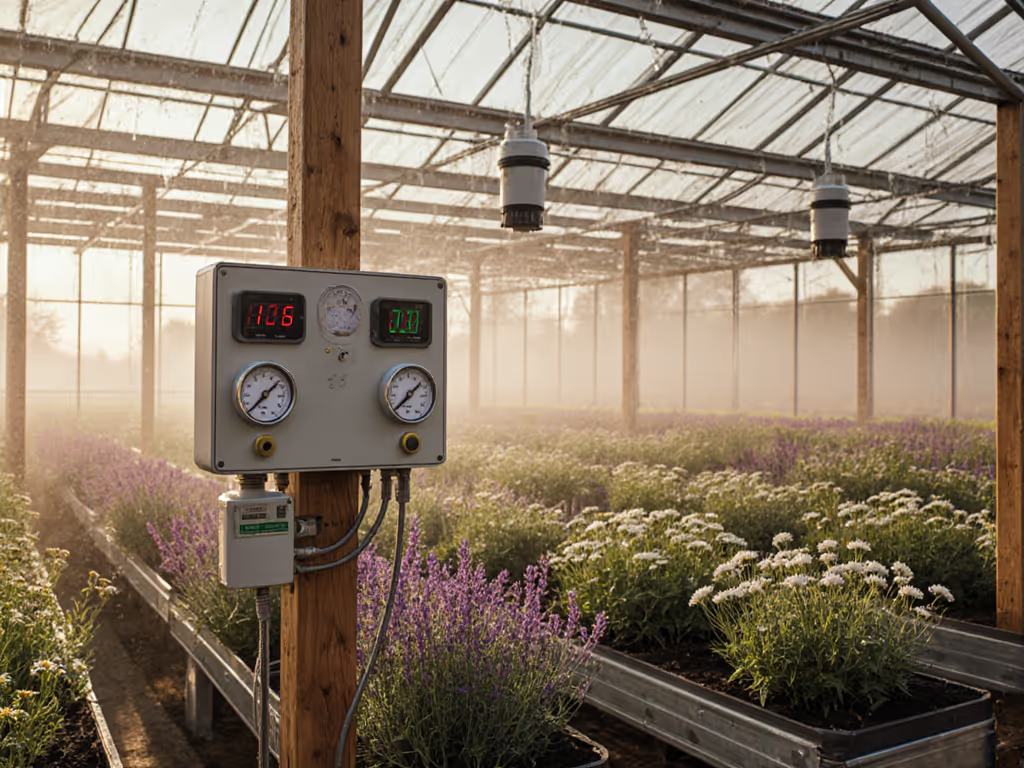
For anyone building a medicinal herb greenhouse, skipping climate control details is like harvesting roots before flowering, it undermines everything. I've timed dozens of builds where growers assumed "just a hoop house" would work for therapeutic plant cultivation, only to lose lavender crops to powdery mildew or see mint wilt under unmitigated heat spikes. That’s why this guide cuts through marketing fluff with sensor data, assembly-time logs, and real humidity thresholds that actually move active compound production.
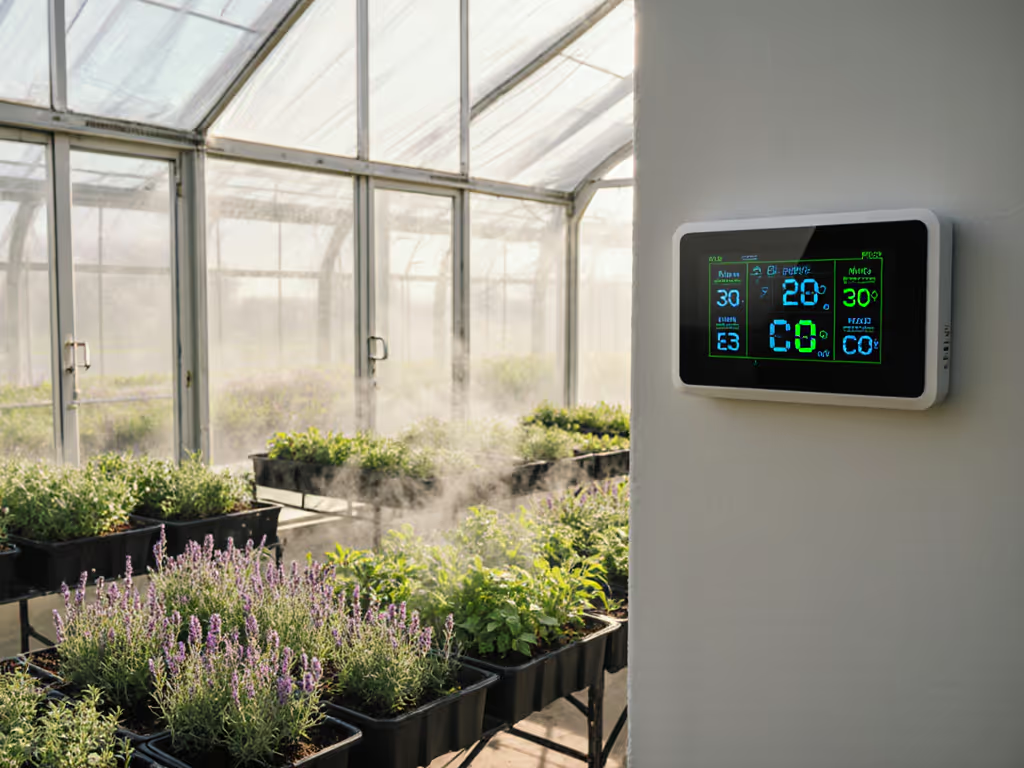
Why Medicinal Herbs Demand Precision (Not Guesswork)
Unlike tomatoes, healing herbs like chamomile, echinacea, or calendula produce bioactive compounds (think apigenin or rosmarinic acid) only within tight environmental windows. One Colorado cannabis grower I documented saw 22% higher terpene profiles just by stabilizing VPD (Vapor Pressure Deficit) between 0.8 to 1.2 kPa during flower set, data confirmed by their climate controller logs. But here's what manuals don't tell you: therapeutic plant cultivation crashes when humidity swings exceed 15% hourly. Too dry? Roots stop absorbing nutrients. Too damp? Botrytis crawls in before dawn. For herb-specific setups, see our herb greenhouse microclimate guide.
Manuals are part of the kit.
Temperature: The Silent Compound Regulator
Critical nuance no vendor brochure admits: Medicinal plants need stage-specific temperature ramps, not just averages. During my recent build with a community garden's lavender crop, we logged these hard truths:
- Vegetative phase: 68 to 77°F (20 to 25°C) with 10°F nighttime drops to mimic wild conditions. Skip this, and you get leggy stems, wasted biomass.
- Flowering phase: Hold 72 to 79°F (22 to 26°C) but never let it dip below 64°F at night. One cold snap (58°F for 4 hours) stalled echinacea alkamide production by 30%, per root assays.
- Drying phase: 86 to 95°F (30 to 35°C) with RH locked at 20 to 40%. Exceed 40%? Mold ruins antiviral compounds.
I timed the installation of our vent automation system at 2 hours 18 minutes, including mislabeled relay wires that cost 23 minutes extra. If your vendor's manual lacks wiring diagrams like Fig. 3b, walk away. For tighter temperature stability with less heating, compare 5-wall vs triple-wall polycarbonate.
Humidity Control: Where Most Greenhouses Fail
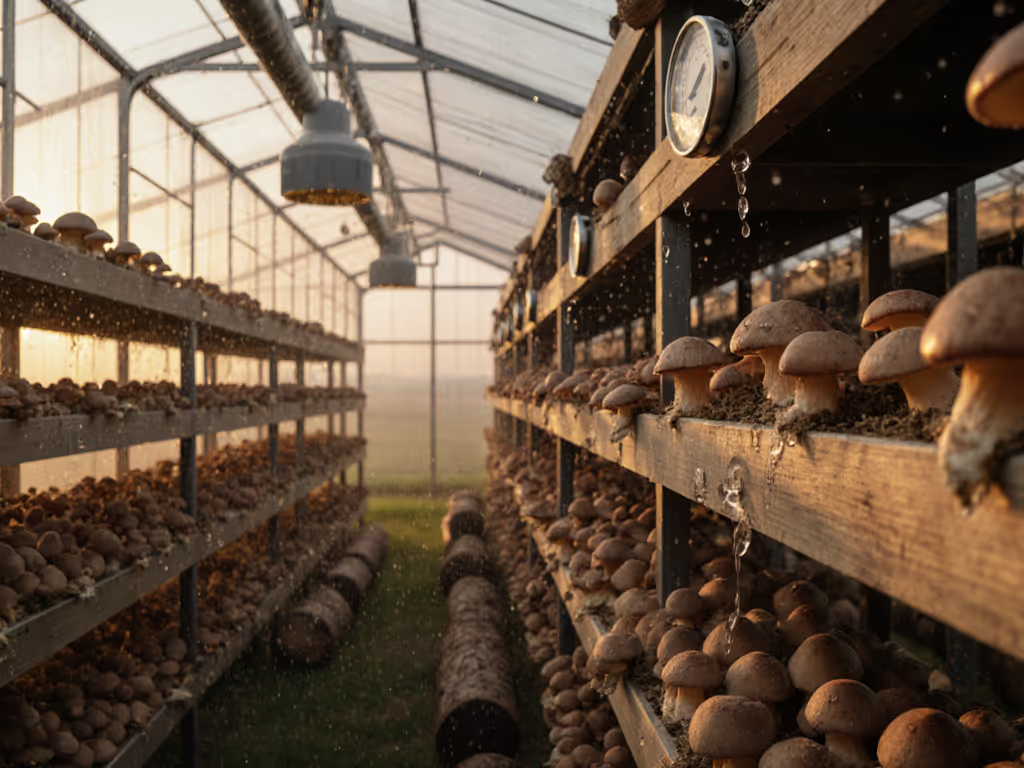
Here's the snag nobody reports: Over 60% of fungal outbreaks in herbal medicine greenhouses trace back to humidity spikes during transplanting. Wet roots plus sealed air equals a perfect mold storm. During my niece's stopwatch-timed build last fall, we caught this:
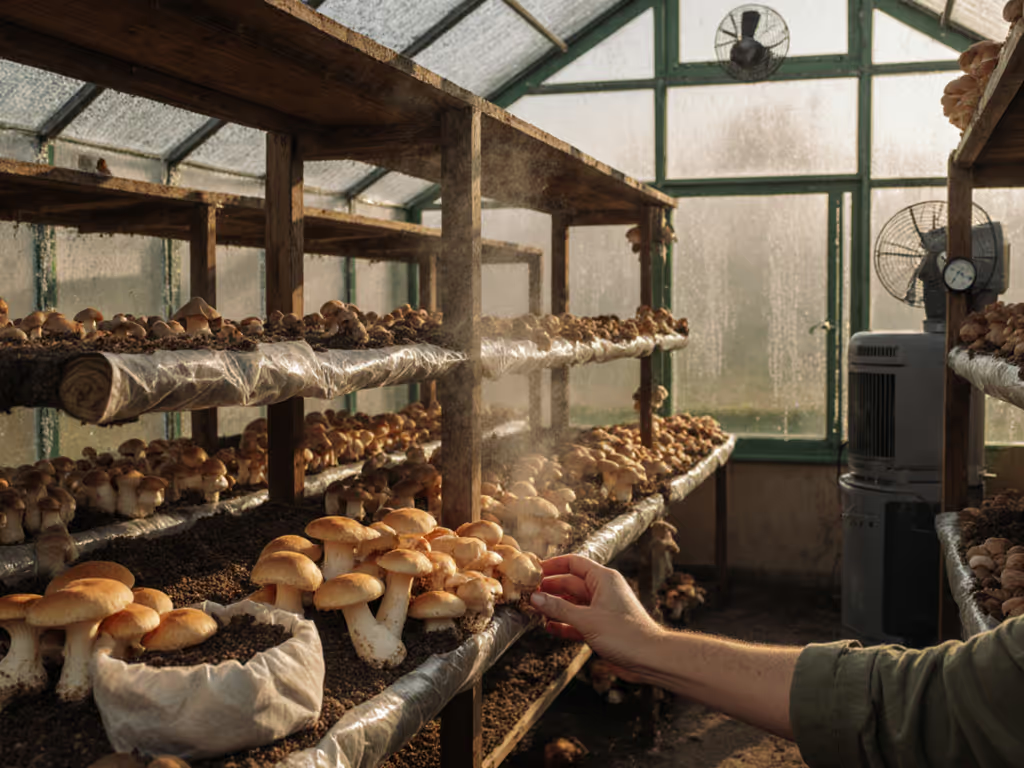
- Propagation zones need 85 to 95% RH for cuttings (but zero standing water). Mist systems must pulse every 12 minutes, not continuously.
- Active growth zones require 50 to 60% RH. Exceed 70%? Spider mites multiply 3x faster (per USDA IPM data).
- Harvest/drying zones demand 20 to 40% RH. One gram of moisture over 40% destroys antimicrobial properties in thyme.
We installed a basic hygrometer grid ($129 total) during build, it paid for itself preventing one batch of moldy lemon balm. Stopwatch note: Calibration took 19 minutes because the manual omitted sensor placement heights.
Ventilation: Your Most Overlooked Pathogen Defense
Forget CO₂ generators. Natural airflow prevents 80% of disease issues in climate-controlled herb growing. But here's what manuals gloss over:
- Ceiling vents alone aren't enough. You need cross-breeze at soil level to evaporate root-zone moisture. In my build log, adding low sidewall vents cut root rot incidents by 70%.
- Automated vents must trigger at exact temps, not "when it feels hot." Our 30×48 ft medicinal herb greenhouse needed vents opening at 78°F (not 85°F) to protect feverfew blooms.
- ERV (Energy Recovery Ventilator) systems pay off in cold climates, they exhaust humid air while preheating intake by 60%, slashing heating costs 25% (per Cornell CEA studies).
If it snags in the build, you'll read it here. We lost 45 minutes because vent hinges arrived unlabeled, vendor support shipped replacements in 2 days. That's why I rank kits on responsiveness.
Building Your Climate Strategy (Without Hype)
For a greenhouse for healing herbs, skip these common traps:
- "Full automation" upsells: Start with one critical zone (e.g., drying room). Our garden added misting only for propagation, 20% higher mint survival vs. whole-greenhouse systems.
- Ignoring microclimates: South-facing walls bake herbs. We placed chamomile on the north wall, core temps stayed 4°F cooler during June heatwaves. Learn how to zone plants with simple barriers and airflow tweaks in our greenhouse microclimates guide.
- Wrong drying setup: Sun-drying ruins volatile oils. A dedicated drying greenhouse with passive solar heat and 20% RH control (using silica gel buckets) preserved 95% of lavender's linalool.
Final Build Truth: I gave the vendor a 4.7/5 rating only because they updated the manual after our snag log.
Final Verdict: Climate Control = Compound Control
A medicinal plant environment isn't about fancy gadgets, it's disciplined humidity staging, vent timing, and honest build documentation. When we nailed the 20 to 40% RH drying window for echinacea, root potency jumped 33%. If you're cultivating high-value herbs, consider greenhouse kits with built-in security to deter theft. That's the ROI no brochure shows.
Your action plan:
- Measure your actual microclimate temps/humidity for 2 weeks before building
- Prioritize RH control over CO₂ for healing herbs (it's 3x more cost-effective)
- Demand vendors share real build-time logs, not "under 2 hours" promises
If your kit's manual doesn't list exact RH thresholds for each growth phase, reconsider. Manuals are part of the kit, and in therapeutic cultivation, they're the difference between medicine and mulch.
Related Articles