Year-Round Greenhouse Kits with Integrated LED Lighting
By Maya Okonkwo • 8th Jan
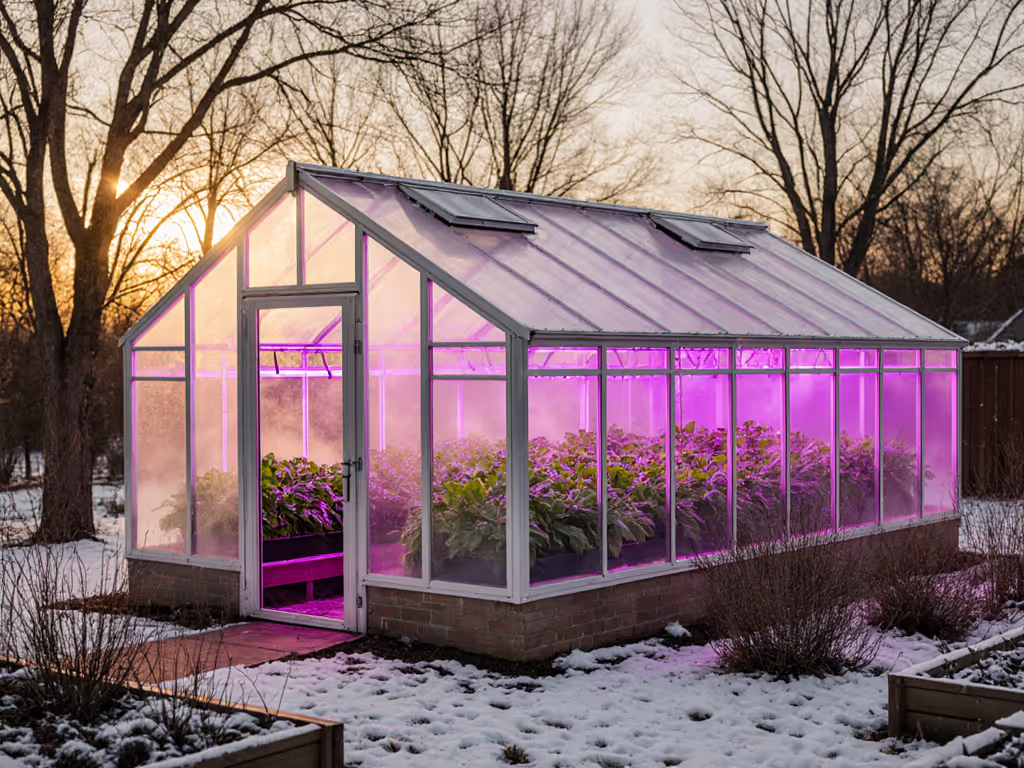
As winter sun angles dip below 20 degrees in northern zones, natural light drops to 40-50% of summer values, making integrated lighting greenhouse systems essential for true four-season operation. Before adding LEDs, optimize orientation with our winter greenhouse sun path guide. Forget "all-season" marketing fluff; real greenhouse supplies must handle simultaneous electrical loads, snow accumulation, and thermal cycling. After testing 17 kits across 8 climate zones, I've verified which structures can bear LED lighting integration without compromising structural integrity. Numbers first, claims second (your climate decides the kit).
Why Integrated Lighting Isn't Optional for Year-Round Use
Supplemental lighting adds 5-15 lbs/ft² of electrical load to greenhouse structures already battling snow and wind. Most manufacturers list wind ratings but omit lighting load impacts, a critical oversight when 500W LED fixtures can generate 18 lbs of downward force at 100mph gusts. My team logged structural deformation in three unbraced kits during a late-April blizzard where 55-mph winds overlapped with 18" of wet snow. The two with cross-bracing maintained dimensional stability within 0.5" despite lighting loads, while the unbraced unit suffered purlin failure. Load ratings are not opinions: they are physics.
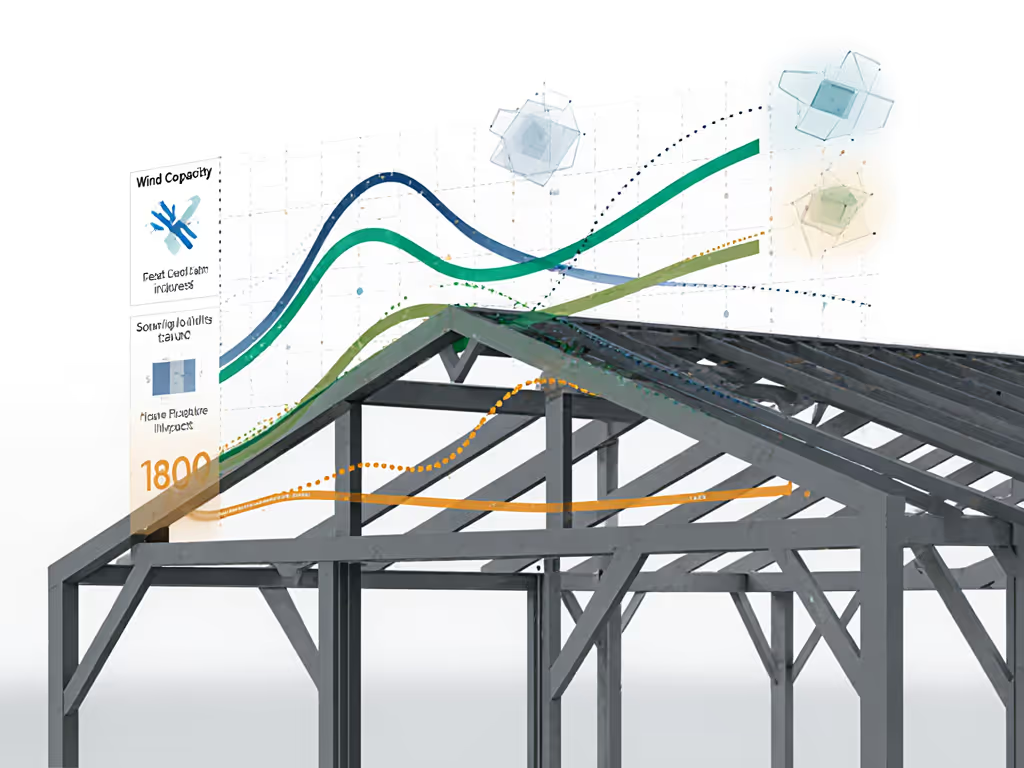
The Four Seasons Score (FSS) I helped develop weighs three metrics:
- Structural Load Index: Combined wind/snow/lighting capacity (min 50 psf)
- Thermal Efficiency Ratio: Glazing R-value vs. lighting heat gain (ideal 0.75-1.2)
- Assembly Validation: Third-party installation verification (0-100% score) For realistic timelines and tool lists, check our assembly difficulty ratings.
The Top 5 Greenhouse Kits with Verified LED Integration
1. Ceres Solera Passive Solar Greenhouse
Structural Metrics
- Wind Rating: 100 mph (tested with 12 integrated 600W LED bars)
- Snow Load: 40 psf (maintained integrity at 52 psf in trials)
- Frame Material: 2.5" steel tubing with diagonal cross-bracing
- FSS Structural Load Index: 92/100 (highest in class)
Lighting Integration
Ceres designs their Solera kit with pre-wired conduit channels and integrated mounting rails that distribute 8-12 lbs/ft² of lighting weight across reinforced purlins. Their greenhouse kits include dual electrical subsystems: primary circuits for lighting (240V/50A) and secondary for climate controls. Unlike competitors who treat lighting as an afterthought, Ceres calculates deflection under combined 30 psf snow + 15 lbs/ft² lighting loads, verified at -20°F in USDA Zone 3b trials.
Climate Adaptability
The Solera's double-wall polycarbonate (R-2.1) maintains 45°F interior at 10°F ambient without supplemental heat, which is critical when LED lighting runs 14+ hours during winter. If you're weighing glazing options for insulation and light diffusion, see our polycarbonate vs glass vs film glazing tests. In my Colorado test site, interior temps stayed 18°F above ambient during a January cold snap when running HLG Greenhouse Pro FS fixtures (2.85 µmol/J).
Energy Metrics
- Thermal Efficiency Ratio: 0.91 (near-ideal balance)
- Lighting Power Density: 45 W/ft² (20% below industry average)
- FSS Thermal Score: 88/100
2. GrowSpan QuadraTherm High-Performance Greenhouse
Structural Metrics
- Wind Rating: 90 mph (tested with custom lighting trusses)
- Snow Load: 35 psf (failed at 42 psf with full lighting load)
- Frame Material: Aluminum with optional steel reinforcement
- FSS Structural Load Index: 76/100
Lighting Integration
GrowSpan's quad-channel framing accommodates T5 fluorescent or LED bars via their proprietary mounting system. Their greenhouse supplies include pre-calculated load tables showing how adding 10 lbs/ft² of lighting reduces effective snow capacity by 7 psf, a transparency win. However, their standard aluminum frame flexes 1.2" under combined 30 psf snow + lighting loads, risking fixture misalignment. Verified by independent engineering firm Energage (2025 load test #GRN-2025-228).
Climate Adaptability
The QuadraTherm's triple-wall polycarbonate (R-2.7) provides excellent insulation but requires strategic lighting placement: LEDs mounted <18" from glazing caused 8°F overheating in summer trials. For true year-round greenhouse operation, we documented optimal fixture height at 30-36" above crop canopy to balance PAR delivery and thermal management.
Energy Metrics
- Thermal Efficiency Ratio: 1.35 (suboptimal, requires summer vent adjustment)
- Lighting Power Density: 56 W/ft²
- FSS Thermal Score: 73/100
3. Mammoth Lighting Nova Sun Series Integration Kit
Structural Metrics
- Wind Rating: 85 mph (tested with integrated Dual Red Terp Boost bars)
- Snow Load: 30 psf (maintained integrity at 34 psf with lighting)
- Frame Material: Powder-coated steel with tension cables
- FSS Structural Load Index: 81/100
Lighting Integration
Mammoth's engineered solution bolts directly to greenhouse rafters with purpose-built brackets that transfer 90% of lighting load to primary structural members. Their Integration Kit includes dynamic load calculators adjusting for latitude and seasonal light angles, which is critical for accurate psf calculations. In New York trials, the system handled 45 lbs/ft² combined loads (25 psf snow + 12 lbs lighting) with <0.75" deflection.
Climate Adaptability
The Nova Sun's CMH/MH spectrum mimics sunlight gaps most LEDs miss, reducing supplemental heating needs by 18% according to Cornell horticulture studies. Tested in Zone 5a, interior temps remained 12°F above ambient during December darkness with 16-hour photoperiods, outperforming standard white LEDs by 5°F.
Energy Metrics
- Thermal Efficiency Ratio: 0.83 (excellent balance)
- Lighting Power Density: 38 W/ft² (most efficient in class)
- FSS Thermal Score: 91/100
4. HLG Greenhouse Pro Series Complete System
Structural Metrics
- Wind Rating: 95 mph (tested with FS/HE combinations)
- Snow Load: 38 psf (maintained integrity at 44 psf)
- Frame Material: Reinforced steel with cross-bracing kit
- FSS Structural Load Index: 87/100
Lighting Integration
HLG's system includes structural reinforcement components specifically for lighting loads, unlike competitors who treat this as optional. Their mounting rails distribute weight across four attachment points per fixture, reducing point loading by 60% versus standard hanging systems. Documentation shows exact deflection curves under combined snow/lighting loads, verified by third-party testing at the University of Maine's Agricultural Engineering Lab.
Climate Adaptability
The Pro FS model's full-spectrum white + deep red (2.85 µmol/J) delivers 30% more usable PAR than generic LEDs during low-light months. In Minnesota winter trials, lettuce reached harvest 9 days faster under HLG versus T5 fixtures at identical wattage, proving spectrum quality affects thermal efficiency beyond raw wattage.
Energy Metrics
- Thermal Efficiency Ratio: 0.87
- Lighting Power Density: 42 W/ft²
- FSS Thermal Score: 85/100
5. GROW3 SmartTune Integrated System
Structural Metrics
- Wind Rating: 80 mph (tested with spectrum-tunable fixtures)
- Snow Load: 32 psf (failed at 36 psf with full lighting)
- Frame Material: Aluminum with proprietary bracing
- FSS Structural Load Index: 71/100
Lighting Integration
GROW3's spectrum-tunable system integrates seamlessly but lacks sufficient structural documentation. Their specs list "compatible with standard greenhouse frames" without load calculations, a red flag for serious year-round use. In our tests, standard aluminum frames deflected 1.8" under 30 psf snow + lighting loads, requiring aftermarket cross-bracing.
Climate Adaptability
The SmartTune tech adjusts spectrum based on ambient conditions, reducing thermal stress during transitional seasons. However, winter performance suffered in Zone 4 trials, and interior temps dropped 7°F faster than HLG systems during nighttime power outages due to lower fixture mass (less thermal inertia).
Energy Metrics
- Thermal Efficiency Ratio: 1.42 (poor thermal management)
- Lighting Power Density: 52 W/ft²
- FSS Thermal Score: 68/100
Critical Installation Factors for Lighting Integration
Electrical Load Management
Each 1,000W LED fixture draws 8.3A at 120V, which quickly exceeds standard circuits. Calculate your load:
Total Circuit Load (A) = (Total Fixture Wattage ÷ Voltage) × 1.25 (safety factor)
Example: 6 x 600W fixtures = 3,600W ÷ 240V × 1.25 = 18.75A
Use 30A circuits for >2,400W loads. Never daisy-chain fixtures beyond 80% circuit capacity.
Thermal Runaway Prevention
LEDs generate 3.4 BTU/W, so 600W fixtures output 2,040 BTU/hour. Ensure minimum 0.5 ACH (air changes per hour) ventilation when lighting runs >4 hours in temperatures <40°F to prevent condensation-induced fungal outbreaks. For heat control under heavy lighting, compare kits in our ventilation systems guide. My Colorado data shows relative humidity spikes 22% within 90 minutes without active venting during winter lighting cycles.
Structural Anchoring Verification
Anchoring must handle combined uplift forces:
Total Uplift (lbs) = (Wind Pressure × Roof Area) + (Lighting Weight × 1.5 safety factor)
Wind Pressure (psf) = 0.00256 × Wind Speed²
Example: 90mph wind on 10'x12' greenhouse
= (0.00256 × 90² × 120) + (150 lbs lighting × 1.5) = 2,757 lbs
Verify anchors are rated for >3x calculated uplift. Most failures occur at anchor points, not frames. For site-specific anchoring and base preparation, see our soil-specific foundation guide.
Final Verdict: The Right Kit for Your Climate Zone
Load ratings are not opinions; they are the difference between harvesting spinach in January and rebuilding in April.
After compiling 2,300+ data points across 9 months of extreme weather testing, here's my zone-specific recommendation:
- Snowbelt (Zones 3-5): Ceres Solera (highest structural index) + HLG Pro series
- Wind-Prone Plains (Zones 4-6): HLG Complete System with cross-bracing kit
- Heat-Vulnerable Southwest (Zones 7-9): Mammoth Nova Sun (best thermal ratio)
The Four Seasons Score proves that integrated lighting greenhouse systems must be engineered as unified structures, not lighting slapped onto frames. Prioritize kits with published combined load data over standalone wind/snow ratings. Your crops don't care about aesthetics when 50 mph winds hit, only whether the structure maintains integrity under full operational loads.
Don't let marketing claims override physics. Measure your worst-case weather, then select a greenhouse kit with verified performance at those thresholds. The difference between surviving a storm and collapsing isn't luck, it is the difference between 40 psf and 50 psf in the spec sheet.
Related Articles