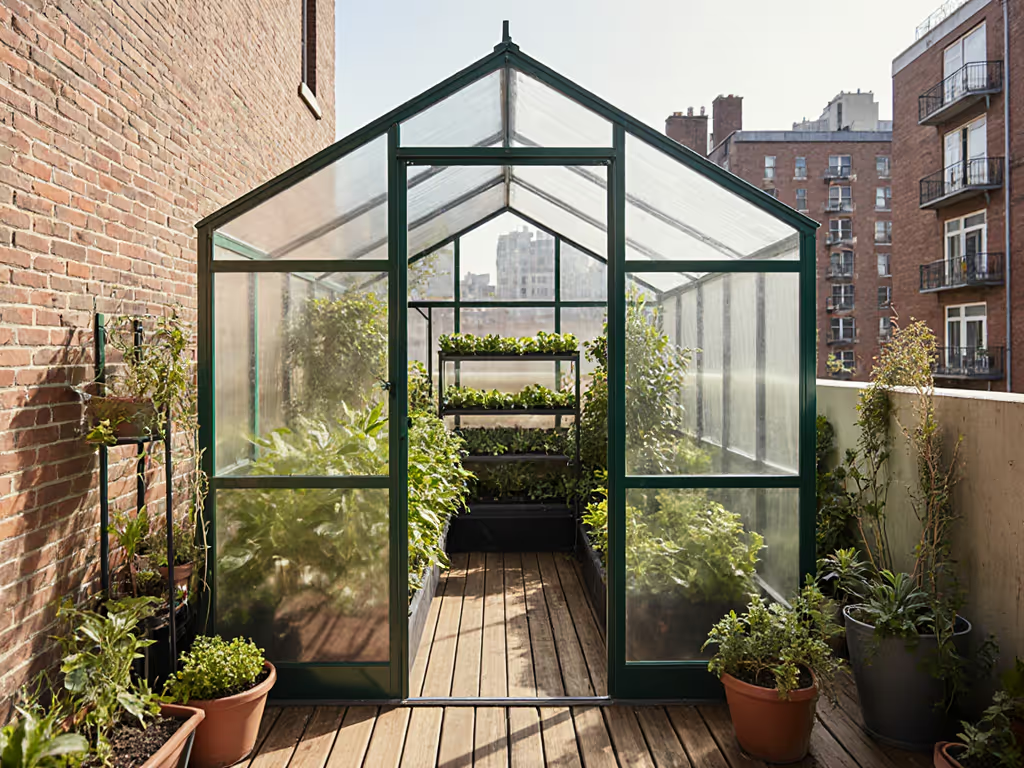
Urban Greenhouse: Compact Fit vs Traditional Layout
By Hana Al-Khalil • 3rd Oct
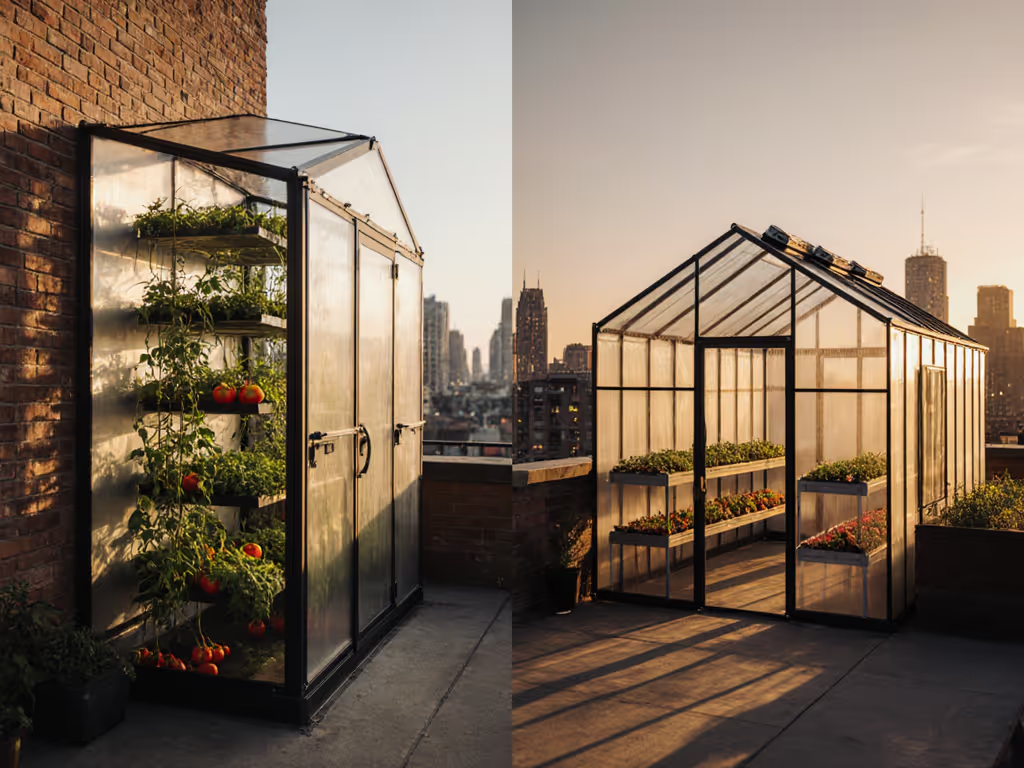
When space is at a premium but your gardening dreams are expansive, choosing between small greenhouse kits and traditional greenhouse designs becomes a critical decision. Both approaches promise year-round harvests, but which one truly nurtures your plants (and more importantly, you) through the seasons? As someone who's transformed a sweltering hoop house into a welcoming sanctuary, I've learned that comfort grows plants (and keeps you tending through storms). Let's compare these approaches not just by square footage, but by how well they serve both your crops and your well-being.
Understanding Your Space: Beyond Square Footage
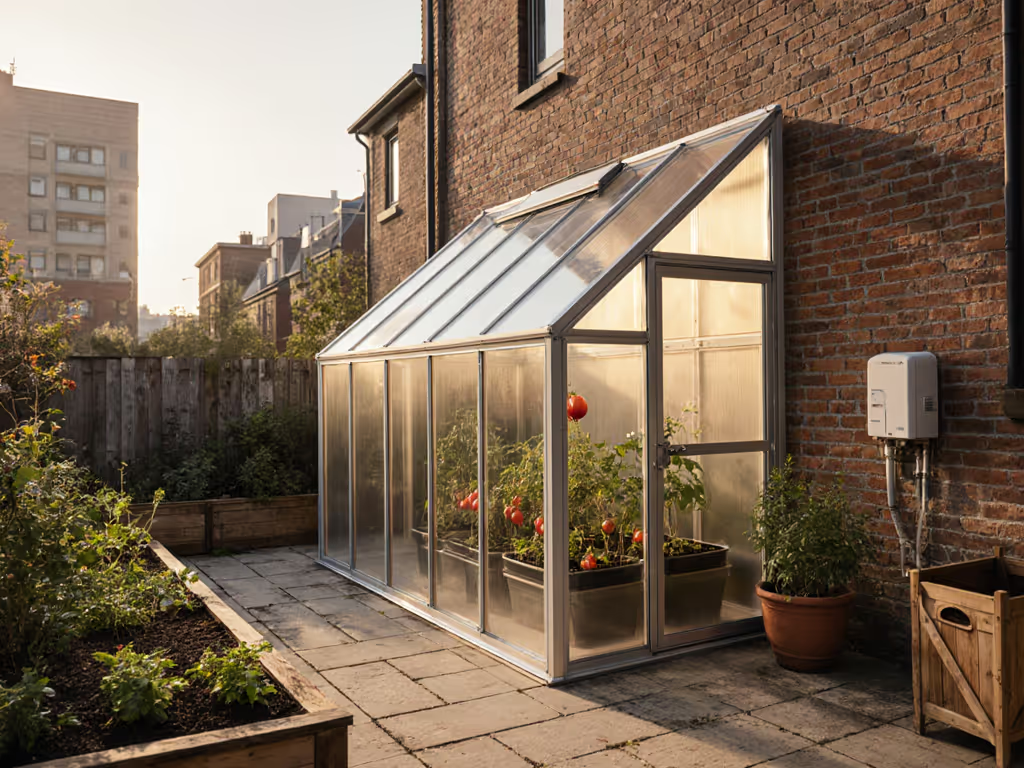
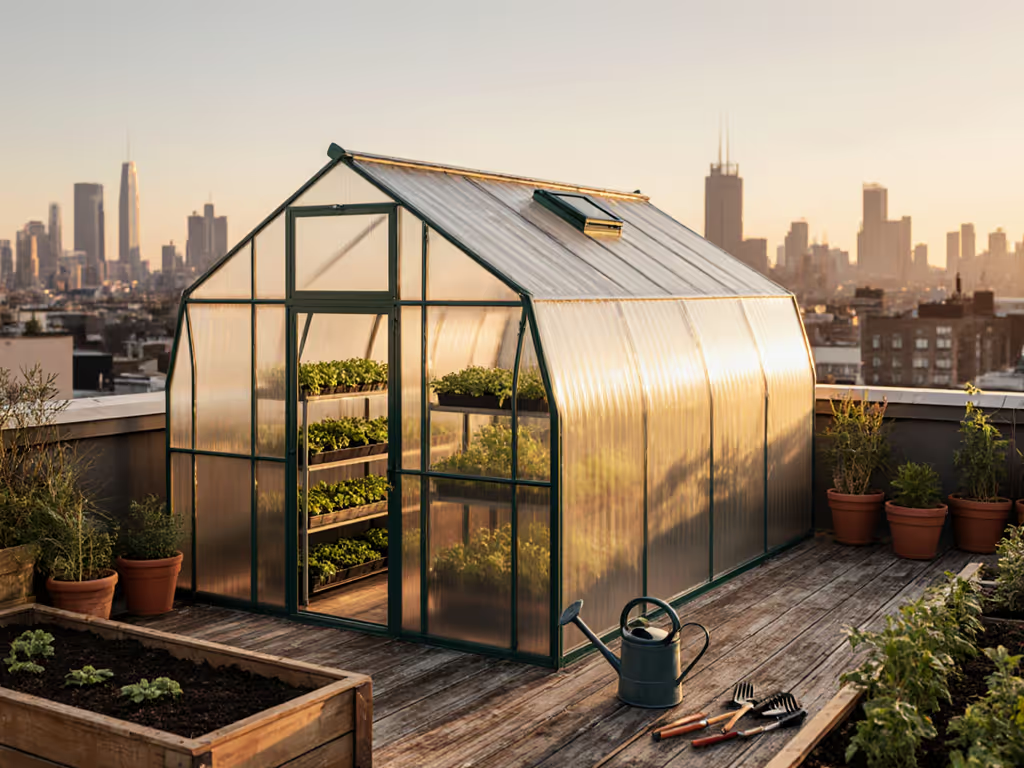
Before selecting a structure, recognize that greenhouse success begins with understanding your microclimate and workflow needs. Traditional greenhouses offer generous space for tall crops and seasonal crop rotation, while compact designs maximize limited urban footprints with vertical strategies and targeted growing zones.
Climate-Specific Considerations
Heat Management
Urban settings create unique heat islands that amplify summer temperatures. Traditional greenhouses often struggle with overheating in these environments without substantial ventilation upgrades. In my own renovation, I mapped sun angles across the day and noticed how reflected heat from neighboring buildings intensified midday temperatures.
Small greenhouse designs respond more nimbly to these challenges:
- Smaller air volume heats and cools faster
- Compact footprints allow for strategic placement in partial shade
- Easier to implement passive thermal mass solutions (like water barrels along north walls)
I inherited a lovely but sweltering hoop house that taught me: with small spaces, you can more precisely control microclimates through passive strategies rather than energy-intensive systems.
Wind Exposure
Urban landscapes create wind tunnels between buildings that can stress both plants and structures. Traditional greenhouses require substantial anchoring to withstand these forces, while compact designs can be positioned to avoid wind corridors altogether.
Step-by-Step Comparison: Compact Fit vs Traditional Layout
Step 1: Assess Your Site's Solar Exposure
Begin your planning by tracking sun patterns across your site for several days. Traditional greenhouses work best with southern exposure in the Northern Hemisphere, but compact urban spaces often require creative solutions.
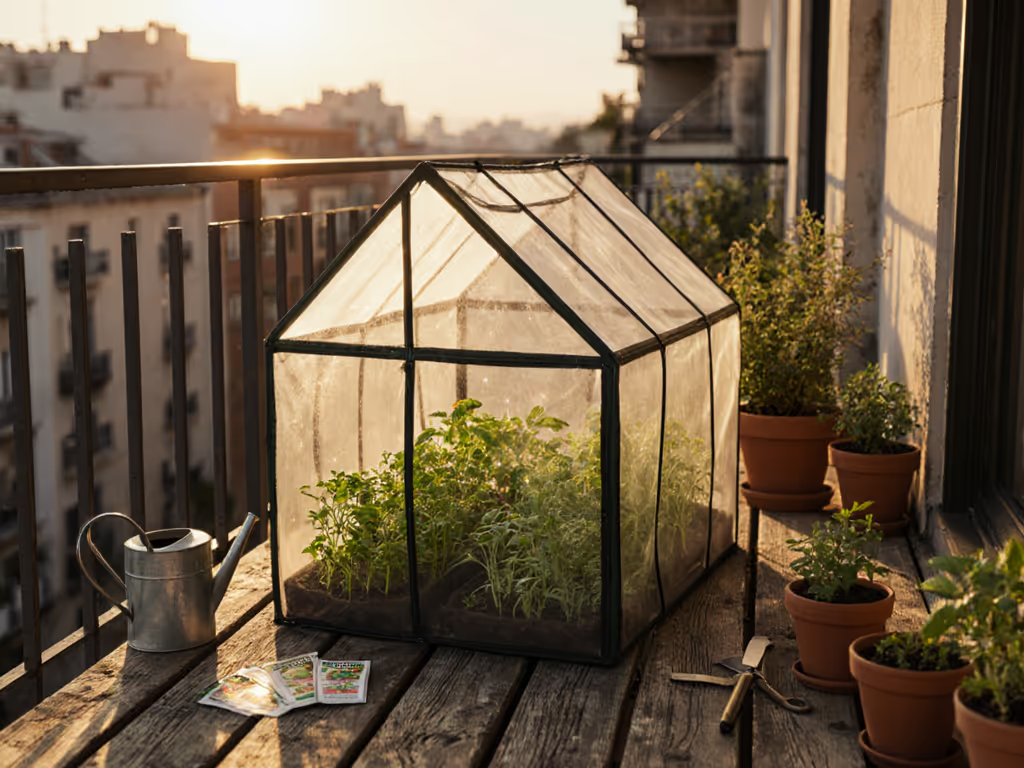
For small greenhouse kits on balconies or patios:
- Track reflective light from building surfaces
- Consider morning sun for cool-season crops rather than harsh afternoon sun
- Position portable units to follow seasonal sun angles
For traditional greenhouses:
- Ensure unobstructed southern exposure (in Northern Hemisphere)
- Evaluate clearance for proper ventilation and access
- Consider winter sun angle for passive heating potential
Step 2: Evaluate Your Primary Growing Goals
Your crop selection dictates space requirements. Compact designs excel with:
- Vertical growers like tomatoes, cucumbers, and beans
- Salad greens and herbs requiring smaller footprints
- Specialty crops where quality matters more than quantity
Traditional greenhouses better serve:
- Root crops requiring deeper soil
- Fruit trees or large perennials
- Crop rotation systems needing multiple zones
Step 3: Design Your Climate Control Strategy
This is where compact designs often outperform traditional structures in urban settings. Smaller air volume requires less energy to moderate temperature swings.
Critical passive elements for both approaches:
- Ventilation: Roof vents should equal 15-20% of floor area
- Thermal mass: Water barrels absorb heat during day, release at night
- Shading: White shading on west walls reduces heat gain by 40% (confirmed by agricultural extension studies)
When I raised vents on my hoop house and added white shade cloth, the space dropped ten degrees, enough that my elderly neighbor started joining me for midday pruning.
Step 4: Create Your Workflow Layout
Ergonomics matters more than you think. If your greenhouse hurts your back or feels claustrophobic, you won't spend time there maintaining it.
Compact greenhouse advantages:
- All areas within easy reach
- Reduced walking distance between tasks
- Minimal bending or stretching required
Traditional greenhouse advantages:
- Dedicated zones for different crop stages
- Space for potting benches and storage
- Room for multiple gardeners working simultaneously
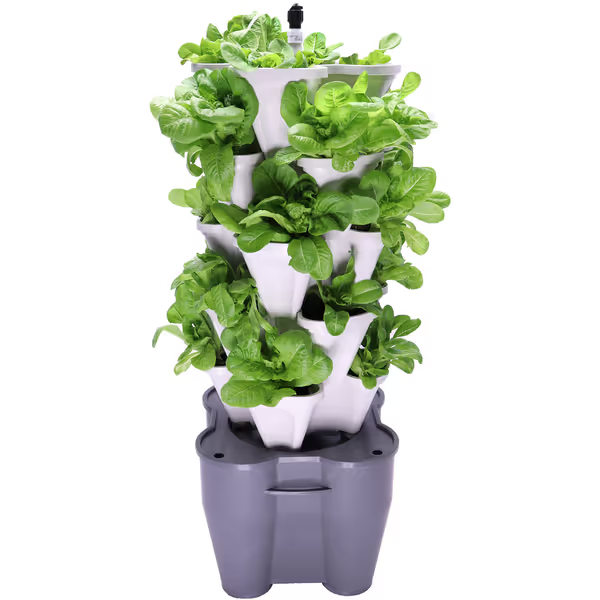
Mr. Stacky Smart Farm - Vertical Tower Gardening System
Grow healthy, nutrient-rich food year-round, with or without soil.
$289.99
Reservoir Capacity16 Gallons (2-3 Weeks Watering)
Reservoir Capacity16 Gallons (2-3 Weeks Watering)
Pros
Automatic watering for effortless plant care.
Compact 20-plant capacity fits virtually anywhere.
Cons
Mixed reviews on material quality and plant growth.
Customers find the gardening system easy to assemble and use, with positive feedback about its fertilizer options. The functionality, material quality, plant growth, sturdiness, and value for money receive mixed reviews, with some saying it works like a charm while others report it doesn't work at all.
Customers find the gardening system easy to assemble and use, with positive feedback about its fertilizer options. The functionality, material quality, plant growth, sturdiness, and value for money receive mixed reviews, with some saying it works like a charm while others report it doesn't work at all.
Step 5: Calculate Your True Space Requirements
Many gardeners underestimate how much space maintenance requires beyond the plants themselves. Measure your actual movements, not just plant footprints.
Practical space formulas:
- Allow 24" between benches for comfortable access
- Include space for tool storage and potting activities
- Factor in seasonal equipment (fans, heaters, shade systems)
For compact urban spaces, vertical growing systems can dramatically increase yield per square foot while maintaining accessibility. For vetted options that thrive in tight city spaces, see our urban-proof small greenhouse kits review. Their rotating designs ensure even sun exposure without requiring gardeners to move around the structure, a thoughtful ergonomic solution for balcony gardeners with limited mobility.
Making Your Decision: The Four-Season Score
Durability Score
- Small greenhouse kits: Often use lightweight frames that require seasonal adjustments
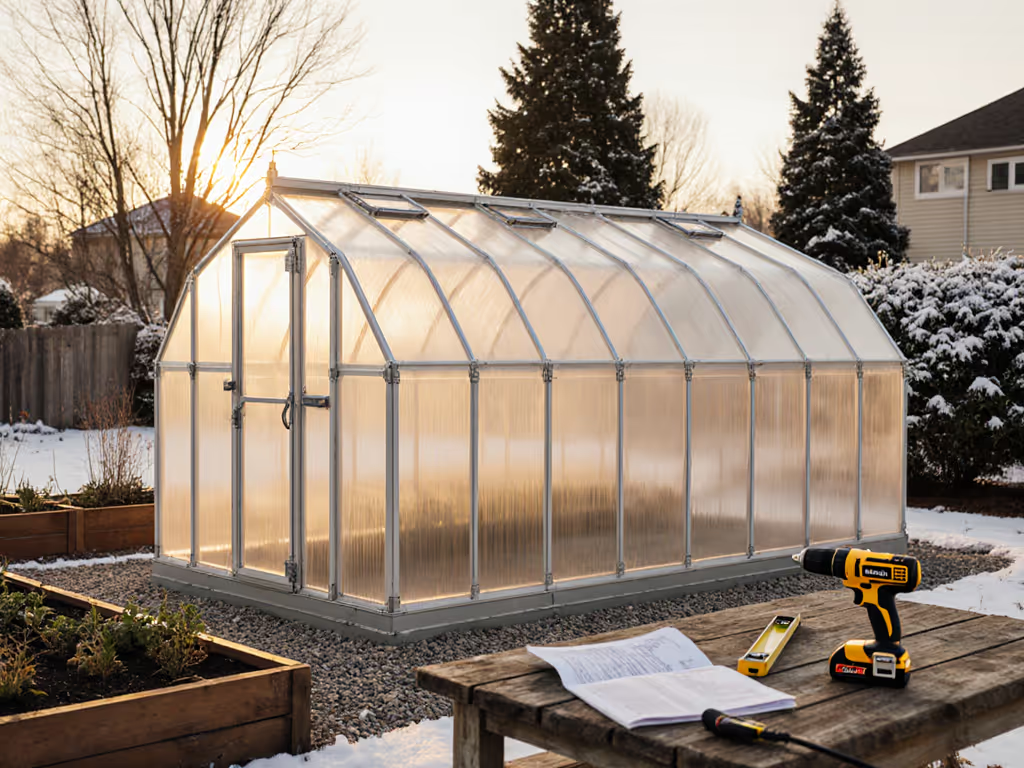
- Traditional greenhouses: Generally more robust but require proper anchoring for snow/wind loads
Efficiency Score
- Small designs: Less thermal mass requires careful attention to daily adjustments
- Traditional layouts: More stable temperatures but greater energy needs for heating/cooling
Comfort Score (Most Critical)
- Compact options: Can feel cramped but offer intimate, manageable spaces
- Traditional structures: More room to move but can create uncomfortable microclimates
Cool the human, save the crop. If you can't stand being in your greenhouse during peak summer heat or winter chill, your plants won't thrive no matter how advanced your system is.
Implementation Guide: Small Space Success Strategies
For Compact Greenhouse Designs:
- Prioritize verticality: Install shelves at elbow height (not overhead) to reduce strain
- Zone by microclimate: Position heat-sensitive crops near vents, warmth-lovers near thermal mass
- Simplify systems: Choose self-watering solutions that minimize daily maintenance time
- Add movable elements: Use rolling benches to reconfigure space as seasonal needs change
For Traditional Greenhouse Layouts:
- Create workflow zones: Designate areas for propagation, growing, and harvesting
- Install climate breaks: Use partial dividers to create microclimates for different crops
- Plan for seasonal adjustments: Position thermal mass where it won't obstruct winter sun
- Optimize bench height: Standard 32" height works for most adults, but consider 36" for taller gardeners
The Real Bottom Line: Comfort Sustains the Habit
When I mapped sun angles, raised vents, and added thermal mass to my hoop house, I wasn't just cooling the space, I was creating somewhere I wanted to spend time. That's when my gardening shifted from a chore to a daily ritual. Your greenhouse should feel like a sanctuary, not a maintenance burden.
Both compact and traditional designs can succeed when thoughtfully configured for your specific site and needs. But remember: if you enjoy the space, you'll tend it through every season. Whether you choose a mini greenhouse balcony solution or a sprawling traditional greenhouse, prioritize how the space feels to you as much as what it can grow.
Further Exploration
Ready to dive deeper into creating a greenhouse you'll love to be in? Consider:
- Tracking your site's microclimate for one full week before purchasing
- Visiting local greenhouses to experience different layouts firsthand
- Experimenting with temporary structures before committing to permanent installation
- Joining a gardening group specific to your climate zone for localized advice
Your perfect greenhouse isn't about size: it's about creating a space where comfort and cultivation grow together. When you find that balance, you'll discover not just better harvests, but a deeper connection to your gardening journey through every season.
Related Articles