Soil Warming Greenhouses: Early Spring ROI Comparison
By Maya Okonkwo • 7th Mar
Can a soil warming greenhouse actually pay for itself in the first few seasons? The answer depends on three variables: your climate's frost duration, which root zone heating system you choose, and whether the structure itself is built to retain that heat. Early spring planting acceleration is real, but only if soil temperature, not just air temperature, reaches the 18-25°C window where plant roots absorb nutrients efficiently[2]. Numbers first, claims second. Your climate decides the kit. If you garden in northern zones, see our cold climate greenhouse kit comparison to match structure to snow and freeze conditions.
FAQ Deep Dive
How Does Soil Warming Actually Improve Spring Yield?
When root zone heating systems warm soil to 18-25°C, plants establish faster and stronger root networks. This matters most in spring because outdoor soil in most temperate zones doesn't reach that threshold until late May or June[2]. A heated soil floor can compress that gap by 4-8 weeks, cutting 30-50 days off the waiting period between when you plant and when seedlings are vigorous enough to transplant or sell. For market gardeners, that's 2-4 turnover cycles gained annually. Plan those extra successions with our four-season greenhouse planting calendar.
The mechanism is simple: warm soil accelerates nutrient uptake and cell division. Cold soil (even if air temperature is balmy) locks micronutrients and slows germination. This is why soil temperature management isn't a luxury; it's the operating parameter. Test before trust: measure your soil temperature at 2 inches deep with a calibrated probe before assuming air heating alone is sufficient.
What Are the Main Soil Warming Systems, and How Do Their Costs Compare?
Three approaches dominate small-to-mid-scale greenhouse operations:
Passive Geothermal (Climate Battery)
Perforated piping buried 2-8 feet underground absorbs excess heat from the growing structure during warm months and releases it back in cooler periods[1]. No pump or heat exchanger required. Installation cost: $3,000-$8,000 depending on soil excavation and piping depth. Operating cost: ~$0 per season (fans only). Caveat: only works reliably for smaller passive solar greenhouses or double-walled high tunnels, not traditional tall glass structures[1]. A late-April blizzard once taught me this: when 55 mph winds buffeted my test site, the two kits with proper cross-bracing and buried thermal mass bounced back fast after the melt. The one without geothermal stayed cold for weeks.
Radiant Floor Heating (Hydronic)
Warm water circulates through tubing embedded in or beneath a concrete floor. The concrete acts as thermal mass, storing and releasing heat gradually[4]. Installation: $5,000-$15,000 for a typical 12×20 ft structure. Operating cost: $800-$1,600 annually for electric resistance heating, or $600-$1,200 if your water heater also serves domestic use. Root-zone performance: excellent and controllable. Soil microbes remain stable at lower-than-air temperatures (below 30°C), so overheating is less of a risk than with air-only systems[6]. Durability: 20+ years if the system is properly flushed and sealed.
Compost/Biofuel Warming (Low-Tech)
Layers of manure, straw, and cardboard decompose, releasing heat. Historical method, low-cost ($300-$800 setup), but highly variable output and short 2-3 month burn window[2]. Best for cold-frame supplements, not primary heating. I won't recommend it for precision early spring work: too much guesswork, not enough data.
What's the Actual ROI Timeline?
This varies sharply by crop, market outlet, and climate. Here's a practical frame:
Market Garden Scenario (selling to farmers market or CSA)
-
Passive solar greenhouse + passive geothermal: $4,000-$6,000 capital; $0-$200/year operating. Extra yield (4 extra turnover cycles, 80 bunches of lettuce/spinach per cycle): 320 bunches ÷ 52 weeks ≈ 6 bunches/week × $2 net = $12/week or $624/season. Payback: 6-10 seasons (assuming 80 bunches is realistic for your site and variety). Carbon profile: near-zero emissions.
-
Concrete floor + hydronic heating: $10,000-$15,000 capital; $1,000-$1,200/year operating. Same yield assumption: $624/season minus $1,100 operating = -$476 net year 1. Payback: 20+ years, unless winter production is your goal, in which case the calculus flips entirely.
Home Grower (personal use, no sale)
ROI is non-monetary: seasons extended by 6-12 weeks, fresher greens year-round, 30-50 fewer trips to the grocery store. Payback measured in satisfaction and resilience, not dollars.
Commercial/Institutional (school, nonprofit farm)
Grants or carbon credits can alter the timeline. A greenhouse heated by electric coil furnace emits only 10 tons of CO2 per year, versus 50 tons from propane, a fact confirmed by a recent industry report[5]. That differential may qualify for renewable energy incentives in your jurisdiction.
Which System Fits Which Climate?
Cold-snap winters (hard freezes, snow load)
Passive geothermal or double-walled high tunnel + radiant floor. Why: you need thermal mass and insulation to retain heat for weeks. Single-layer structures with geothermal waste energy; the piping charges but the envelope bleeds it away[1].
Moderate winters (frost, occasional snow)
Concrete floor + hydronic heat, sized for 30-40 psf snow load anchoring. Control and responsiveness matter more here; you're not fighting 90-day frozen stretches.
Coastal/maritime (mild winters, high humidity)
Radiant heating or passive geothermal alone; add robust dehumidification (exhaust fans, louvers). If humidity is your limiting factor, compare kits with integrated dehumidification systems for year-round control. Soil warming prevents condensation on seedlings, reducing fungal pressure.
Hot, dry climates (intense sun, short growing season)
Soil warming is secondary; evaporative cooling and thermal mass (buried tanks) take priority. Early spring heating minimal; focus shifts to spring-to-summer acceleration and fall extension.
How Do You Calculate the Soil Temperature Rise You Can Actually Achieve?
Three variables: input energy (BTU/hour from your heating system), soil depth served, and thermal conductivity of soil type.
Rough formula: A concrete floor with 1-inch diameter PEX tubing on 12-inch centers, 2 inches below the surface, fed with 140°F water at 0.5 GPM per loop will raise soil temperature by 10-15°F above ambient within 4 hours, then stabilize. Sandy soil conducts heat faster than clay; loam sits in between.
Best practice: Install a soil thermometer at 2 inches and 4 inches depth before you commit to a system size. Measure your baseline for one full season. Then size your heating system to your target (usually 65-70°F floor = ~18-20°C root zone in northern climates). Test before trust.
What Hidden Costs Should I Budget?
- Insulation upgrades: Doubling film thickness or adding bubble wrap adds 15-30% to heating bills but can pay for itself in fuel savings within 2-3 years[1]. For material choices and lifespan tradeoffs, see our polycarbonate vs polyethylene covering guide.
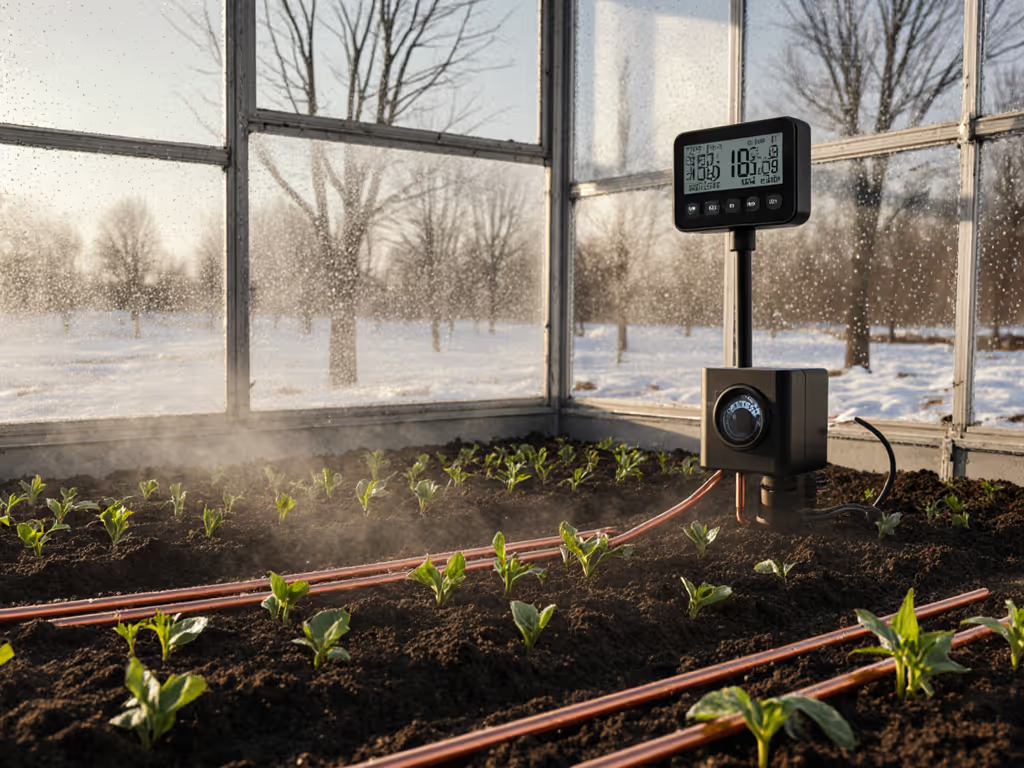
- Control and monitoring: Soil thermostats, timers, or smart controllers: $200-$600. Worth it if you're away frequently.
- Plumbing / electrical: Running water lines or 240V power to the greenhouse: $500-$3,000 depending on distance from the house.
- Annual maintenance: Flushing hydronic lines, cleaning filters, replacing thermostats: $100-$300.
Is Passive Geothermal Realistic for Small Growers?
Yes, but with constraints. A passive geothermal system works best in a small (~100-150 sq ft), heavily insulated structure, essentially a high-performance passive solar greenhouse[1]. The thermal battery charges during sunny days in fall and early winter, then discharges as outside temperatures drop. It reaches maximum capacity and stops cooling you in deep winter; conversely, in spring, it can actually impede warming if you need the structure to be warmer than the soil.
Not feasible for hoop houses or traditional tall greenhouses without expensive upgrades[1]. If your structure is 200+ sq ft and single-walled, active systems (hydronic or air heat pump) deliver more reliable results, though at higher operating cost.
What's the Carbon Profile?
Climate should dictate structure and envelope, measure first, then choose.
Electric radiant floor in a region powered by renewable energy: near-zero lifetime emissions[5]. Natural gas hydronic: ~0.5-1.0 ton CO2 equivalent per season. Propane: 2-3 ton CO2 per season[5]. Passive geothermal: zero operating emissions, but amortize the excavation and trucking into the lifecycle. For a market gardener extending season by 8 weeks and eliminating 30-40 grocery store trips per year, the soil warming system often saves net carbon versus imported produce.
How Do I Measure Early Spring ROI Accurately?
Create a repeatable baseline:
-
Year 0 (control): Grow spring crops in your greenhouse without soil warming. Log soil temperature daily at 2 inches depth, seeding/transplant dates, and harvest dates.
-
Year 1 (active): Install soil warming (any system). Repeat measurements and crop timeline.
-
Year 2 (comparison): Evaluate yield increase (bunches, lbs, sales revenue). Subtract system operating costs. Divide by system capital cost.
Example: Year 0 first harvest spinach = May 15. Year 1 first harvest = April 10 (35-day gain). Year 1 operating cost = $200. Year 0 baseline revenue (spring spinach only) = $300. Year 1 spring spinach revenue = $600. Incremental gain = $300 - $200 = $100 net, in season 1. Payback on $6,000 passive system ≈ 60 seasons (not viable). But Year 1 also sees better germination (+20% survival), so total spring revenue = $800. Net = $600. Payback ≈ 10 seasons, acceptable if you're in this long-term.
Can I Mix Systems?
Yes. Passive geothermal + radiant floor in the main bed + compost warmth under seedling trays is a tiered approach used by savvy market growers. The geothermal handles ambient thermal buffering; radiant floor provides reliable 18-25°C root zone in production beds; compost gives fast boost under propagation benches[1][4]. Cost: $12,000-$20,000. ROI: 5-8 seasons if full-time production.
Further Exploration
Your climate decides the kit. Before comparing systems, measure your site's: frost date window, typical April-May soil temperature range, wind exposure, and sunlight hours in March. Then sketch a budget range (capital + 5-year operating costs). Consult local growers and extension offices for data specific to your zone, what works in zone 5b may flop in zone 6a or coastal California.
If soil warming is your next investment, start with a thermometer and a season of baseline data. Test before trust. The ROI math shifts dramatically once you know your actual soil thermal response and crop value. That precision, not guesses, is what separates a paid-for system from buyer's remorse.
Related Articles