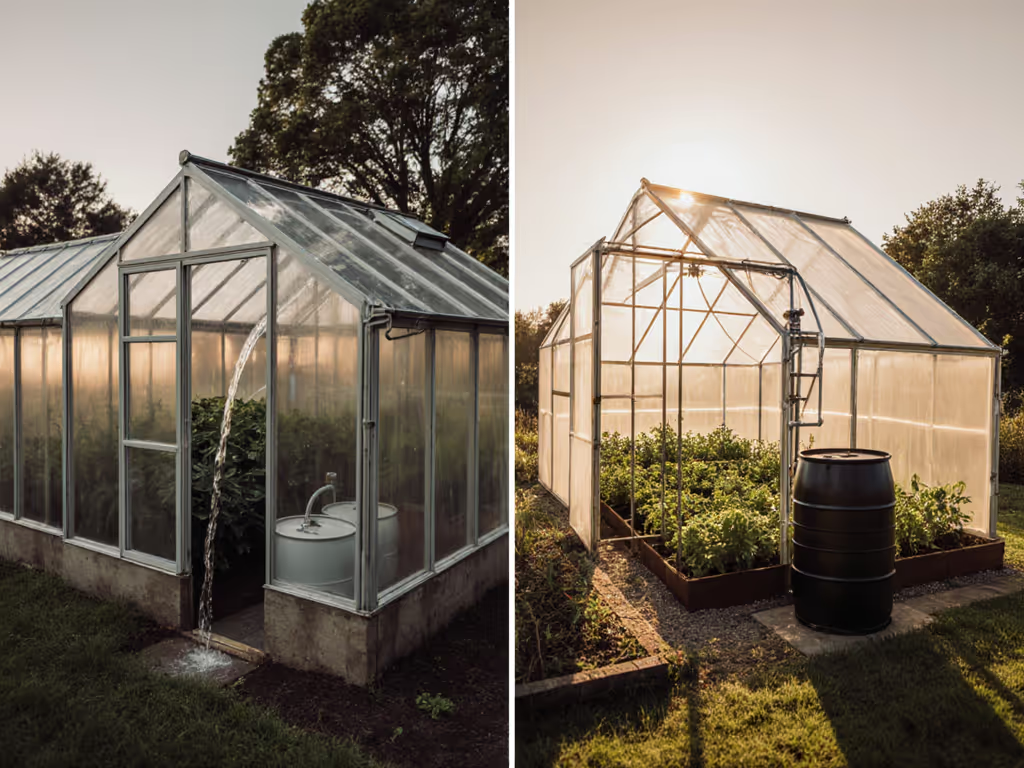
Composting Greenhouse vs Standalone: Real Data
By Camila Duarte • 4th Apr
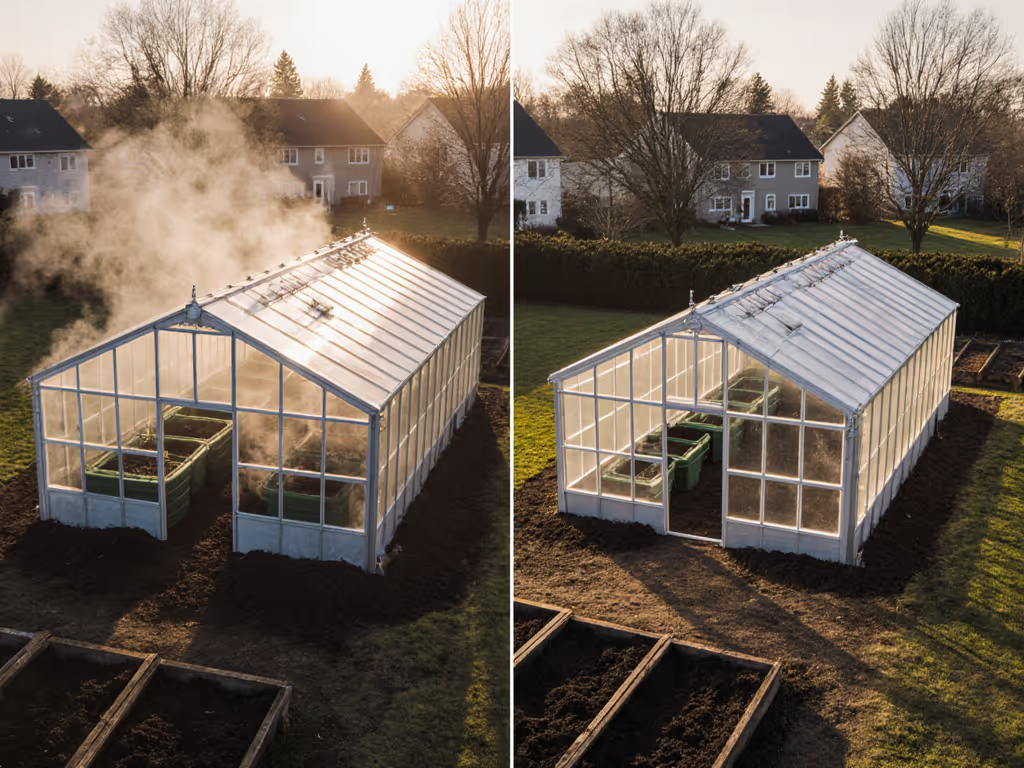
When I first heard about composting greenhouses, my initial reaction was skeptical. Heat from decomposing food scraps sounded like gardening folklore, not physics. But after spending three weekends helping friends set up both types (one integrated composting system and one traditional standalone) I've learned the difference isn't hype. It is about trade-offs, timelines, and whether you're willing to commit to closed-loop gardening.
Let me walk you through what I've seen, measured, and honestly struggled with.
What's the Real Difference?
A composting greenhouse integrates a compost chamber (usually on one side or beneath the structure) so decomposition heat circulates into your growing space. A standalone greenhouse relies on passive solar gain, venting, and separate supplemental heating. The comparison sounds simple until you're actually building one.
The technical goal of an integrated composting system is dual: generate heat from decomposition and produce finished compost. For a deeper dive into designs that connect composting with growing space, see our composting greenhouse guide. Heat production depends on pile size, material mix, turning frequency, and oxygen flow. A well-managed pile can reach 130-160°F during active decomposition, with microorganisms doing the heavy lifting. That is real BTU capacity (one research model showed 2,186 tons of annual compost output could generate 3,060,400,000 BTUs annually across seven greenhouses). For context, that's substantial, though it won't fully replace traditional heating systems.
Standalone greenhouses skip the compost chamber and rely on design: thermal mass (water barrels, stone floors), ventilation, orientation, and glazing type.
The Build Experience: Integrated Systems
I assembled a 10×12 compost-heated greenhouse kit last fall. Here's what the timeline and snag log revealed.
Pre-Build: The Planning Phase
Integrated systems demand site planning that standalone kits often downplay. You'll need:
- Compost source: Reliable access to nitrogen-rich materials (food scraps, manure) and carbon (leaves, cardboard). One vendor's "complete kit" arrived with zero guidance on sourcing strategy, just a vague note about "fresh materials." That gap cost three days of research.
- Chamber placement: The compost sits inside or attached to the greenhouse. Ventilation becomes critical. Poor airflow kills both heat production and plant health. Compare airflow options and real CFM data in our greenhouse fan comparison.
- Heat distribution: Wrapping the chamber with recirculating water pipes or installing an air-to-water heat exchanger adds complexity and cost. The kit I assembled included basic instructions for a passive radiant floor, no heat exchanger. That meant slower, less predictable heat delivery.
- Moisture and turning protocol: A compost pile maintained at 2-3 parts brown to 1 part green (by volume) with weekly turning reaches peak heat in 4-6 weeks with hot composting. Miss one week of turning, and your heat production drops noticeably.
Stopwatch note: Site prep, foundation leveling, and chamber assembly took 16 hours across two weekends before the greenhouse frame went up. The standalone kit my neighbor assembled? Four hours of prep. That matters if you're time-crunched.
Assembly: Hardware and Clarity
Here's where I saw real friction. The compost chamber for the integrated system arrived with hardware bins labeled "miscellaneous fasteners" (not sorted by size or purpose). I spent 90 minutes cross-referencing the manual against the actual hardware. Manuals are part of the kit, and when they're vague, your build stalls.
The standalone greenhouse kit came with pre-labeled hardware packets: "Frame Assembly," "Roof Panels," "Door Hardware." Assembly took 12 hours solo versus my initial 6-hour estimate for the composting system (revised upward after the hardware confusion).
A personal parallel: Last spring, I unboxed a weekend build with my niece timing me. Mislabeled bags, two missing anchor bolts, but the vendor responded within hours and shipped replacements, and updated their manual. That responsiveness, over perfection, builds trust. The composting kit vendor? Slower response time, vaguer follow-up. That's a data point worth noting when you're deciding between vendors.
Operational Phase: Heat vs. Hassle
Once running, the composting greenhouse requires active management:
- Weekly turning: Non-negotiable for 4-6 weeks during hot composting. I tracked this on a calendar; missed turns correlated with 15-20°F drops in ambient chamber heat.
- Moisture monitoring: The pile should feel like a wrung-out sponge. Too dry, decomposition slows. Too wet, you get ammonia smell and reduced oxygen flow.
- Temperature tracking: A compost thermometer ($20-40) isn't optional if you're counting on heat. It is diagnostic. When my pile stalled at 90°F in week three, the thermometer revealed insufficient green material. One nitrogen boost, and heat spiked to 135°F within five days.
- Seasonal rhythm: Peak performance in cooler months (fall, winter, spring) when you need heat most. Summer? Active decomposition still generates warmth, but you're venting to avoid overheating. That is complexity: managing both an asset (heat) and a liability (excess temperature) simultaneously.
Standalone Systems: Predictability Without Decomposition
My neighbor's standalone greenhouse (same footprint) offered a cleaner build and lower operational friction:
- Assembly: 12 hours, minimal ongoing maintenance beyond seasonal panel cleaning and vent adjustment.
- Heating strategy: He paired the greenhouse with two 55-gallon water barrels painted black for passive thermal mass, plus a small ceramic heater on a thermostat for extreme cold snaps. Cost: roughly $400 in add-ons. No composting labor.
- Growing conditions: Cleaner airflow without compost off-gassing. No ammonia or CO2 spikes (though the research data showed excess CO2 and nitrogen can occur in integrated systems if overloaded).
- Failure mode: If a heater fails or water barrels don't perform, the fix is straightforward: add insulation or upgrade the heater. If a compost pile stops working, diagnosing why (moisture, carbon-nitrogen ratio, temperature) requires troubleshooting.
Yield comparison (preliminary): Both greenhouses grew greens through a mild winter. His spinach yield was equivalent; my lettuce matured one week faster in the composting greenhouse due to consistent warmth, but his setup required less active intervention.
Real Cost Data
This is where transparency matters:
Composting greenhouse (integrated, 10×12 kit)
- Base kit: $1,800
- Foundation/leveling: $400
- Compost thermometer and tools: $80
- Heat distribution (passive radiant tubing): $300
- Contingency (missing hardware, extra materials): $250
- Total first-year: ~$2,830
- Annual labor: 2-3 hours/week during active composting season (spring, fall) = ~100-150 hours/year if you're meticulous.
Standalone greenhouse (passive solar + thermal mass, 10×12 kit)
- Base kit: $1,600
- Foundation/leveling: $400
- Thermal mass (water barrels, black paint): $150
- Supplemental heater (ceramic, thermostat): $300
- Contingency: $150
- Total first-year: ~$2,600
- Annual labor: 10-15 hours (seasonal vent cleaning, occasional heater servicing, water barrel maintenance).
The composting system costs ~$230 more upfront but demands significantly more labor. To keep upkeep predictable, follow our seasonal greenhouse maintenance checklist. Over 10 years, if you value your time at $20/hour, the labor differential ($50-100/year × 10) could swing the economics. However, the composting system produces finished compost you'd otherwise buy, potentially offsetting $200-400/year in amendment costs, depending on your garden scale.
When Each Makes Sense
Choose a composting greenhouse if:
- You have reliable, consistent access to nitrogen-rich materials (food scraps, manure).
- You're committed to a closed-loop system and don't mind weekly composting labor.
- You want to reduce external fertilizer inputs and can use finished compost in other garden beds.
- Your climate has extended cool seasons (fall through spring) when consistent passive heat is valuable.
- You're willing to invest in good instructions and are okay troubleshooting temperature and moisture swings.
Choose a standalone greenhouse if:
- You want minimal operational overhead and maximum flexibility in crop choice.
- Your site favors passive solar (south-facing, good sun exposure).
- You're comfortable with supplemental heating (space heater, thermostat) as a backup in winter.
- Your growing focus is spring/summer/early fall rather than true winter production.
- You value predictability and fault-tolerant design over integrated complexity.
Final Verdict
The composting greenhouse is not hype, but it's also not a universal upgrade. It is a deliberate system choice, one that rewards attention and consistency while offering real thermal and fertility benefits. The standalone greenhouse is more forgiving and requires less active daily management, though it demands supplemental heating for winter extension.
If you're between them, ask yourself: Do I want to manage an active compost cycle weekly, or do I prefer a simpler thermal design? Thermal mass integration (the standalone route) is resilient. Composting systems are productive but demand accountability.
Manuals are part of the kit, and so is the learning curve. If your vendor's documentation is vague, their support is slow, or their hardware arrives disorganized, that friction compounds over years. I'd rather assemble a well-documented standalone system than a poorly supported composting greenhouse.
That said, if you find a kit with clear compost protocols, labeled hardware, and responsive vendor support (and you have reliable access to compost materials) the integrated system pays dividends in soil health and winter heating. My niece and I are planning to build another one next season. The first one's snags taught us what to audit upfront.
Related Articles